South Korea's Defense Ministry confirmed Thursday that consultations regarding joint management of the demilitarized zone with the United Nations Command are underway.
At present, the UNC is the sole body managing affairs related to the Demilitarized Zone dividing the two Koreas.
The confirmation came after local reports said that Defense Minister Ahn Gyu-back had proposed to UNC Commander Gen. Xavier Brunson that the two sides jointly manage the DMZ.
According to reports, the ministry proposed holding consultations over the issue of DMZ jurisdiction with the US side, and requested that the matter be discussed through bilateral consultative bodies, including the Korea-US Integrated Defense Dialogue and the Security Consultative Meeting.
In the proposal, areas lying north of South Korea's barbed-wire fence and within the southern sector of the DMZ would remain under UNC jurisdiction, which would continue to exercise approval authority over personnel access. Areas south of the fence, however, would fall under South Korean military jurisdiction, including authority over entry approvals.
Asked to confirm the reports during a regular briefing at the ministry’s headquarters in Seoul, Defense Ministry Vice Spokesperson Col. Lee Kyung-ho said, “We are in close consultation with the UNC on DMZ-related issues.”
However, Lee denied reports that Ahn had delivered the proposal on his own, adding that further details could not be disclosed.
The UNC has yet to disclose its stance.
The US general-led UNC is the sole body exercising authority over DMZ-related affairs under the 1950-53 Korean War Armistice Agreement, which brought a temporary halt to the war.
The issue of whether to allow Seoul to share authority over DMZ access gained renewed attention last year after a senior presidential security official was denied entry by the UNC while attempting to visit a remains recovery site in the DMZ in November.
The denial drew immediate backlash from South Korea's ruling bloc.
Unification Minister Chung Dong-young called for reclaiming authority over DMZ access approvals. Lawmakers from the ruling Democratic Party of Korea also proposed bills that would allow the South Korean government to use the DMZ for nonmilitary, peaceful purposes.
In response, the UNC has asserted its sole authority, saying, “If the legislation were to pass, it would constitute a direct violation of the Armistice Agreement and effectively amount to Seoul declaring it would no longer be bound by the accord.”
Chung is also seeking the partial reopening of the “DMZ Peace Trail.”
During a visit last month to the area in Goseong, Gangwon Province, Chung said, “As part of the Lee Jae Myung government’s trust-building measures, we will work to reopen the inner-DMZ sections so that the Peace Trail can be restored to its original form.”
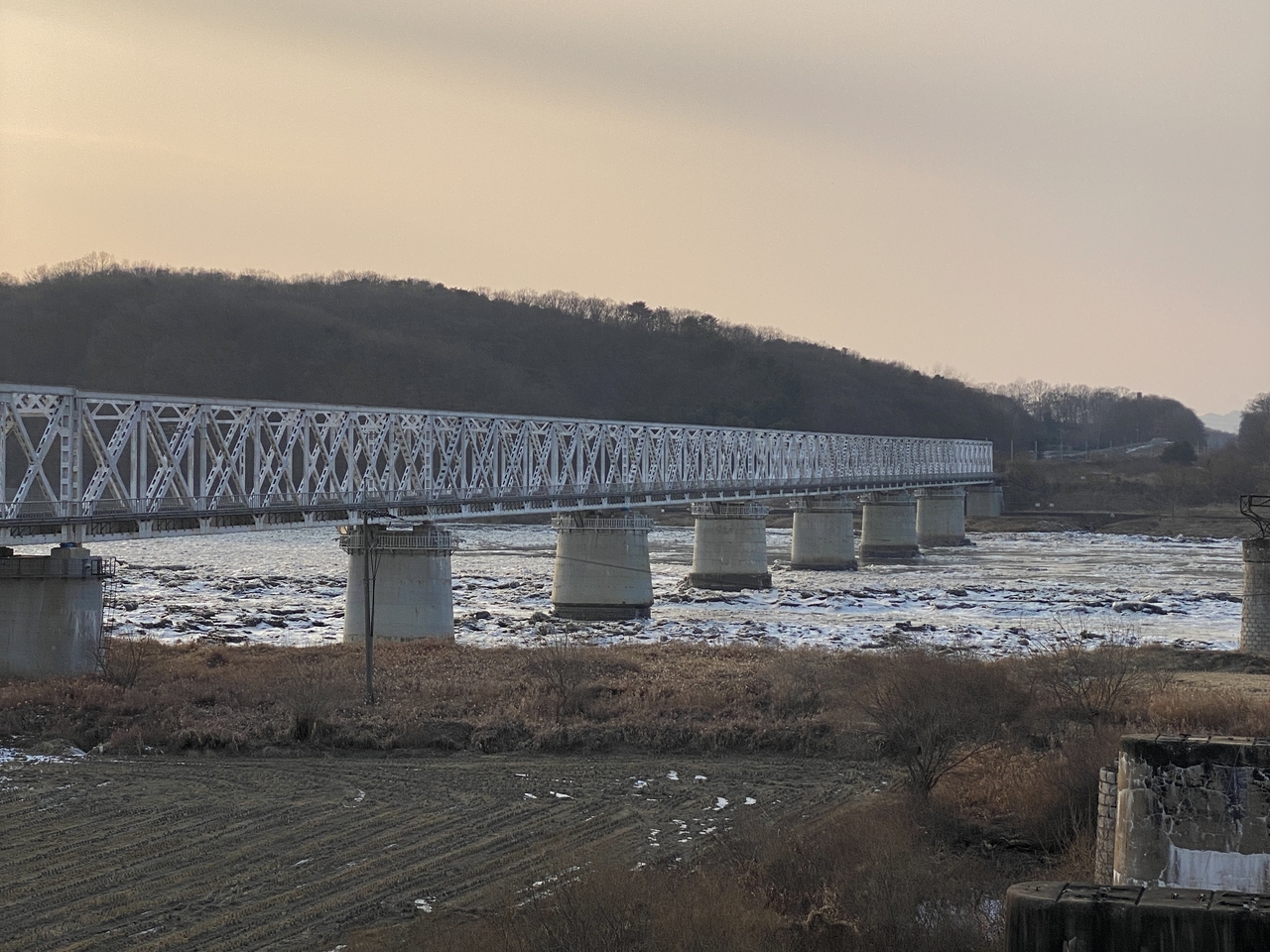
The Peace Trail routes were first opened in April 2019, but access to inner-DMZ sections of three courses — in Paju, Cheorwon and Goseong — was suspended in April 2024 due to security conditions.
However, the UNC reaffirmed its position, saying in a same-day release that “the routes located inside the DMZ remain restricted for security reasons and fall under UNC jurisdiction.”
Currently, at the DMZ, South Korean troops are stationed at general outposts south of the fence, with military personnel frequently entering and exiting the area.
flylikekite@heraldcorp.com

![[Exclusive] Ateez to return in November](https://wimg.heraldcorp.com/news/cms/2026/09/02/news-p.v1.20260902.76162fb0ba55493aad1c076f240d0750_R.jpg?type=h&h=120)