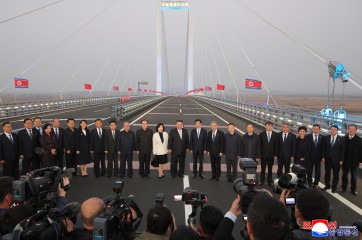

North Korea is expected to convene the 9th Congress of the Workers’ Party of Korea in early to mid-February, a pivotal political event that will lay out the regime’s governing and military strategy for the next five years.
The congress — the party’s highest decision-making body, held once every five years — is expected to focus on three core agenda items: strengthening nuclear and conventional military capabilities in parallel, institutionalizing the “two hostile states” framework toward South Korea and consolidating Kim’s governing ideology.
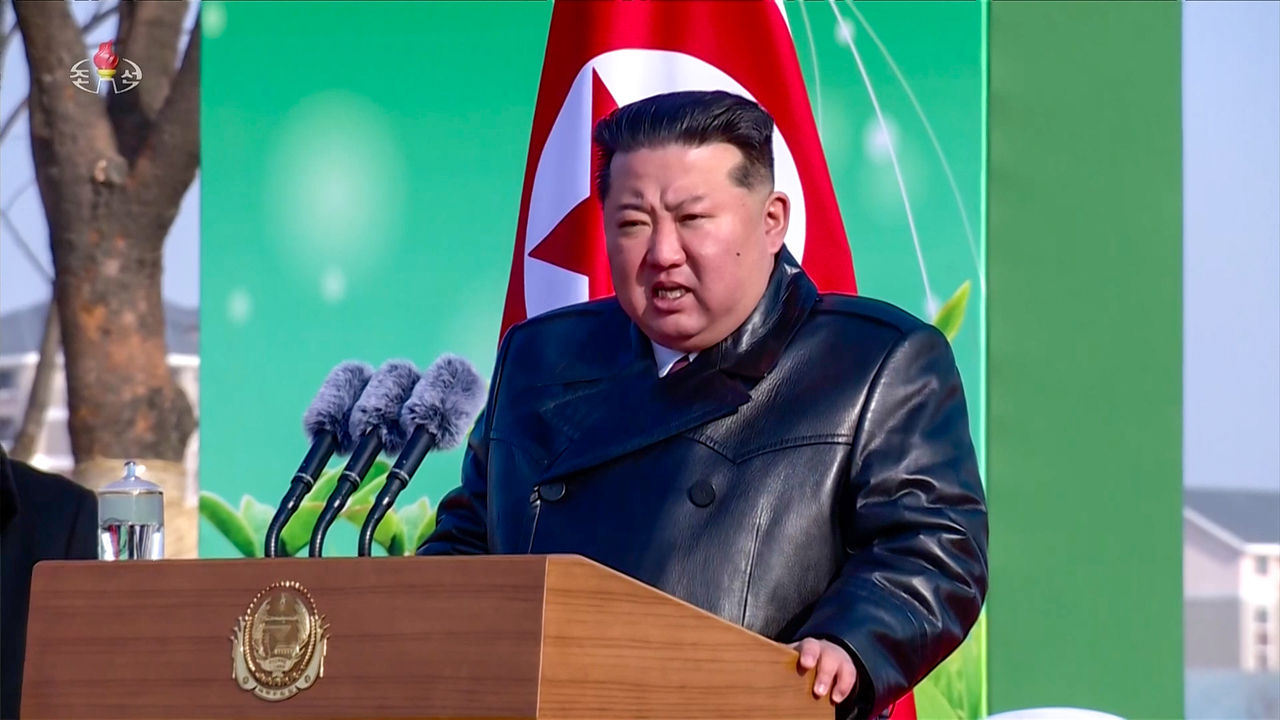
Recent North Korean media reports suggest that preparatory procedures are nearing completion. Pyongyang has finalized the selection of party delegates at the grassroots, city, provincial and central levels, signs that only the formal announcement of the congress schedule remains. Observers anticipate that Kim Jong-un, North Korean leader and general secretary of the Workers’ Party of Korea, will soon convene a Politburo meeting to officially set the dates.
Experts predict that the congress will formally adopt a policy line emphasizing the parallel development of nuclear forces and conventional, or non-nuclear, military capabilities. While North Korea has devoted the past several years to advancing strategic weapons — including intercontinental ballistic missiles, nuclear-capable cruise missiles, reconnaissance satellites and submarine-based nuclear systems — analysts say Pyongyang is now recalibrating its approach.
During on-site inspections of defense research institutes in September last year, Kim signaled that the upcoming party congress would present a defense policy combining nuclear deterrence with strengthened conventional forces. This is widely interpreted as a move to enhance weapons suitable for localized or regional conflict scenarios, particularly on the Korean Peninsula.
The shift appears informed by lessons drawn from the Russia-Ukraine war, where North Korea has reportedly observed that conventional and asymmetric capabilities — such as drones, artillery rockets and self-propelled guns — continue to play decisive roles in modern warfare.
“Given changes in the nature of warfare, the actual likelihood of nuclear weapon use has become extremely low,” said Hong Min, a senior research fellow at the Korea Institute for National Unification. “The international trend is to combine nuclear and conventional forces in a balanced way, and North Korea appears to be moving in that direction.”
Hong added that Pyongyang may also task its defense sector with exploring the integration of artificial intelligence into next-generation weapons systems, potentially expanding asymmetric warfare capabilities.
Another major focus of the congress is expected to be the institutionalization of North Korea’s redefined stance toward inter-Korean relations. Since late 2023, Pyongyang has declared South Korea a hostile state, abandoning decades of rhetoric centered on reunification.
Experts believe the 9th Party Congress could formally entrench this “two hostile states” framework through party-level decisions, paving the way for subsequent legal or constitutional changes. The current preamble of the Workers’ Party rules still contains references to “peaceful reunification” and “national unity,” which analysts say could be removed as part of a broader ideological overhaul.
“There is a strong possibility that the party congress will introduce measures to solidify the ‘two states’ concept and later reflect them in constitutional revisions,” Lim Eul-chul, a professor at Kyungnam University's Institute for Far Eastern Studies, said, noting that Kim has previously pledged to institutionalize the shift through law. However, Lim cautioned that revising the constitution would require a formal amendment process, adding that it remains uncertain how the legal institutionalization would ultimately be carried out.
However, if done, such a move would likely deepen the structural rupture in inter-Korean relations, with Lim warning that it could further limit diplomatic maneuvering space on the peninsula.
Despite the scale of the political event, North Korea is not expected to issue a specific outreach or policy signal toward the US at the congress. Observers say Pyongyang is likely to maintain a critical posture while refraining from concrete proposals, as Washington has yet to present incentives that would draw North Korea back into talks.
North Korea’s diplomatic priority remains its deepening alignment with Russia, while developments such as South Korea’s newly released National Defense Strategy and heightened US focus on China are likely being closely assessed in Pyongyang.
Speculation has emerged over possible US-North Korea contact later this year, but analysts caution that recent US military actions abroad may reinforce Pyongyang’s perception of strategic risk rather than encourage engagement.
The congress may also serve as a milestone in consolidating Kim’s personal governing ideology, often referred to as “Kim Jong-un-ism.” While the party’s rules officially define the state ideology as Kim Il-sung–Kim Jong-il-ism, observers say efforts to establish Kim’s independent ideological framework have intensified in recent years.
If formally articulated, the move would reinforce internal cohesion and legitimize Kim’s leadership heading into the next five-year policy cycle. Some analysts note, however, that even if the term is introduced, its substantive content may remain vague.
Signs of the congress’s imminence are also visible in Pyongyang, where large-scale parade preparations have reportedly been underway for months at Mirim Airfield. While the event is expected to emphasize regime unity and leadership achievements, Hong points out that select military capabilities — particularly long-range precision strike systems — may be showcased as highlights.
“These could include long-range precision strike weapons capable of carrying nuclear warheads, serving as deterrence against the US, as well as advanced conventional systems,” Hong said.
Based on past precedents, experts estimate the congress could open between Friday and Feb. 10, potentially concluding ahead of Feb. 16, the birthday of former leader Kim Jong Il, when major commemorative events are traditionally held.
mkjung@heraldcorp.com