South Korea is facing a constitutional challenge to a decades-old law that bars foreigners from engaging in political activities, with a public-interest group arguing it undermines free expression.
Open Net Korea, Seoul-based rights advocacy group, filed a petition with the Constitutional Court challenging Article 17-2 of the Immigration Act, according to its statement released on Friday.
Article 17-2 prohibits all political activity by foreign nationals unless otherwise allowed by statute, and violations can trigger deportation or exit orders.
The group argued the clause imposes a “principled, comprehensive and blanket ban” that suppresses social participation and expression by residents who work, study and live long-term in the country.
The provision dates back to 1977, during the authoritarian Yushin era and reflects a Cold War-era view of foreigners as potential security threats, Open Net said.
“With more than 2.8 million foreign residents in the country, forcing silence on such a scale is incompatible with a modern democracy,” the group said, calling for the clause to be struck down. It urged the Constitutional Court to issue what it described as a meaningful and timely decision.
It said the definition of political activity — acts intended to influence political decision-making — is so broad that it effectively silences foreign nationals on issues ranging from their own rights, to the politics of their home countries and global matters such as climate action.
The petitioners in the case is a foreign employee of a climate-focused nonprofit.
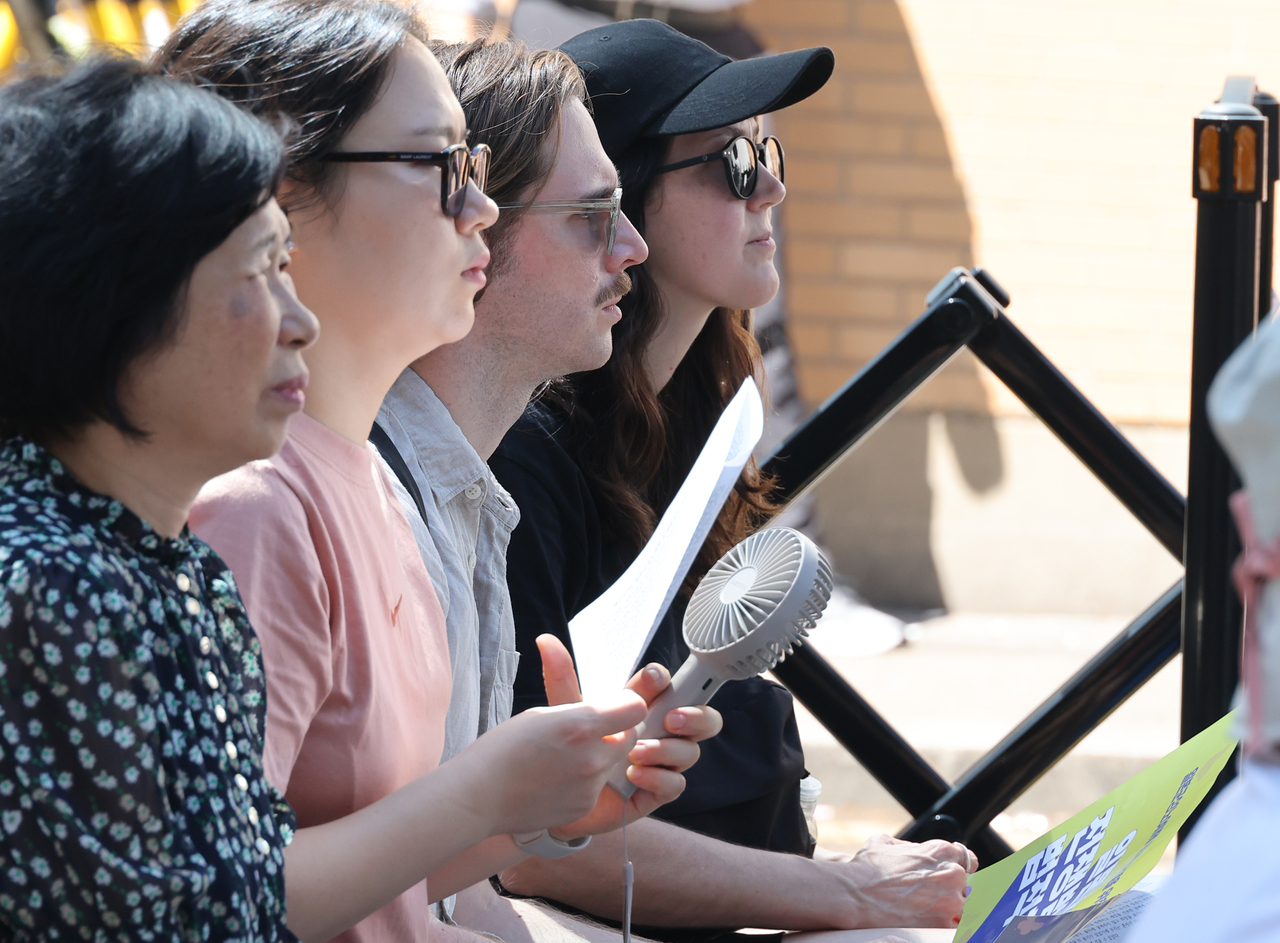
Open Net said the petitioner cannot freely take part in press conferences, rallies or campaigns related to Korea’s climate, environment or energy policies for fear of violating the law.
The group said the restriction has similarly chilled participation by refugees, migrants and foreign activists on issues such as democratization movements abroad, international conflicts or policies on refugee and labor matters.
Even expressions critical or supportive of global human-rights concerns may be deemed political under the current law, it said.
Foreign nationals accounted for roughly 5.5 percent of South Korea’s population as of last year, and many contribute to the economy and local communities as residents, the group said.
While Korea grants certain local voting rights to long-term foreign residents, the law simultaneously excludes them from the broader democratic discourse, creating what Open Net called a “contradiction” in the legal framework.
hnpark@heraldcorp.com