
Quarterly earnings fall 40% as tariff costs exceed W1.4tr
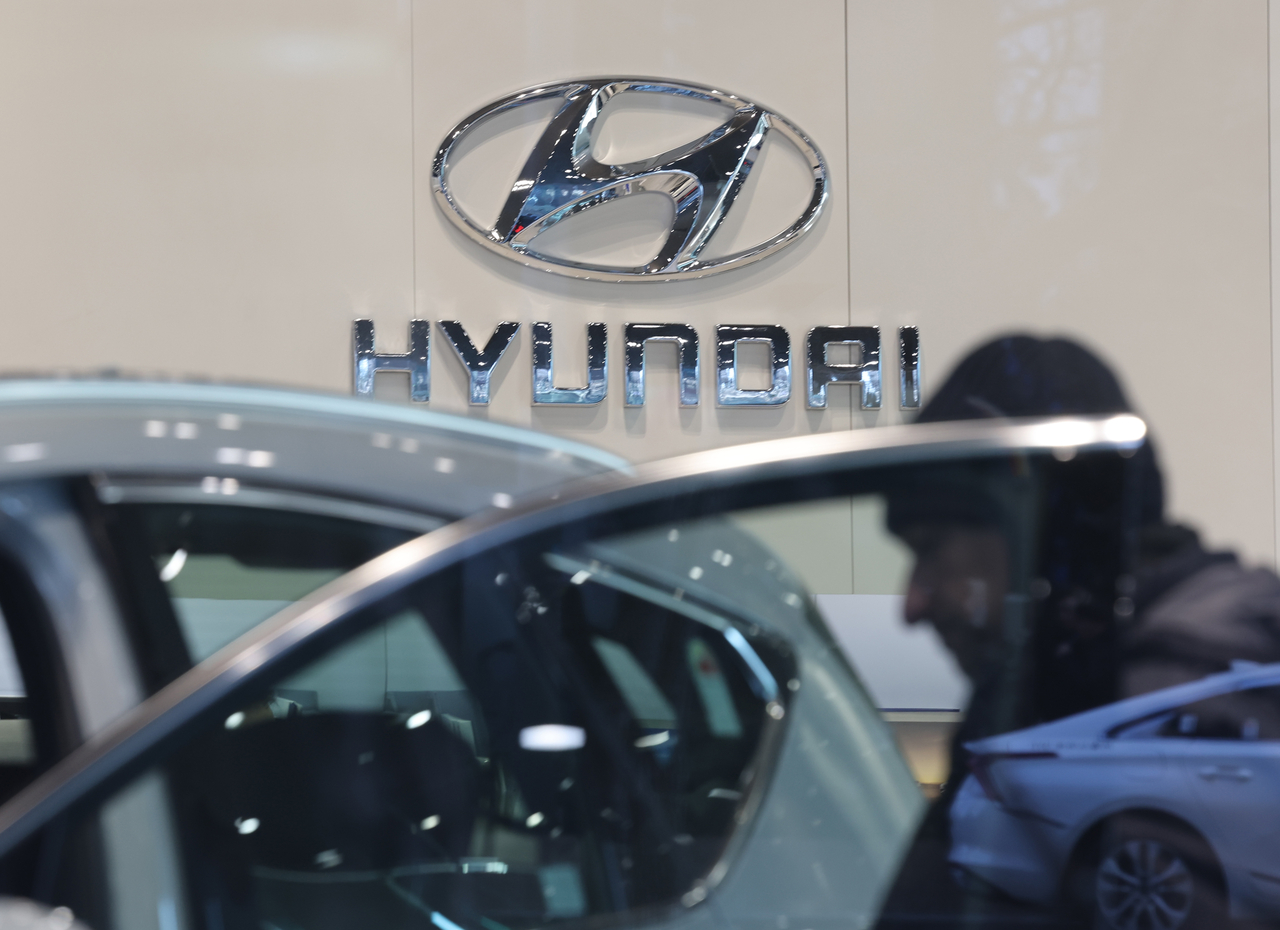
Hyundai Motor said Thursday its fourth-quarter operating profit fell 40 percent from a year earlier as higher US tariffs weighed on earnings, overshadowing gains from improved pricing and favorable exchange rates.
Operating profit for the October-December period fell 39.9 percent on-year to 1.69 trillion won ($1.19 billion). Meanwhile, revenue edged up 0.5 percent to 46.84 trillion won. The automaker’s operating margin slid to 3.6 percent, as cost pressures intensified in key markets.
It marked the first time South Korea’s largest carmaker’s quarterly profit fell to the 1-trillion-won range since the third quarter of 2022, when the COVID-19 pandemic disrupted global auto production.
The result also missed market forecasts, which had projected quarterly profit in the range of 2.5 trillion won to 3 trillion won, as the US tariffs exerted a sharper drag on profitability than investors had anticipated.
Hyundai said the impact of US tariffs caused a 1.46 trillion won increase in cost during the fourth quarter, and an estimated 4.11 trillion won for the whole year, according to Hyundai CFO Lee Seung-jo during a conference call.
When combined with losses reported by its smaller sister brand Kia, which announced tariff-related costs of around 3 trillion won, the total losses incurred by Hyundai Motor Group from tariffs exceed 7 trillion won.
Although the carmaker implemented contingency measures to reduce tariff impacts, inventory sold in the fourth quarter was still subject to a 25 percent US tariff, reducing the advantages of subsequent tariff relief, it explained.
In April, the US levied a 25 percent tariff on all imported automobiles and auto parts. South Korea and the US reached a trade agreement in July to lower the rate to 15 percent in return for Seoul's pledge to invest $350 billion in the US. But it wasn't until Nov. 14, when Seoul proposed legislation to support special investment in the US, that the reduced tariff rate was applied retroactively from the first day of that month.
US President Donald Trump's announcement earlier this week that he would raise auto tariffs back to 25 percent has further increased uncertainty. Trump cited delays in South Korea’s legislative approval of the trade agreement.
“We expect this year’s tariff effect to be at a similar level to last year,” CFO Lee said, adding the carmaker will continue contingency measures to offset tariff-related expenses.
The full-year results showed a similar trend. Operating profit for 2025 fell 19.5 percent to 11.47 trillion won ($8.04 billion), while revenue rose 6.3 percent to a record 186.25 trillion won.
Hyundai’s operating margin stood at 6.2 percent, within its previously announced guidance range of 6.0 percent to 7.0 percent.
Last year, Hyundai sold 4.41 million units, down 0.1 percent from a year earlier. Domestic sales totaled 712,954 units, while overseas sales came to 3.43 million units. Despite the slight decline, Hyundai noted that its annual US wholesales surpassed 1 million units for the first time.
Eco-friendly vehicles particularly fared well, with sales rising 27 percent to 961,812 units, including 275,669 electric vehicles and 634,990 hybrid vehicles.
Looking ahead, Hyundai expects uncertainty throughout the year, citing slower growth in major markets, intensifying competition in emerging economies and broader trade risks, including tariffs.
Hyundai targets global sales of 4.16 million units, revenue growth of 1 to 2 percent from 2025, and an operating margin target of 6.3 percent to 7.3 percent.
The carmaker also plans to invest a total of 17.8 trillion won this year, with a focus on eco-friendly vehicles, software-defined vehicles, autonomous driving and artificial intelligence technologies. Breaking down, it plans to inject 7.4 trillion won into research and development, 9 trillion won into capital expenditures and 1.4 trillion won into strategic investments.
Hyundai is also stepping up efforts to secure technological competitiveness in humanoid robotics and autonomous driving.
“Proof-of-concept testing of humanoid robots at the Metaplant has been underway since late last year,” Lee said, adding that a demo model of the company’s smart car could be rolled out in the second half of the year.”
sahn@heraldcorp.com


![[Exclusive] Ateez to return in November](https://wimg.heraldcorp.com/news/cms/2026/09/02/news-p.v1.20260902.76162fb0ba55493aad1c076f240d0750_R.jpg?type=h&h=120)