

Record foreign traffic draws food brands to terminals as experience and sales converge
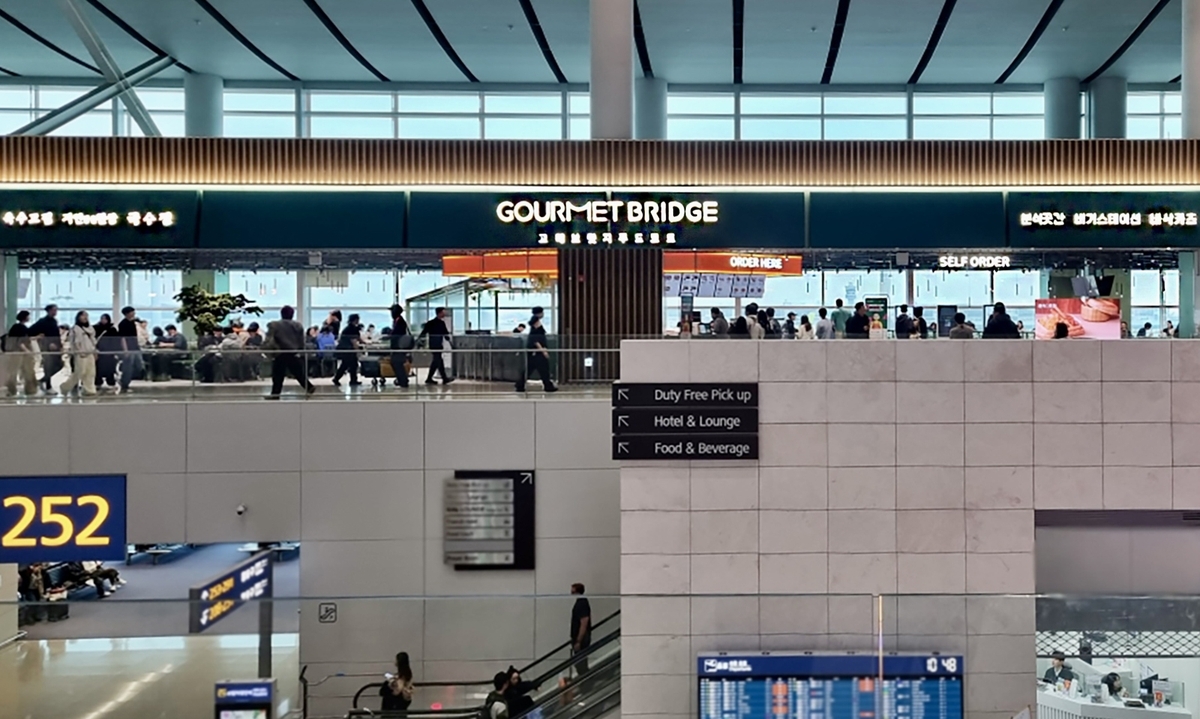
Incheon Airport is becoming a frontline venue for K-food experiences, as food operators compete for a swelling stream of international visitors during their first and last hours in the country.
That push comes as passenger volumes hit a record 74 million in 2025, the highest since the airport opened in 2001, and traffic this year is forecast at between 75.54 million and 78.55 million. The airport has become a strategic platform where brand exposure, experience and sales converge, according to some industry insiders.
While much of the new competition is concentrated in Terminal 2, home to 13 airlines including Korean Air and Asiana Airlines, the expansion is taking shape across distinct formats.
CJ Freshway, for instance, went big in January, opening the airport’s largest food court in Terminal 2 and timing the launch with Asiana Airlines’ relocation.
“In step with rising passenger numbers, we aim to serve as a bridgehead for K-food by improving dining convenience for airport users,” a CJ Freshway official said, adding that the company’s concession business has posted average annual growth of 25.5 percent over the past five years.
Lotte GRS saw sales at Incheon Airport climb 23 percent on-year through November 2025, as sustained investment began to take shape on the ground. In January, the company opened a smart cafe in Terminal 2, pairing its Angel-in-us Coffee label with the gelato concept Gelccine, where a barista robot prepares brewed coffee in plain sight.
Some brands are narrowing their focus. Korea Ginseng Corp. is targeting Chinese visitors, whose numbers surged last year as passenger traffic on China routes climbed 22.6 percent to 12.36 million from a year earlier.
Viewing Incheon’s Terminal 2 as a strategic foothold, the company opened two concept stores there in 2025: one an experiential space for sampling portable ginseng products, the other a palace-inspired shop centered on whole-root ginseng and herbal teas.
Food industry officials say airport retail offers distinct advantages, as spending is more experience-oriented and price resistance is lower than in domestic markets.
“Even amid weak domestic consumption, travel demand remains steady and foreign visitor numbers continue to rise alongside the K-culture boom,” said one food industry official. “Airports are being used as forward bases to build brand recognition and promote Korean food to overseas consumers.”
Experience-driven formats are extending into premium spaces as well.
Inside Korean Air's Prestige East lounge at Terminal 2, instant noodle makers Otoki and Nongshim supply ramyeon for the airline’s Ramyun Library, a self-serve ramyeon station where passengers select packaged noodles and prepare them using automated machines.
Describing the lounge as “a symbolic space for travelers from around the world,” an Otoki official said the ramyeon-themed installation is designed to serve as a touchpoint that introduces visitors to the appeal of Korean ramyeon in a setting suited to airport travel. “The response has been so strong that lines form daily,” the official added.

minmin@heraldcorp.com