
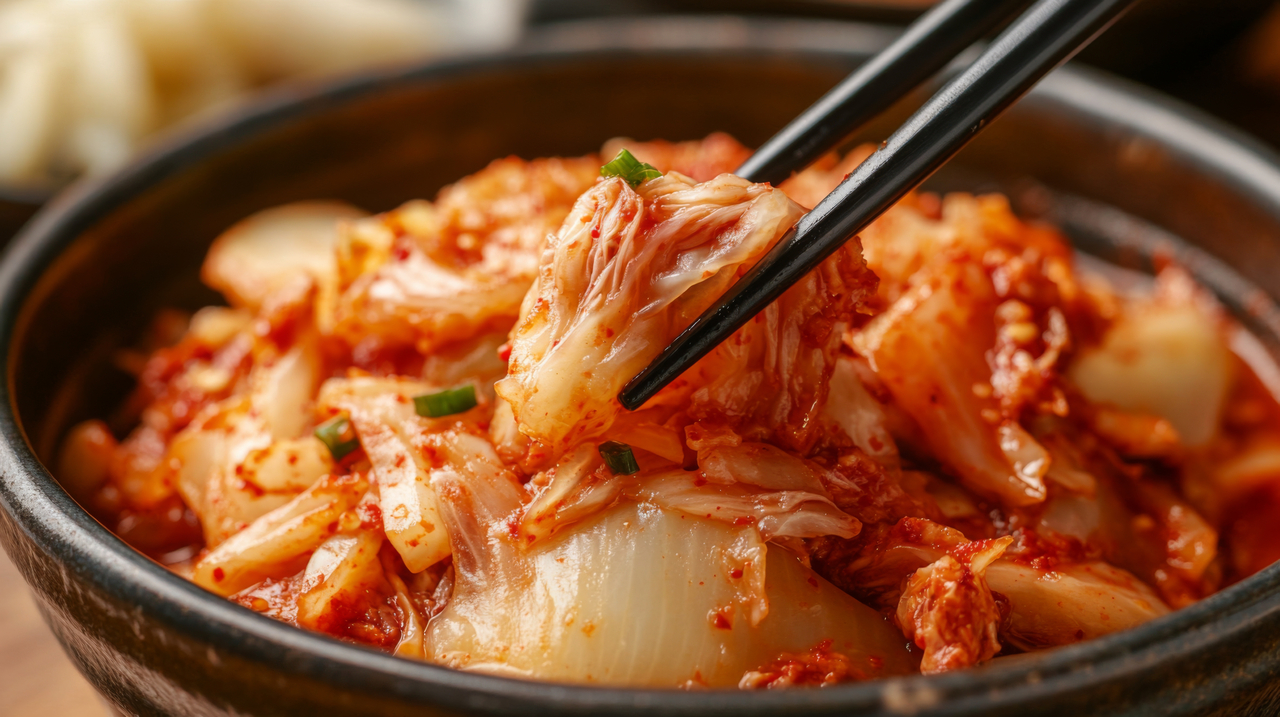
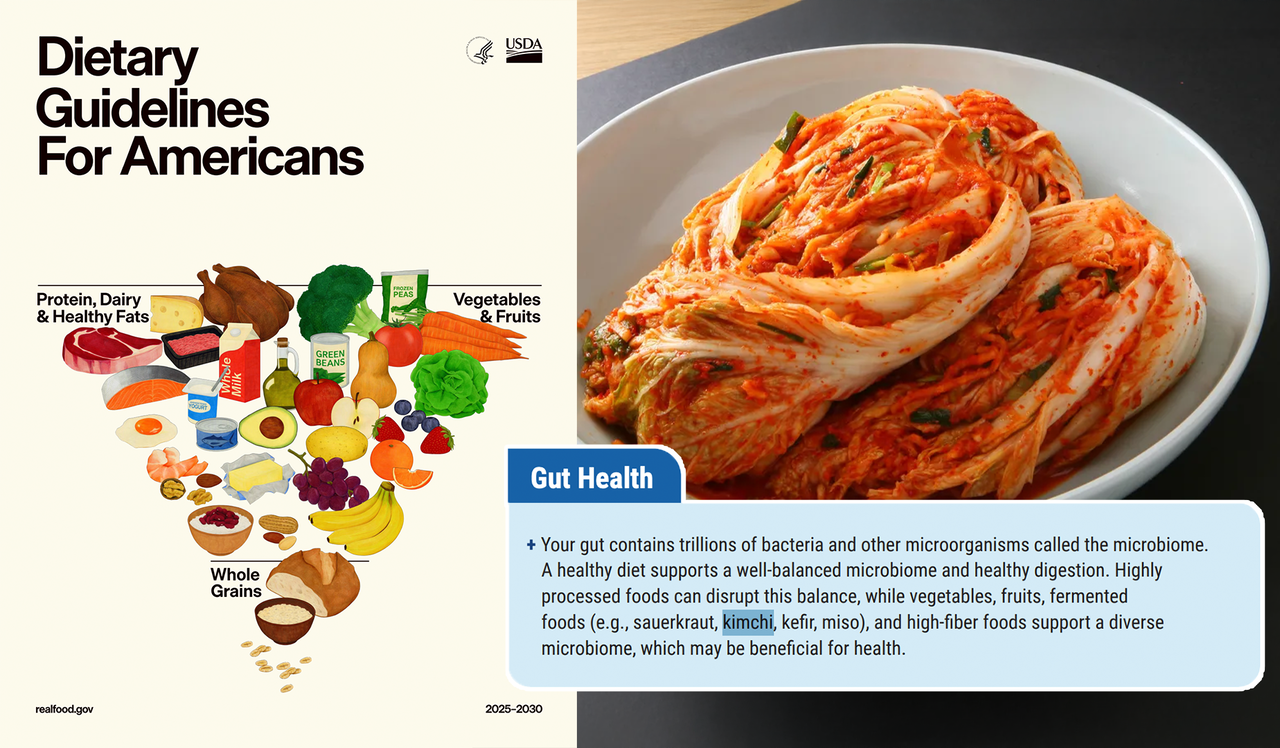
Kimchi, Korea’s centuries-old fermented staple, has gained fresh global recognition after being named a “gut health” food in the latest Dietary Guidelines for Americans (2025–2030), issued by the US Department of Health and Human Services and the US Department of Agriculture.
수백 년의 역사를 지닌 한국의 발효 식품 김치가 미국 보건복지부와 농무부가 공동 발표한 ‘미국인을 위한 최신 식생활 지침(2025~2030)’에서 ‘장 건강 식품’으로 선정되며 새로운 국제적 주목을 받고 있다.
In the new guidelines, kimchi is highlighted alongside foods such as sauerkraut, kefir and miso as a fermented food that helps support gut health by maintaining microbiome diversity.
이번 지침에서 김치는 사우어크라우트, 케피어, 미소 등과 함께 장내 미생물 다양성을 유지해 장 건강을 돕는 발효 식품으로 소개됐다.
The gut microbiome refers to the vast community of bacteria, viruses and other microorganisms that live in the digestive tract. Research over the past decade has shown that a balanced and diverse microbiome does far more than aid digestion.
장내 미생물군은 소화기관에 서식하는 방대한 양의 박테리아, 바이러스, 기타 미생물 군집을 의미한다. 지난 10여 년간의 연구는 균형 잡힌 다양한 미생물군이 단순한 소화 기능을 넘어서는 역할을 한다는 점을 보여줬다.
It plays a role in immune function, metabolism and even brain health, influencing how the body responds to stress and inflammation.
이는 면역 기능과 대사, 나아가 뇌 건강에도 관여하며, 신체가 스트레스와 염증에 반응하는 방식에 영향을 미친다.
Fermented foods are increasingly valued because they help create an environment in which beneficial microbes can thrive. This is where kimchi stands out.
발효 식품은 유익균이 잘 자랄 수 있는 환경을 조성한다는 점에서 점점 더 높은 평가를 받고 있으며, 김치는 이 점에서 두드러진다.
How kimchi supports the gut
김치가 장 건강을 돕는 방식
Kimchi is made by fermenting vegetables, most commonly napa cabbage and radish with garlic, chili pepper, ginger and salted seafood. As fermentation begins, natural lactic acid bacteria multiply rapidly, lowering the pH and creating an acidic environment that favors beneficial microbes.
김치는 주로 배추와 무에 마늘, 고추, 생강, 젓갈 등을 넣어 발효해 만든다. 발효가 시작되면 자연 유래의 유산균이 빠르게 증식하면서 pH를 낮추고, 유익균이 살아가기 좋은 산성 환경을 형성한다.
According to research from the World Institute of Kimchi, the number of lactic acid bacteria in kimchi can increase from around 100,000 per gram at the early stage of fermentation to more than 100 million per gram once fully matured.
세계김치연구소에 따르면 김치 속 유산균 수는 발효 초기 g당 약 10만 마리 수준에서 완전히 숙성되면 g당 1억 마리 이상으로 증가할 수 있다.
Scientists have identified dozens of functional strains in kimchi, many linked to anti-inflammatory effects, metabolic health and immune support.
과학자들은 김치에서 수십 종의 기능성 균주를 확인했으며, 이들 중 다수는 항염 효과와 대사 건강, 면역력 강화와 연관돼 있다.
Kimchi also contains dietary fiber from vegetables. This fiber acts as “food” for gut bacteria, helping them produce beneficial compounds as they break it down. Some studies suggest that fermented foods combining fiber and live microbes may influence the microbiome more effectively than fiber or probiotics alone.
김치는 채소에서 유래한 식이섬유도 풍부하다. 이 섬유질은 장내 세균의 ‘먹이’ 역할을 하며, 분해 과정에서 유익한 물질 생성에 기여한다. 일부 연구는 식이섬유와 살아 있는 미생물이 함께 포함된 발효 식품이 섬유질이나 프로바이오틱스 단독 섭취보다 장내 환경에 더 효과적으로 작용할 수 있다고 보고한다.
Emerging studies indicate that certain lactic acid bacteria found in kimchi may also help regulate inflammation and oxidative stress. Because chronic inflammation is linked to conditions ranging from obesity to neurodegenerative disease, this has drawn growing scientific interest.
최근 연구들은 김치에 포함된 일부 유산균이 염증과 산화 스트레스 조절에도 도움을 줄 수 있음을 시사한다. 만성 염증이 비만부터 신경퇴행성 질환에 이르기까지 다양한 질환과 연관된 만큼, 과학계의 관심도 커지고 있다.
The gut-brain connection is another area of attention. Specific gut microbes are known to interact with stress hormones and neural signaling pathways, reinforcing the idea that gut health can affect mood and mental well-being.
장과 뇌의 연관성 또한 주목받는 분야다. 특정 장내 미생물은 스트레스 호르몬 및 신경 신호 전달 경로와 상호작용하는 것으로 알려져 있으며, 이는 장 건강이 기분과 정신적 안녕에 영향을 미칠 수 있다는 인식을 뒷받침한다.
Kimchi’s health benefits are closely tied to its history.
김치의 건강 효능은 그 역사와 밀접하게 연결돼 있다.
Long before refrigeration, Koreans developed fermentation as a way to preserve vegetables through harsh winters. Over time, kimchi evolved into hundreds of regional varieties, reflecting local ingredients, climates and tastes.
냉장 기술이 등장하기 이전부터 한국인들은 혹독한 겨울을 나기 위한 채소 저장법으로 발효를 발전시켰다. 시간이 흐르며 김치는 지역별 식재료와 기후, 입맛을 반영한 수백 가지 종류로 진화했다.
In 2013, the communal practice of making kimchi, known as kimjang, was recognized by UNESCO as an Intangible Cultural Heritage.
2013년에는 김장을 담그는 공동체 문화인 ‘김장’이 유네스코 인류무형문화유산으로 등재됐다.
Despite its benefits, kimchi is a salted food and can be high in sodium. Experts emphasize balance rather than excess, especially for people sensitive to salt.
다만 김치는 염장 식품으로 나트륨 함량이 높을 수 있다. 전문가들은 특히 염분에 민감한 사람일수록 과다 섭취보다 균형이 중요하다고 강조한다.
Still, for those whose diets rely heavily on processed foods and lack fiber, adding moderate amounts of kimchi can be a simple way to support gut health.
그럼에도 가공식품 위주의 식단으로 섬유질 섭취가 부족한 경우, 김치를 적당히 추가하는 것만으로도 장 건강을 돕는 간단한 방법이 될 수 있다.
Tip
1. fermented — 발효된
2. gut — 장(腸)
3. microbiome — 장내 미생물군
4. metabolism — 대사
5. inflammation — 염증
6. lactic — 젖산의, 유산 관련
7. oxidative — 산화의
8. sodium — 나트륨
khnews@heraldcorp.com



![[Room Tone] Monopoly’s less famous cousin](https://wimg.heraldcorp.com/news/cms/2026/09/15/news-p.v1.20260427.66c40f4b14054f6a8c036bfc20e046c9_R.jpg?type=h&h=120)