Seoul invokes 'no less favorable' clause to secure Taiwan-level tariff treatment for chips
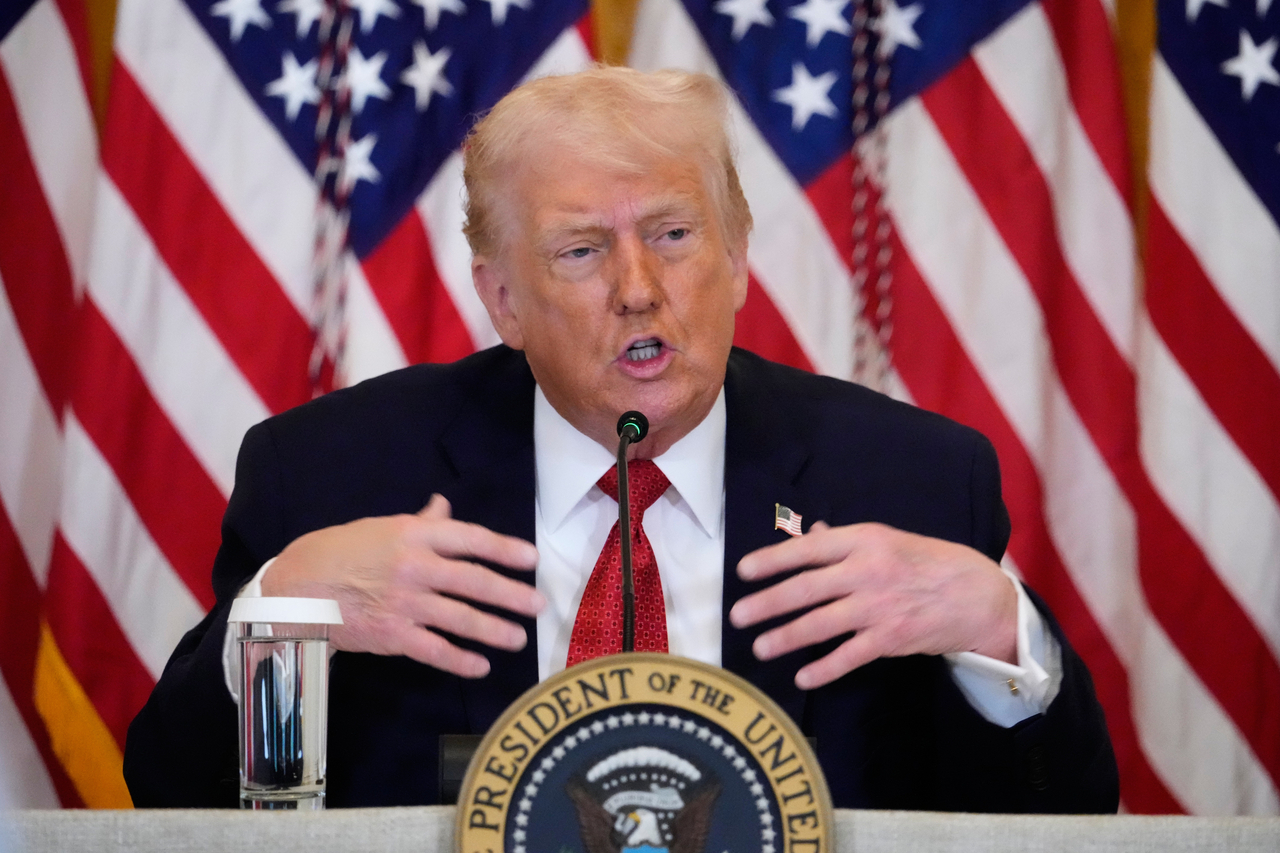
South Korea is moving swiftly to shield its chipmakers from renewed trade headwinds, following Washington’s warning of steep tariffs on foreign-made semiconductors — a move widely interpreted as targeting the country's tech giants.
According to industry sources Sunday, government officials are preparing to hold internal meetings to assess the broader implications of the proposed measures. While the details of Washington’s tariff plan remain unclear, companies like Samsung Electronics and SK hynix are expected to be among the most exposed.
The presidential office issued a statement on the same day, saying it would work to minimize the fallout on Korean companies by invoking the “no less favorable” treatment clause outlined in the Korea-US Joint Fact Sheet.
“The JFS explicitly states that any future semiconductor tariff measures will not be less favorable than those applied to other major countries,” the statement read.
“Based on this principle, we plan to thoroughly analyze the recent US-Taiwan agreement, communicate closely with industry stakeholders and engage in consultations with the US government.”
The remarks signaled Seoul’s determination to ensure Korea receives treatment equal to that afforded to Taiwan, its chief rival in the global chip market.
Though last year’s trade agreement between Korea and the US imposed a 15 percent tariff on many Korean exports, semiconductors were left unresolved. Instead, Korea secured a commitment not to be treated less favorably than Taiwan — a clause now coming into focus as the US ties tariff relief to domestic investment.
That commitment gained urgency following remarks from US Commerce Secretary Howard Lutnick on Friday, who issued a blunt ultimatum to global chipmakers: “Everyone who wants to build memory has two choices: They can pay a 100 percent tariff, or they can build in America.”
No country was named, but few in Seoul had doubts about the target.
With Washington shifting to a more aggressive stance, Korean companies that have already committed to large-scale investments in the US may now face further strategic decisions. Samsung is currently building a $37 billion foundry in Taylor, Texas, while SK hynix will invest $3.87 billion in a chip packaging plant in Indiana.
Now, Seoul is closely reviewing the US-Taiwan semiconductor deal as a potential benchmark. Under that framework, Taiwan Semiconductor Manufacturing Co. pledged $250 billion in US investment and secured tariff exemptions for chip imports — up to 2.5 times the plant’s projected output during construction and 1.5 times that after operations begin.
For Korean firms, the numbers are striking. Whether similar terms can be extended to Samsung and SK hynix remains unclear, but officials say they are preparing for high-stakes negotiations.
Further raising concerns, US President Donald Trump last week signed a proclamation imposing a 25 percent tariff on certain high-performance chips re-exported from the US. The measure, based on Section 232 of the Trade Expansion Act, targets advanced semiconductors like Nvidia’s H200 and AMD’s MI325X.
Korean memory chips currently appear to be excluded, but Seoul is not taking that as reassurance.
“The current impact on Korean firms appears limited,” said Trade Minister Yeo Han-koo upon returning from a trip to Washington. “But we cannot rule out a second wave of measures. It’s too early to be assured.”
In response, the government has launched emergency consultations with Samsung and SK hynix. Industry voices are calling for tighter public-private coordination to avoid disruption to the nation’s top export industry.
“The uncertainty itself is becoming a growing risk,” said an industry source who requested anonymity. “There’s real concern the Trump administration could impose duties with little warning.”
Another source added: “Tariffs are not something firms can manage alone. Close cooperation with the government is essential.”
Kim Seong-yeol, director general for industrial infrastructure at the Ministry of Trade, Industry and Resources, stressed urgency.
“The US remains a core market for Korea’s semiconductor industry,” he said. “The government and private sector must form a united front. We will act swiftly and strategically to safeguard our national interests.”
yeeun@heraldcorp.com

![[Exclusive] Enhypen to return with new album in November, agency confirms](https://wimg.heraldcorp.com/news/cms/2026/09/29/news-p.v1.20260929.41760e88b0f048fcb5fa3e0dd9b75524_R.jpg?type=h&h=120)