
NARA, Japan — President Lee Jae Myung and Japanese Prime Minister Sanae Takaichi kept returning to the same message in Nara. Reciprocal visits by leaders — and the steady cultivation of personal rapport — are essential to forging durable, future-oriented Seoul-Tokyo ties.
South Korean national security adviser Wi Sung-lac said Wednesday that the "most meaningful outcome" of Lee's two-day trip to Japan was "the personal friendship and trust" the two leaders have built.
"Toward the end of our discussions, that kind of exchange took place — that even if difficult issues arise in the future, we should work through them based on the friendship and trust we have established," Wi told reporters.
Wi said the meeting, the leaders' third encounter and their second summit, had further strengthened ties between Lee and Takaichi.
"And I think it showed that, on the basis of that relationship, the two sides can open up new areas of cooperation and also work through issues from the past," Wi added.
The setting did some of the work over the tight two days in Takaichi's hometown and political base. Nara is often described as a shared cultural wellspring, shaped by Buddhism, craftsmanship and state-building traditions introduced from Baekje, an ancient Korean kingdom influential on Japan's Asuka-era civilization.
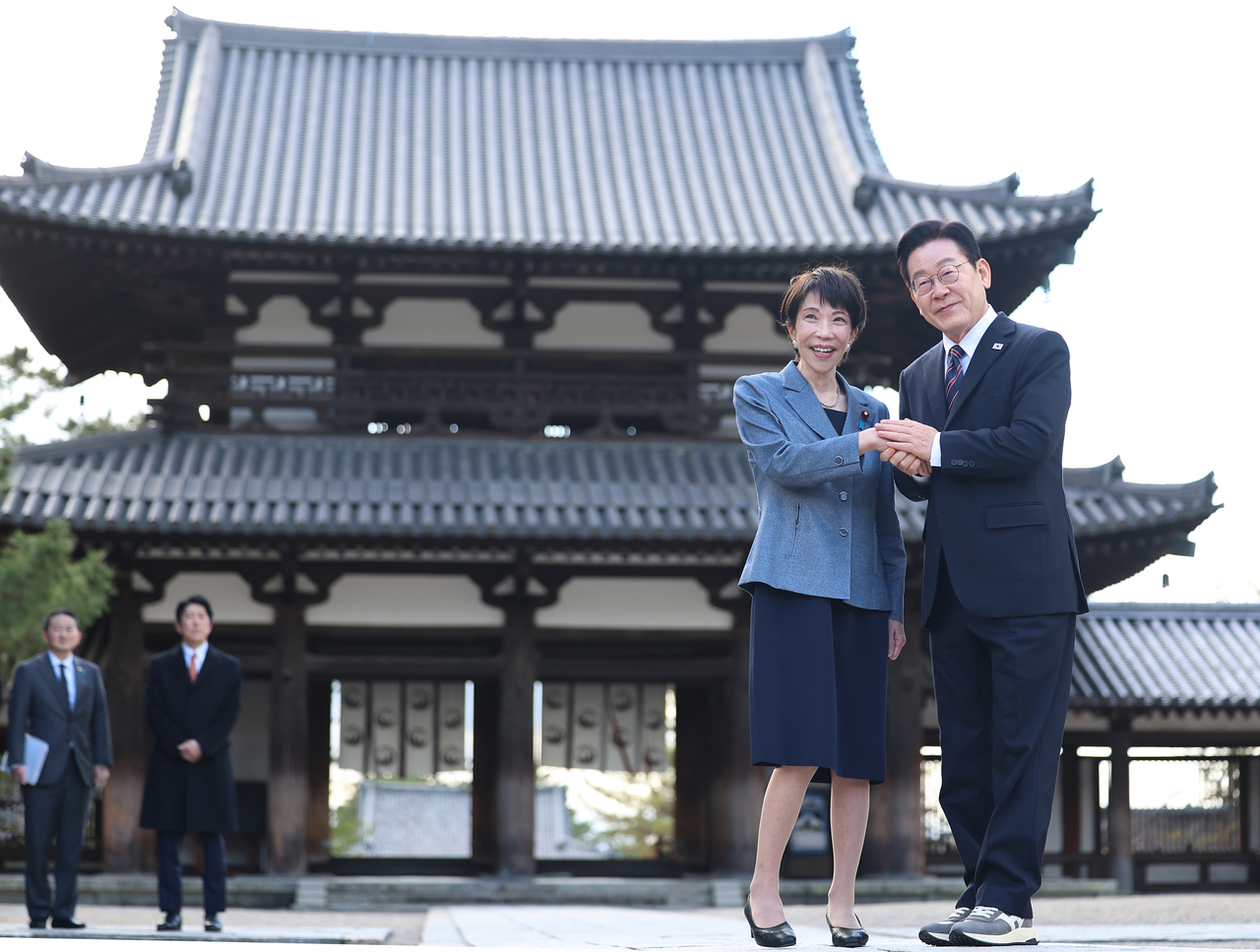
On Wednesday morning, the two leaders began their friendship program at Horyuji temple, which houses the "Baekje Kannon," also known as the Kudara Kannon, a statue widely believed to have been shaped by Baekje artistic traditions.
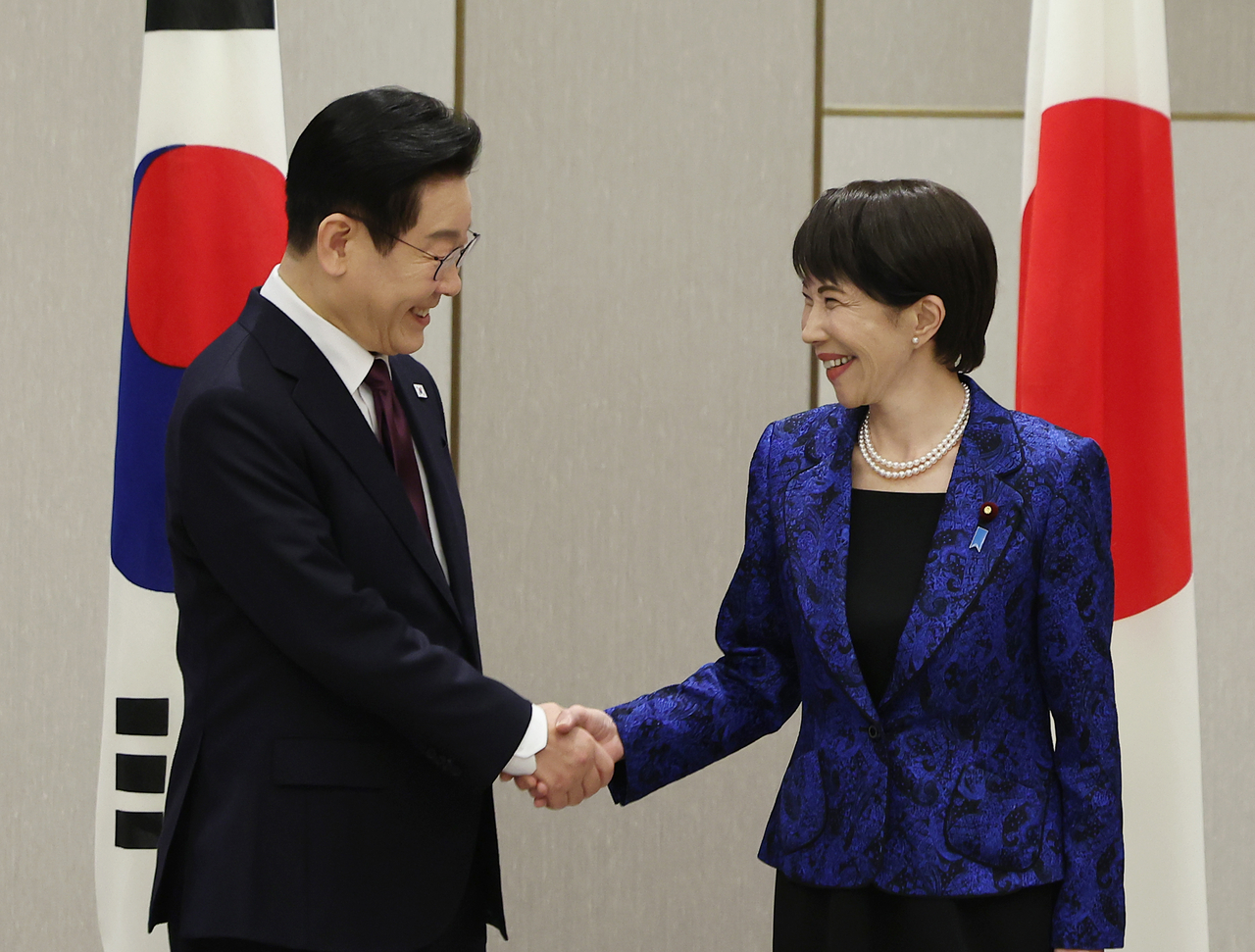
Upon arriving, Lee shook hands with Takaichi, who was waiting for him, exchanged a few words, and entered the temple grounds alongside her.
Walking on, Lee turned to Takaichi and asked: "Do you come here often? Did you come on school trips when you were young?"
When diplomacy finds rhythm
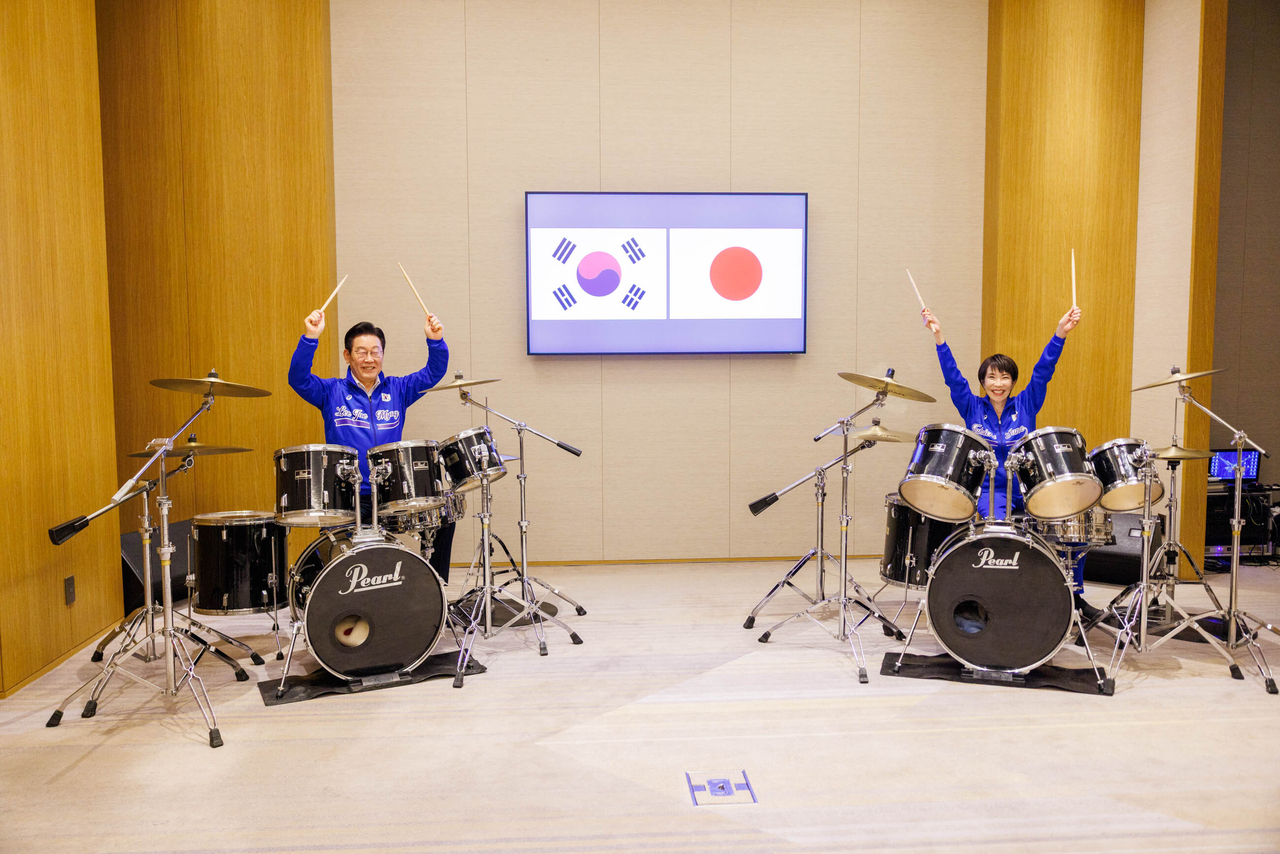
Lee and Takaichi also briefly traded diplomacy for drums on Tuesday, sitting side by side for an impromptu duet to recent K-pop hits during a friendship program after wrapping up a joint news conference on the summit's outcome.
In front of Pearl drum kits — one of Japan's best-known music brands — the two leaders donned matching blue uniforms prepared by the Japanese side and launched into an impromptu duet.
Lee and Takaichi played "Golden," the theme song from "KPop Demon Hunters" — a project involving South Korea, Japan and the United States — as well as "Dynamite," the Billboard-topping BTS track.
Lee reflected on the moment in a post on X on Wednesday, sharing a video of the drum duet with Takaichi. "Playing the drums had long been a personal dream of mine, which made the prime minister's thoughtful consideration all the more meaningful," Lee wrote.
Lee described their performance as a symbolic exchange, saying, "Our duet, adding a shared harmony atop each of our own rhythms, began a little awkwardly, but with each beat, the sound gradually came together."
Lee added that through the experience he and Takaichi shared "sincere feelings through music," casting it as a hopeful metaphor for the future of Seoul-Tokyo ties.
"Just as we respected our differences and found a common rhythm, I hope Korea and Japan can deepen cooperation and move closer together, step by step," he said.
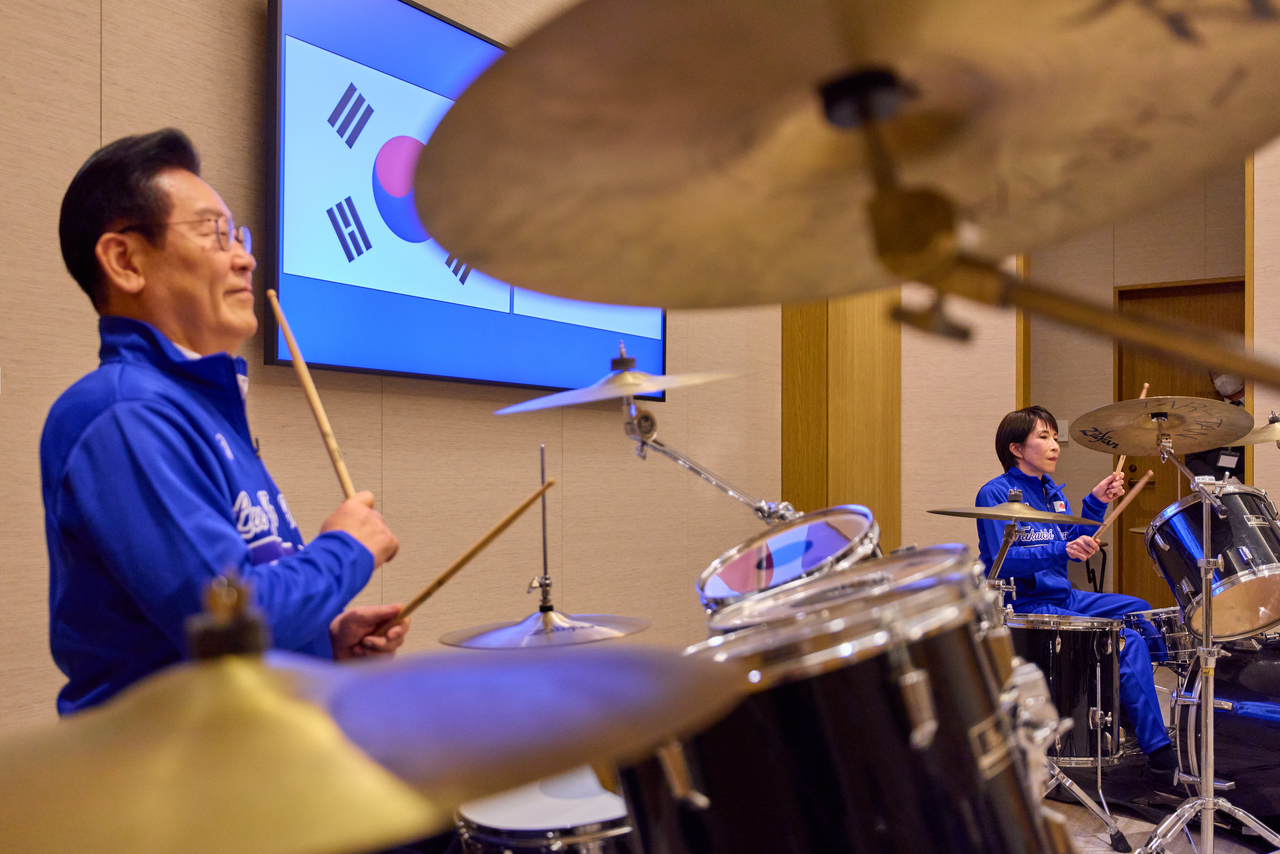
After the drum duet, Takaichi said Tuesday on her official X account that the surprise had been planned after she recalled Lee saying that playing the drums was "a dream of his" when they first met at the 2025 APEC summit in Gyeongju, North Gyeongsang Province.
Takaichi is known as an avid rock fan who began drumming in high school, and she has said that when she first won election to parliament she carried drumsticks with her wherever she went.
"Going forward as well, in order to develop Japan-South Korea relations in a future-oriented and stable manner, we will continue close communication between the governments of Japan and South Korea, including the proactive implementation of ‘shuttle diplomacy,'" Takaichi said.
Chemistry defines Nara summit
The second summit between Lee and Takaichi highlighted the chemistry and affinity between the two leaders. Despite the tightly packed two-day itinerary, Lee spent most of his time in Nara with Takaichi.
Lee arrived in Nara on Tuesday afternoon and met Takaichi for a full slate of engagements: a one-on-one summit attended by only a few aides, expanded talks, a joint press appearance, a private tete-a-tete and an official banquet.
Takaichi personally came out to greet Lee at his lodgings, visibly brightening when she saw him and giving a deep, folded-handed bow.
Lee responded that he was overwhelmed by the warmth of the reception. "If you welcome us by breaking protocol like this, we hardly know where to put ourselves," he said. Lee also added, "Not only the Japanese public, but the people of South Korea as well, will be deeply grateful for this kind of gesture from you."
During the news conference, Lee repeatedly underscored his appreciation for Takaichi's efforts to improve Seoul-Tokyo ties.
"I am grateful for the prime minister's special attention," Lee said, while announcing an agreement to jointly pursue DNA testing to help identify the remains of victims of the Chosei coal mine tragedy during Japan's colonial period from 1910 to 1945.
Before wrapping up the news conference, he again expressed his thanks.
"Once again, I would like to express my deep gratitude to the prime minister for the exceptional and generous hospitality, and for the special consideration she has shown — sparing no effort, almost to the point of throwing herself into it — in improving Korea-Japan relations."
dagyumji@heraldcorp.com