
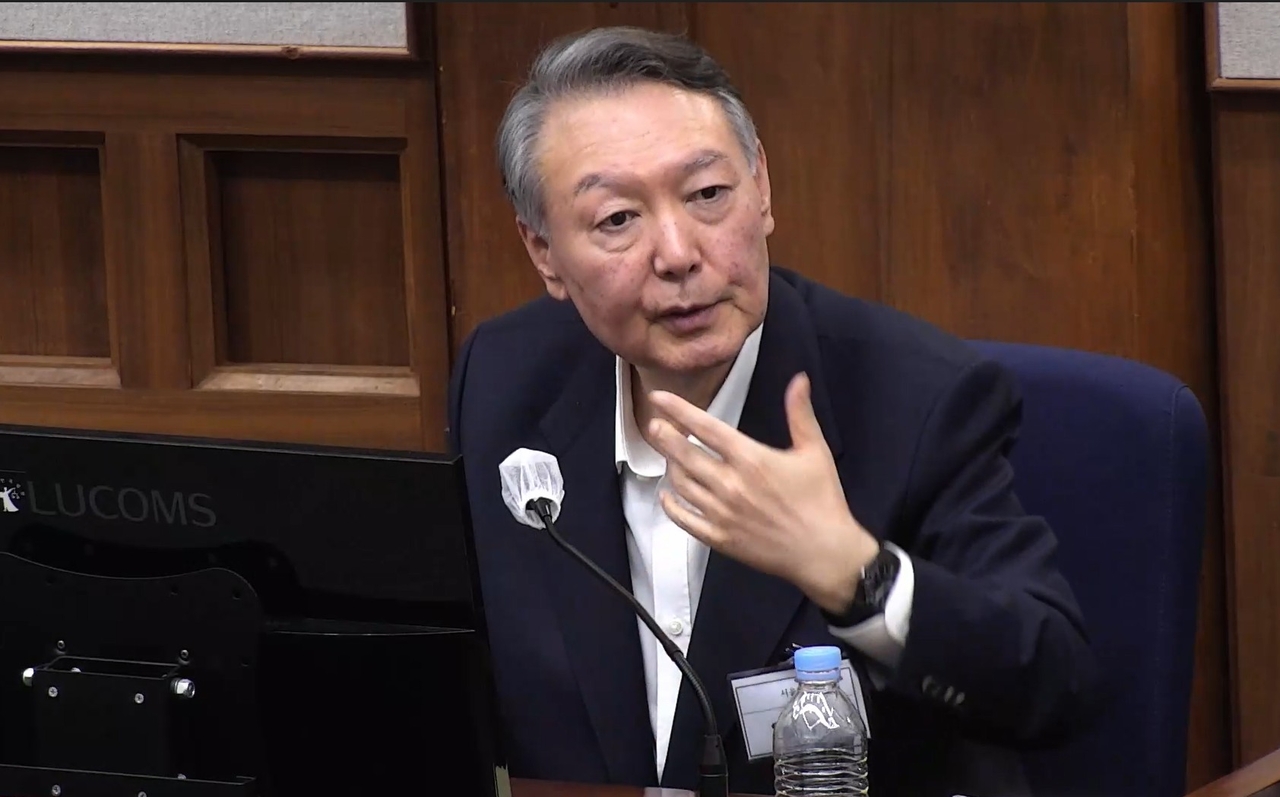
This week is set to be pivotal in determining the legal consequences of former President Yoon Suk Yeol's failed attempt to impose martial law on Dec. 3, 2024, as he faces a succession of closely watched court proceedings.
Tuesday marked the final hearing in Yoon's insurrection trial, during which Yoon's attorneys delivered their final arguments. Special counsel Cho Eun-suk had not yet submitted his sentencing request as of press time.
Five separate court proceedings are scheduled for Yoon this week alone. Trials began Monday on charges of benefitting an enemy country, while the first court ruling on a separate charge of resisting arrest is expected Friday.
Monday: Trial opens on charge of benefiting enemy
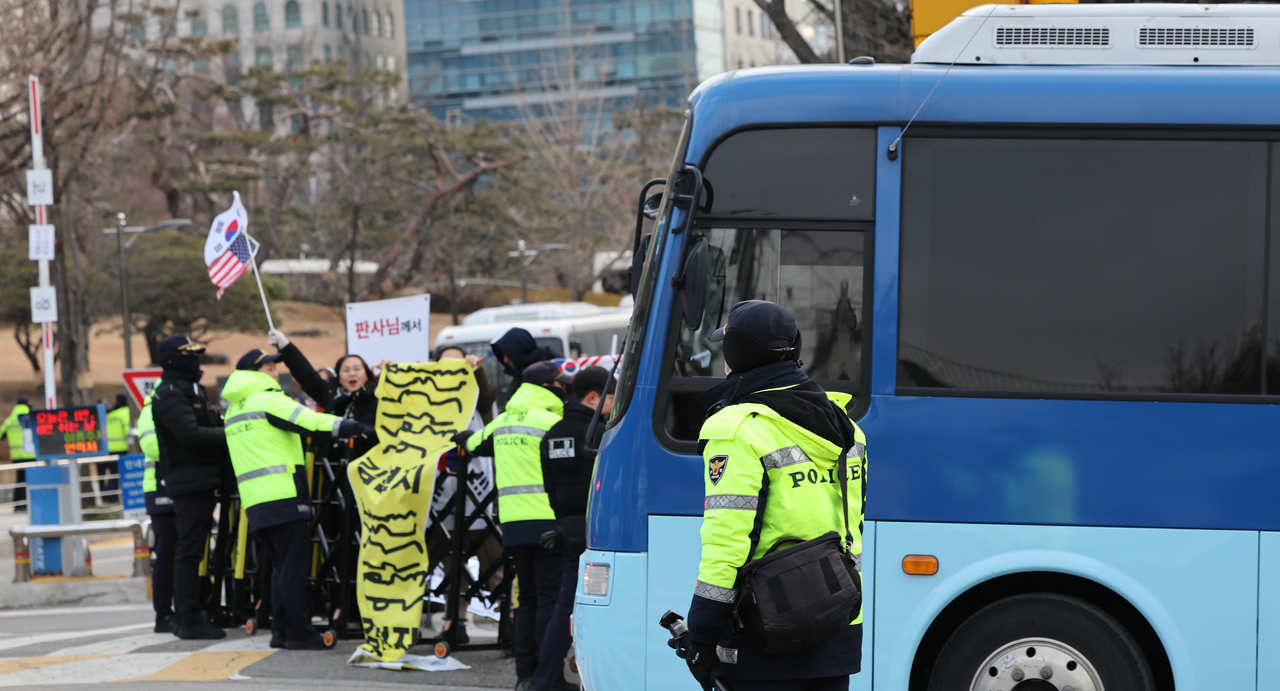
A new trial examining allegations that Yoon and his aides abused power and provided benefit to an enemy country opened at 10:15 a.m. Monday.
The special counsel alleges that Yoon authorized the dispatch of drones into North Korean airspace in October 2024 in an effort to heighten tensions with Pyongyang and use the escalation as justification for martial law.
According to the special counsel, one of the drones involved in the operation crashed near Pyongyang, potentially exposing sensitive military information, including operational details and capabilities.
The special counsel argues this constitutes the crime of "benefiting enemy" as outlined in Article 99 of the Criminal Act, which applies regardless of collusion with hostile forces if the act harms South Korea's military interests or confers a military advantage to an adversary.
The hearing was held behind closed doors to protect classified military information, but it began turbulently.
Yoon's lawyers objected to the absence of special counsel Cho, arguing that proceedings could not continue without his presence. The court went into recess for 25 minutes while waiting for Cho to arrive.
After proceedings resumed, defense attorneys filed a recusal request against the presiding judge, taking issue with his Jan. 2 decision to order an extension of Yoon's arrest, marking the first time Yoon has sought a judge's recusal.
The defense later withdrew the request at around 6 p.m. Monday, citing Yoon's intention to comply with the judicial process.
Tuesday: Yoon's final hearing on insurrection charge, preparatory hearing on perjury charge
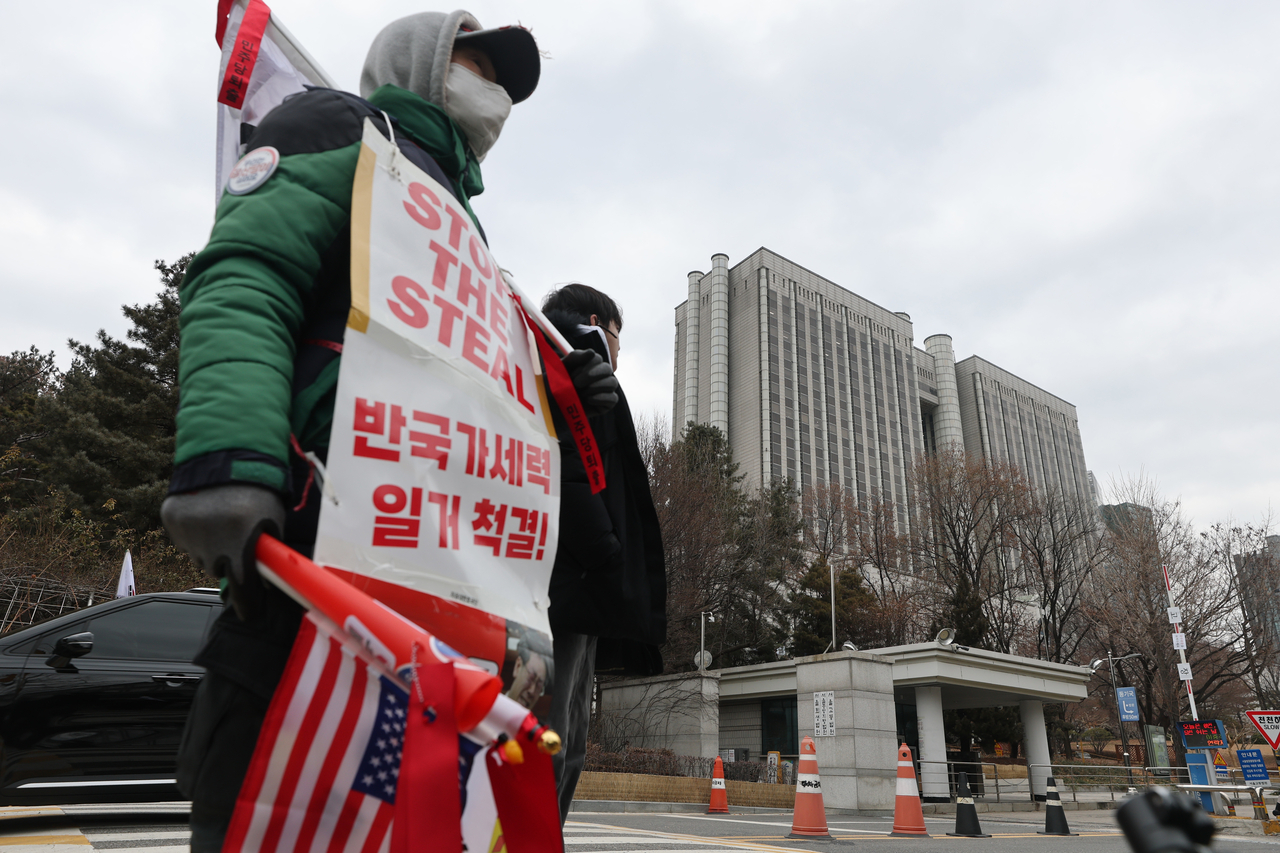
Yoon's legal team gave his final argument in the insurrection case Tuesday, with Cho expected to present the special counsel's sentencing request afterward, though that had not yet happened as of Monday at 6 p.m.
The sentencing request that had initially been scheduled for Friday was postponed after that hearing was prolonged by attorneys for former Defense Minister Kim Yong-hyun, one of several co-defendants, who spent nearly eight hours reviewing evidence.
Presiding Judge Ji Gwi-yeon delayed both Yoon's final statement and the prosecution's sentencing request, citing the need to ensure equal defense rights for all defendants.
Under South Korean law, prosecutors may seek only three possible sentences for leading an insurrection: the death penalty, life imprisonment or life imprisonment without labor.
Also on Tuesday, the court held the first preparatory hearing in a separate case in which Yoon is accused of perjury during former Prime Minister Han Duck-soo's trial on charges of aiding an insurrection.
Prosecutors allege that Yoon falsely stated that plans for a Cabinet meeting — necessary for the declaration of martial law — had been arranged in advance.
Preparatory hearings are held before formal trials to clarify the positions of the prosecution and defense and to organize the schedule of proceedings. Defendants are not required to attend.
Wednesday: Preparatory hearing in case involving overseas posting of former defense minister
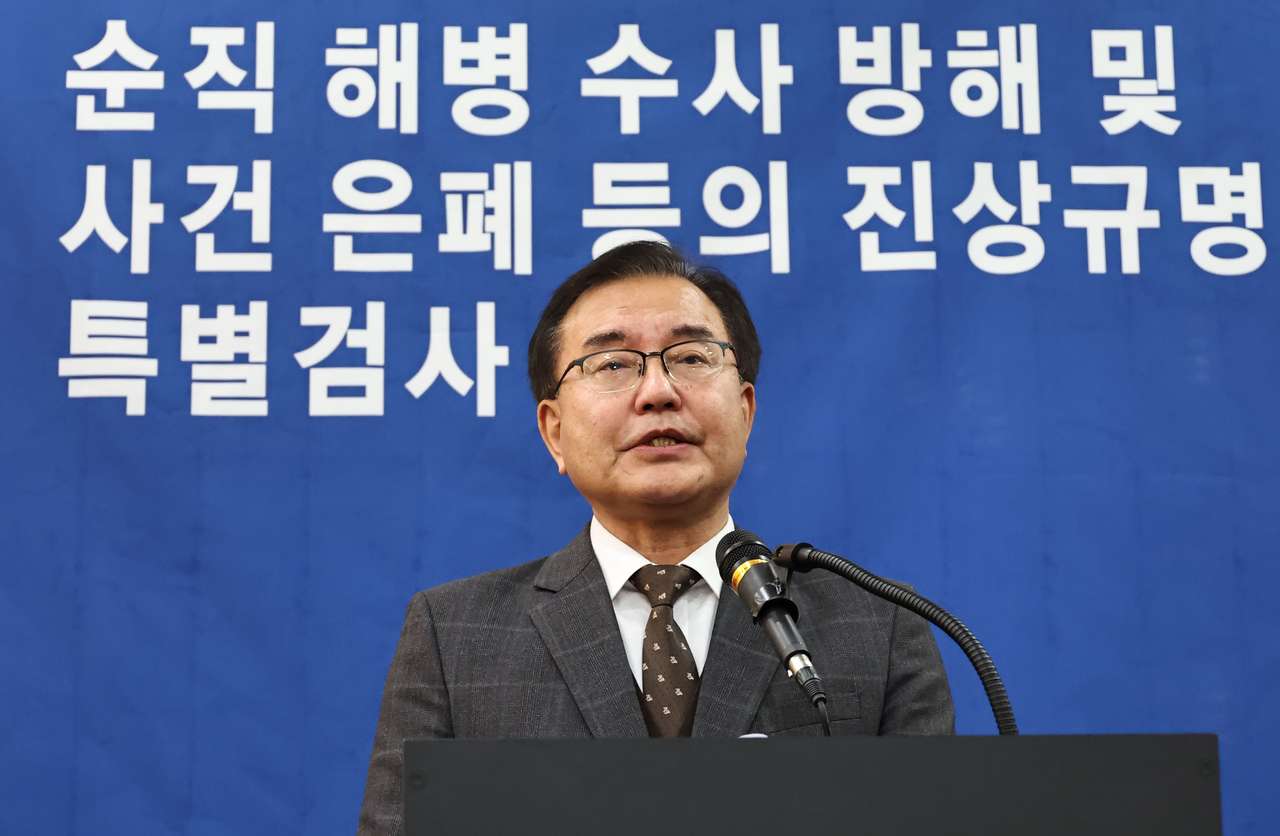
On Wednesday, the first preparatory hearing is to be held in a case brought by another special counsel investigating the death of Marine Cpl. Chae Su-geun.
The case centers on allegations that Yoon appointed Lee Jong-sup, who had served as Yoon's first defense minister, as the ambassador to Australia to facilitate his departure from South Korea while under investigation as a key suspect in the Marine's death.
Chae died in July 2023 after being swept away during a flood rescue mission, an incident that later escalated into political controversy amid allegations of interference in the investigation and attempts to shield officials from accountability.
Friday: First sentencing for Yoon
Yoon Suk Yeol's legal superweek culminates Friday with his first sentencing, as the court delivers its ruling on charges of resisting arrest.
The Seoul Central District Court is scheduled to announce the decision at around 2 p.m.
On Dec. 26, the special counsel sought a combined sentence of 10 years in prison, including five years for resisting arrest, two years for revising the martial law decree after the fact and three years for infringing on Cabinet members' deliberation rights, spreading false information to foreign media and destroying evidence.
In its final argument, the special counsel said the case involved "a grave crime in which the defendant privatized state institutions to conceal and justify his own criminal acts," adding that "the constitutional order of the Republic of Korea was seriously undermined, inflicting deep harm on the public who placed their trust in him by electing him president."
The special counsel said a heavy sentence was necessary "to restore constitutional order and the rule of law, and to prevent the recurrence of abuses of power by those at the highest levels of authority."
Yoon argued that the Corruption Investigation Office for High-ranking Officials, which attempted to arrest him in January 2025, lacked jurisdiction to investigate insurrection charges.
He also rejected accusations that he infringed on Cabinet members' deliberation rights, arguing that such deliberation amounted to mere advisory input and questioning whether the advice constituted a legally protected right and relationship of duty between the president and Cabinet ministers.
seungku99@heraldcorp.com


![[World Class] HUFS bets on Songdo, AI to redefine what a global university can do](https://wimg.heraldcorp.com/news/cms/2026/10/18/news-p.v1.20260930.7e4dbeacfc1d4d16848c0e2a441c04e6_R.jpg?type=h&h=120)
