
Rival parties push overlapping investigations even as legal experts warn extraordinary prosecutorial tools are becoming politicized
South Korea’s National Assembly is sliding into what political observers describe as a full-scale “special counsel war."
Rival parties are proposing overlapping independent probes one after another, while the ruling party chief has floated the idea of another probe to make up for any shortcomings of investigations that have not yet even approved by the Assembly.
The flood of independent probes has raised questions over whether special prosecutors, once considered an extraordinary legal tool, have become a routine political weapon amid deepening public distrust of the prosecution.
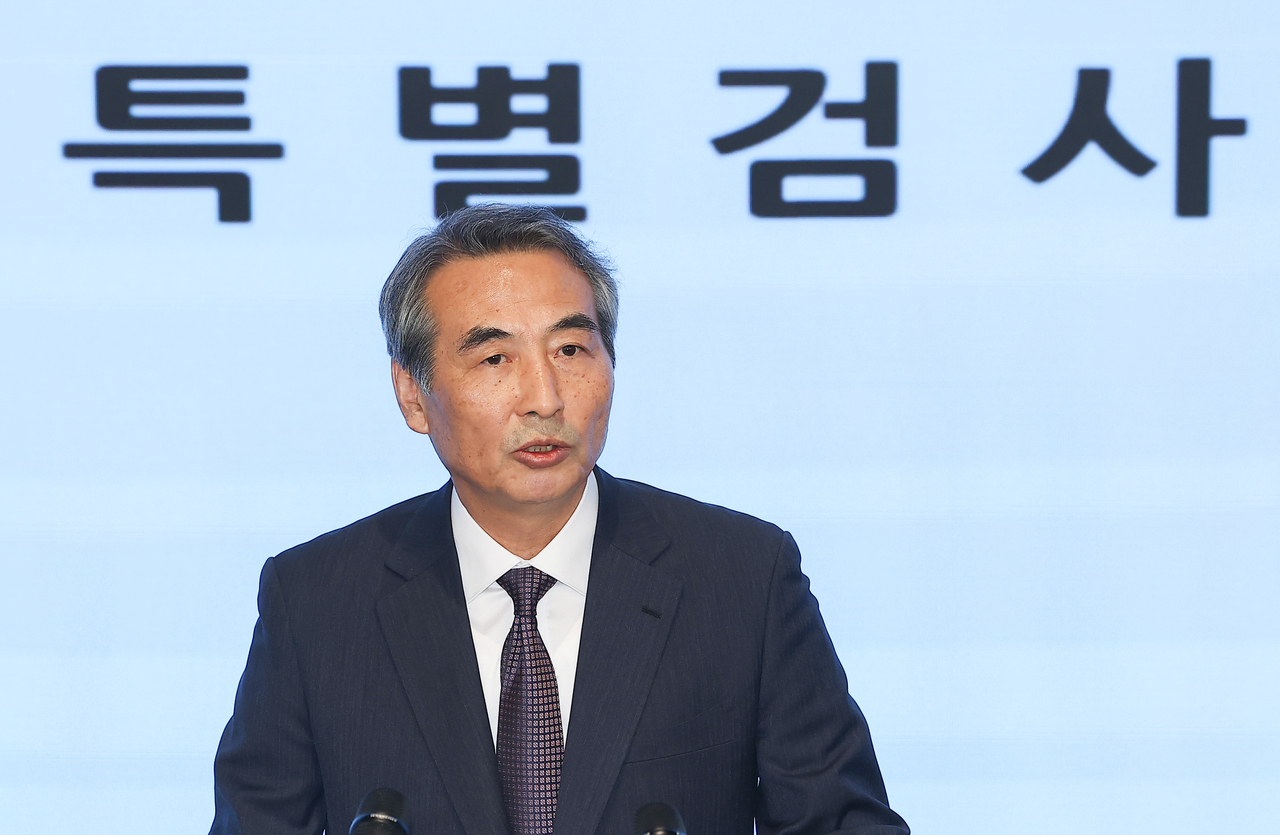
Both the ruling Democratic Party of Korea and the main opposition People Power Party have in recent weeks introduced or suggested special counsel bills on a range of issues, even as the results of three existing special counsel investigations were only just announced or wrapped-up.
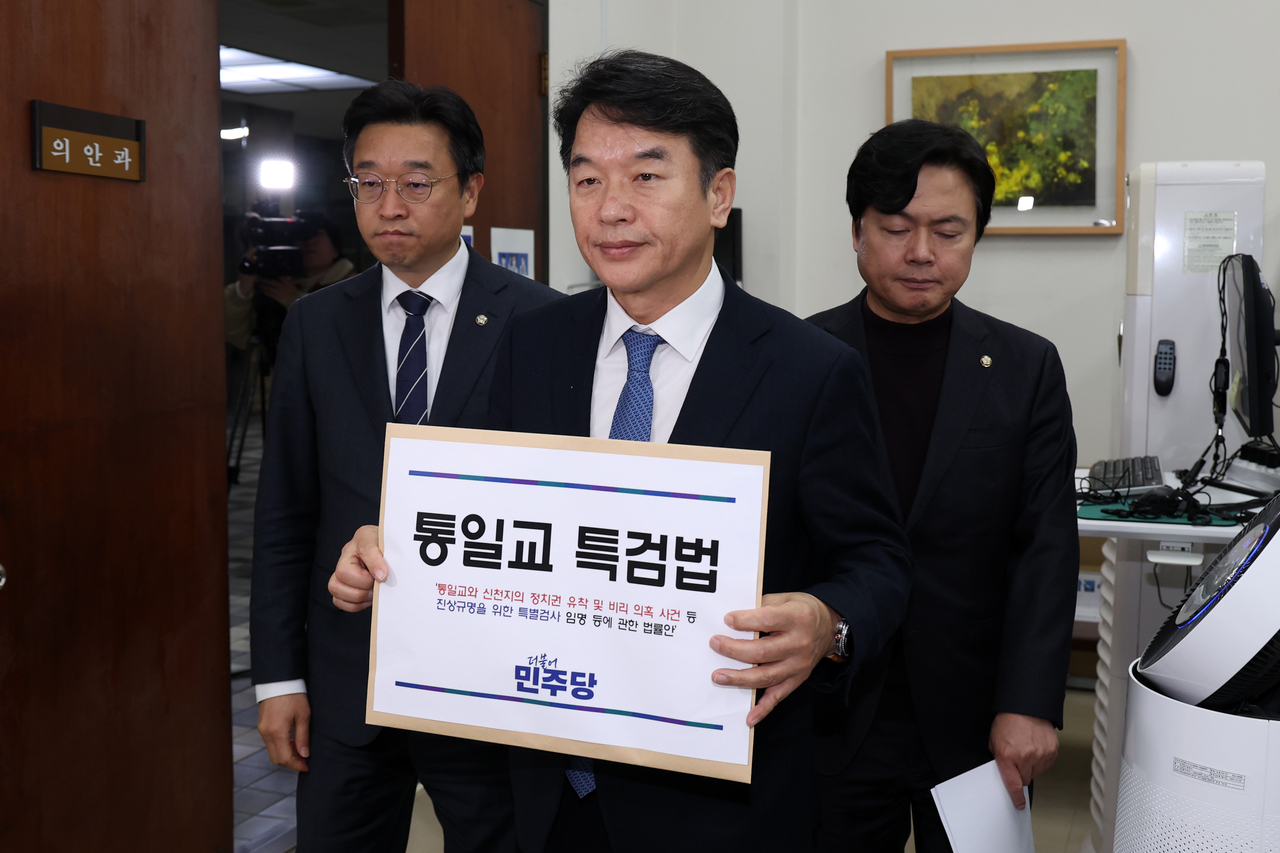
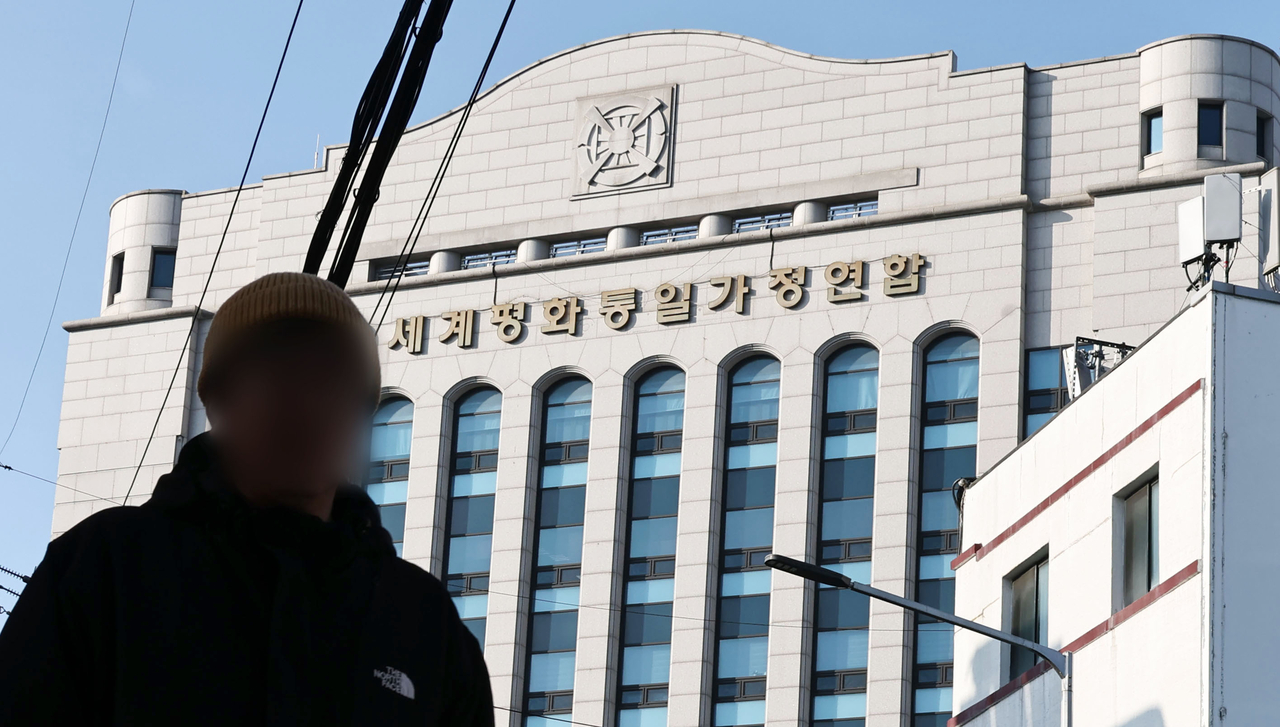
Furthermore, three such bills are Unification Church–related, each drafted by different parties, and are currently pending at the National Assembly.
The ruling party’s bill takes the broadest scope, targeting alleged illegal political funding and election interference by both the Unification Church and Shincheonji Church of Jesus, which is a splinter Christian group that also faces allegations of election interference.
A separate bill by the minor Rebuilding Korea Party focuses on illegal donations and bribery involving politicians, while a joint proposal by the People Power Party and minor New Reform Party additionally targets alleged cover-ups and interference in earlier investigations related to the religious group.
On top of it, the Democratic Party on Wednesday moved to place a second comprehensive special counsel bill and a special counsel bill targeting the Unification Church and Shincheonji on the agenda of the ruling party-led National Assembly’s Legislation and Judiciary Committee, immediately referring them to the committee’s mediation panel.
In South Korea’s legislative process, an agenda coordination committee is convened when bills are deemed contentious and require mediation between parties. The committee can deliberate on legislation for up to 90 days. However, if four of the six members vote in favor, the bill can be passed immediately, effectively allowing the majority bloc to fast-track legislation.
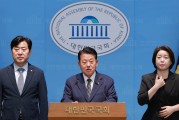
A day earlier, party chair Rep. Jung Chung-rae had already raised the prospect of a “third, comprehensive special counsel.”
Tensions escalated further after Jung openly suggested a third investigation even before the second had begun.
“If the second comprehensive special counsel proves insufficient, wouldn’t a wrap-up special counsel be necessary?” Jung said on Jan. 6 during a YouTube appearance. “We are pursuing a second special counsel because the first one was inadequate.”
The expanding range of proposed investigations has sparked debate over whether special counsels, originally designed as rare, exceptional tools, are being overused and increasingly driven by political populism.
Hwang Do-ssu, a law professor at Konkuk University, pointed out the irony of the apparent overuse of special counsels within the Assembly.
“A special counsel is appointed because people do not trust the investigative authorities such as the prosecution because they believe such existing institutions cannot be relied upon," the Seoul-based expert explained.
Special counsel investigations are most often associated with cases involving those currently or formerly in top government positions, or those with close connections to such individuals, due in part to the belief that the prosecutors' office cannot be entirely free from government influence.
Recent special counsel investigations include those into former President Park Geun-hye, who was found guilt of allowing personal connections to influence state affairs in 2016, and former President Lee Myung-bak and his alleged connection to investment firm MBK in 2008.
"But the Democratic Party claims it has already completed prosecutorial reform and stripped prosecutors of their investigative powers. If that is the case, then the current investigative agencies should be trustworthy — by the Democratic Party’s own standards. There should be no need for a special counsel. Yet they are still pushing for one."
According to Hwang, the contradiction lies in invoking distrust of investigative bodies while simultaneously asserting that those same institutions have already been fundamentally reformed.
"This is a very dangerous line of thinking because it suggests an intention to engineer an investigation that produces conclusions tailored to their political preferences — this amounts to using the judicial system as a tool of populism.”
Political commentator Choi Jin, head of the Seoul-based Institute of Presidential Leadership, echoed Hwang and said that the trend reflects “an eruption of public distrust toward existing power institutions — such as the prosecution, the judiciary and the police.”
As the ruling party prepares to push the second comprehensive special counsel and the Unification Church–Shincheonji special counsel bills through the scheduled Jan. 15 plenary session — even without bipartisan agreement — the Assembly appears headed for a prolonged confrontation.
The opposition has warned it will launch a high-intensity filibuster to block passage when the scheduled plenary meeting convenes next week. However, given the numerical advantage held by the ruling camp within the Assembly, both special counsel bills are widely expected to clear the committee
Hwang also warned of what he described as a fundamental inversion of the special counsel system’s original purpose, noting that such probes have traditionally been demanded by opposition parties rather than the ruling camp.
“Special counsels are typically sought by the opposition when it believes the existing prosecution system cannot be trusted,” he said. “In such cases, the opposition negotiates through the National Assembly to appoint an independent prosecutor to ensure a fair and credible investigation.”
mkjung@heraldcorp.com