

Memory rebound helps offset HBM gap with SK hynix
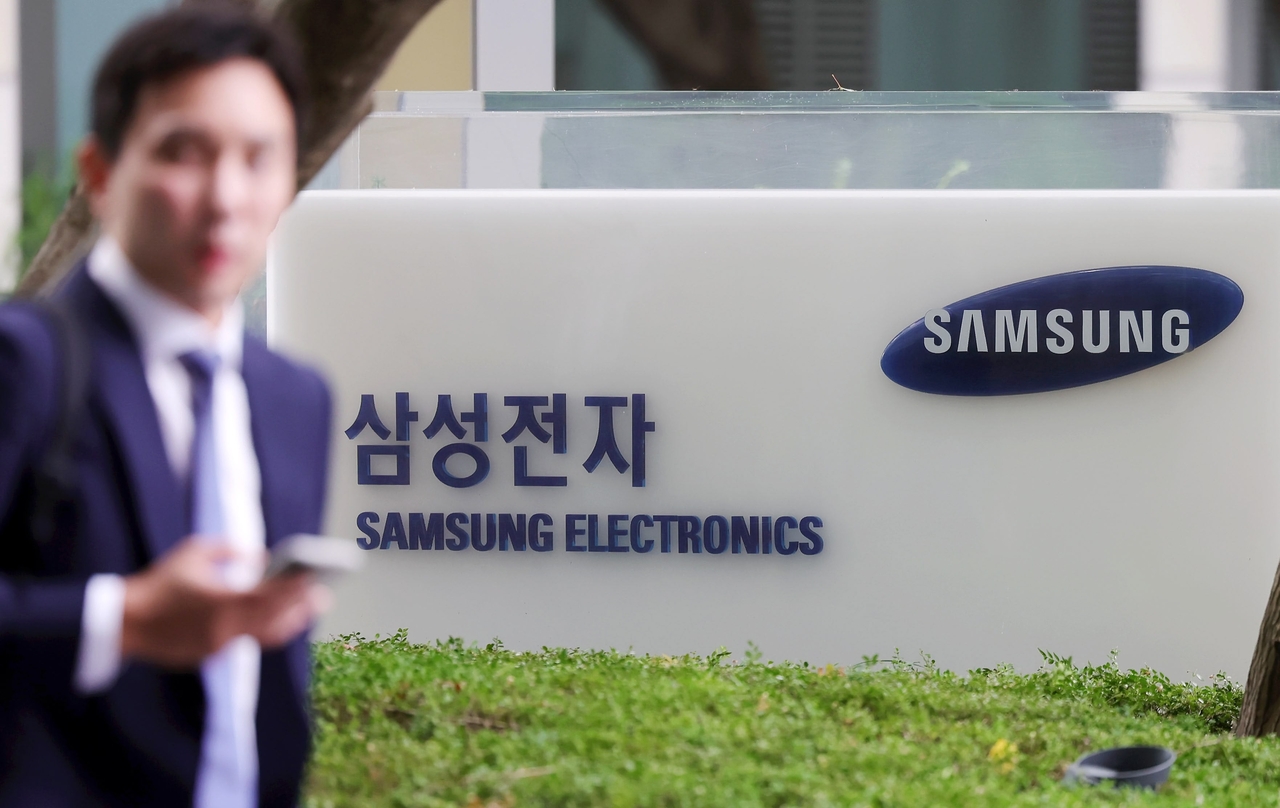
Samsung Electronics is expected to deliver a sharply stronger fourth quarter as legacy memory prices rebounded late in 2025, extending its recovery from the dip in profits it endured during the 2023 memory downturn.
Samsung is scheduled to release preliminary earnings for the October to December period of 2025 this week. The baseline market consensus compiled by FnGuide, a local financial data provider that aggregates brokerage earnings forecasts, estimates fourth quarter revenue at 88.62 trillion won ($61.3 billion) and operating profit at around 16 trillion won.
That would represent a year-on-year increase of 11.8 percent in revenue and a 146.5 percent jump in operating profit.
More recent brokerage estimates indicate a stronger quarter than this consensus suggests. According to data compiled by Yonhap Infomax from reports issued by 10 local securities firms over the past month, Samsung’s average operating profit estimate stands at 18.99 trillion won, with more than 16 trillion won expected to be generated by the Device Solutions semiconductor division.
This would mark a substantial sequential improvement from the third quarter when operating profit stood at 12.20 trillion won.
IBK Securities published the most aggressive outlook, estimating fourth quarter operating profit at 21.75 trillion won. IBK analyst Kim Woon-ho attributed the upward revision to faster-than-expected memory price increases and the impact of a weaker won, noting that most semiconductor transactions are settled in US dollars, which amplifies reported earnings when converted into local currency.
Historically, Samsung’s highest quarterly operating profit remains 17.57 trillion won, recorded in the third quarter of 2018 during the last global memory supercycle.
The rebound in earnings coincided with a late-2025 spike in memory prices, particularly in legacy DRAM and NAND. According to DRAMeXchange, the average fixed contract price for PC DRAM DDR4 8Gb rose from $1.35 at the end of 2024 to $9.30 at the end of 2025, a nearly sevenfold increase. Prices climbed 32.9 percent in the fourth quarter alone, reaching the highest level since tracking began in 2016.
DDR4, first introduced in 2014, is an older memory standard. The price surge has been driven primarily by supply constraints rather than a broad-based expansion in end demand, as major memory makers reduced or converted legacy production lines to focus on high-bandwidth memory used in servers and artificial intelligence accelerators.
NAND flash prices followed a similar path, with DRAMeXchange data showing that prices for general-purpose 128Gb NAND products used in memory cards and USB devices rose 2.76 times over the year.
Samsung’s scale has positioned it to benefit disproportionately from this environment. According to Counterpoint Research, Samsung reclaimed the top spot in the global memory market in the third quarter of 2025 with $19.4 billion in memory revenue, supported by strong demand for conventional DRAM and NAND. But Samsung’s DRAM revenue share fell from 40 percent a year earlier to 33 percent, trailing SK hynix at 34 percent, while SK hynix maintained clear leadership in HBM.
mjh@heraldcorp.com


![[World Class] HUFS bets on Songdo, AI to redefine what a global university can do](https://wimg.heraldcorp.com/news/cms/2026/10/18/news-p.v1.20260930.7e4dbeacfc1d4d16848c0e2a441c04e6_R.jpg?type=h&h=120)
