South Korea’s consumer prices rose 2.1 percent in 2025, marking the slowest pace in five years, government data showed Wednesday.
The consumer price index, a key gauge of inflation, averaged 116.61 for the year, up 2.1 percent from a year earlier, according to the Ministry of Data and Statistics. The increase eased by 0.2 percentage point from the 2.3 percent rise in 2024.
The cost-of-living index, seen as the indicator best reflecting the inflation felt by households, rose 2.4 percent this year, the slowest pace since 2020.
Consumer price growth slowed to 1.7 percent in August before rebounding to 2.1 percent in September, remaining above the government’s 2 percent inflation target thereafter.
In December alone, consumer prices climbed 2.3 percent from a year earlier, easing by 0.1 percentage point from November. The reading marked a fourth consecutive month above the government’s target.
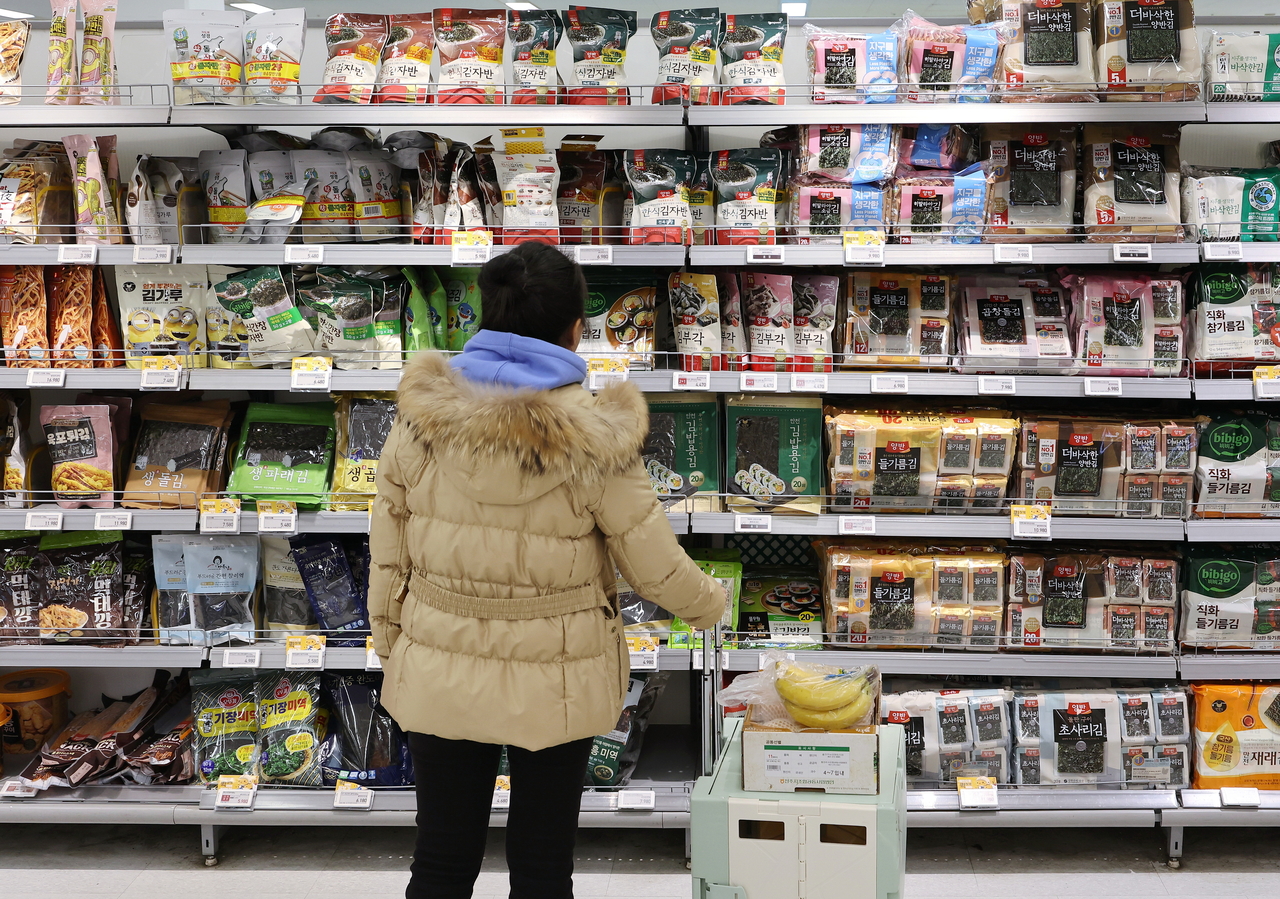
Officials at the Data Ministry cited persistent price increases in agricultural, livestock and fishery products as a key driver of recent inflation. Prices in the sector rose 4.1 percent on-year in December, contributing 0.32 percentage point to the overall increase in consumer prices.
Rising oil prices also added to inflation pressures, with the won’s continued weakness against the US dollar pushing up import costs. Oil prices rose 6.1 percent year-on-year in December, the biggest increase this year since February’s 6.3 percent gain. Petroleum prices jumped 10.8 percent, while gasoline rose 5.7 percent.
On an annual basis, prices of agricultural, livestock and fishery products rose 2.4 percent, with livestock and fishery prices climbing 4.8 percent and 5.9 percent, respectively.
Average oil prices over the year rose 2.4 percent from the previous year's average, turning positive for the first time in three years after falling 1.1 percent in 2024 and 11.1 percent in 2023.
jwc@heraldcorp.com