
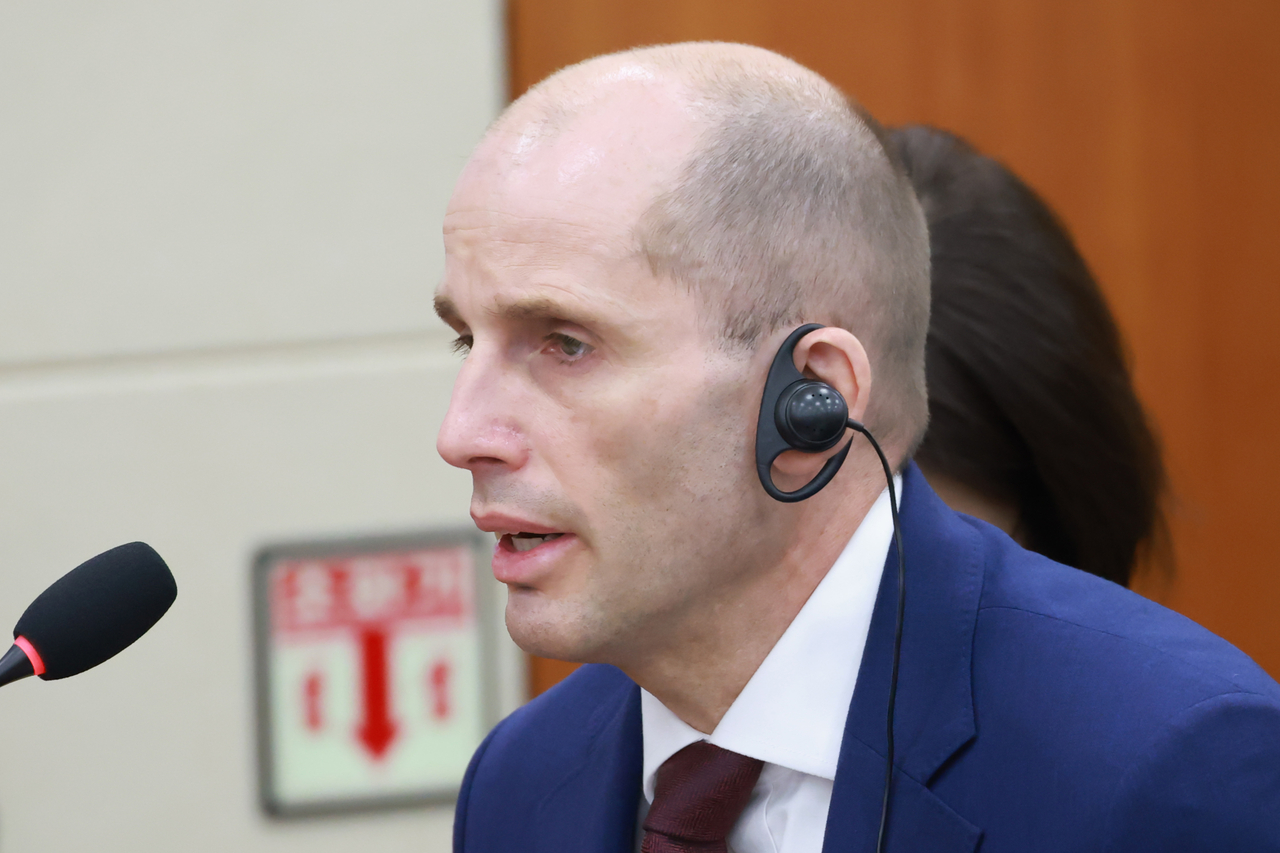
South Korea’s National Intelligence Service on Tuesday denied Coupang interim CEO Harold Rogers’ claim that the company’s internal investigation into a large-scale data breach was conducted “following the instructions or orders" of the intelligence agency.
The NIS, in a statement released to the media, emphasized that it had issued no instructions, orders or approvals of any kind regarding Coupang’s self-led investigation of key evidence, which is currently under police investigation.
Last week, Coupang, in a move that surprised Korean authorities, reported that its own investigation had determined the scale of the data breach affected only about 3,000 users, far fewer than widely reported.
During Tuesday's parliamentary hearing, Rogers defended the company’s decision to look into the evidence themselves and contact the suspect, claiming it was done in line with what the NIS had suggested.
The NIS, countering Rogers’ testimony, said Coupang had already duplicated the forensic images of hard drives on Dec. 15, two days before the agency made any contact, contradicting Rogers’ account of the timing and the agency’s involvement.
The agency further dismissed his claims that government authorities retained copies of the forensic images, transferred the originals to the police and authorized Coupang to keep additional copies.
Regarding Rogers’ account that the NIS had instructed Coupang to contact the former employee responsible for the data leak, the agency said it had repeatedly underscored that “the final decision is up to Coupang” when the company sought advice on whether to reach out to the leaker.
“We have earnestly warned Coupang that false statements by its CEO are a serious matter that undermines trust in government agencies,” the NIS said.
Earlier in the hearing, Korea’s Deputy Prime Minister and Science Minister Bae Kyung-hoon expressed “serious concern” that Coupang disclosed the results of its own investigation without consulting authorities, calling the move “extremely malicious.” Bae warned that Coupang’s claim limiting the breach to about 3,000 users was unfounded, noting the data could have been uploaded to cloud servers.
hyejin2@heraldcorp.com