South Korea's industrial output grew from a month earlier in November, driven by robust semiconductor production, while retail sales fell at their fastest pace in 21 months, government data showed Tuesday.
Retail sales, a gauge of private spending, dropped 3.3 percent over the period, following a brief rebound the previous month, according to data from the Ministry of Data and Statistics.
This marked the steepest decline since February 2024, when it dropped 3.1 percent on-month.
The downturn was largely driven by weaker sales of food and apparel, reflecting the fading impact of the extended Chuseok holiday that fell in early October.
"There is also a base effect following the increase in October due to the Chuseok holiday, a brief cold spell and various discount campaigns," Lee Doo-won of the ministry said.
Sales of semidurable goods, such as clothing, dropped 3.6 percent, while sales of non-durable goods, including food, declined 4.3 percent, marking the sharpest month-on-month drop since February 2024.
However, Lee noted that cumulative retail sales rose 0.4 percent during the January-November period and said there remains a possibility that annual retail sales for 2025 could turn positive, ending a three-year streak of declines.
Industrial production rose 0.9 percent on-month in November.
Industrial output has fluctuated in recent months, falling 0.3 percent in August, rising 1.3 percent in September and declining 2.7 percent in October.
The output of the mining and manufacturing sector, considered the backbone of the economy, gained 0.6 percent on-month in November, the ministry said.
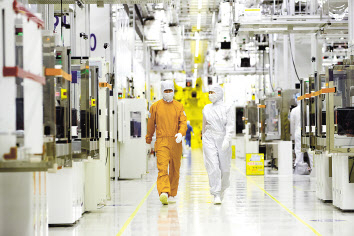
Notably, semiconductor production jumped 7.5 percent, largely due to strong outbound shipments and a base effect from the previous month.
The ministry said chip output surged as global semiconductor demand continued to rise amid the artificial intelligence boom.
Facility investment increased 1.5 percent on-month, led by higher investment in machinery, although investment in transportation equipment, including automobiles, declined.
The ministry said looking ahead, exports driven by robust global semiconductor demand, along with solid consumer sentiment, are expected to continue supporting the economy. (Yonhap)