

Key architectural elements of Gwanwoldang were unveiled to the public on Monday, offering a rare look at a long-displaced piece of Korea’s architectural heritage.
The Overseas Korean Cultural Heritage Foundation is presenting “The Return of Gwanwoldang: Walking Through Time” at Gyejodang Hall in Gyeongbokgung. The special exhibition comprehensively documents the disassembling and repatriation of Gwanwoldang, which had remained in Japan for about 100 years.
Believed to have been built in the late Joseon era (1392-1910) as a royal shrine, Gwanwoldang was taken to Japan during the country's colonial rule of Korea in the early 20th century (1910-1945). It passed through Tokyo before being installed on the grounds of Kotoku-in, a Buddhist temple in Kamakura city, just south of Tokyo. The structure returned to Korea in May after its unconditional donation by Sato Takao, the temple’s chief priest.
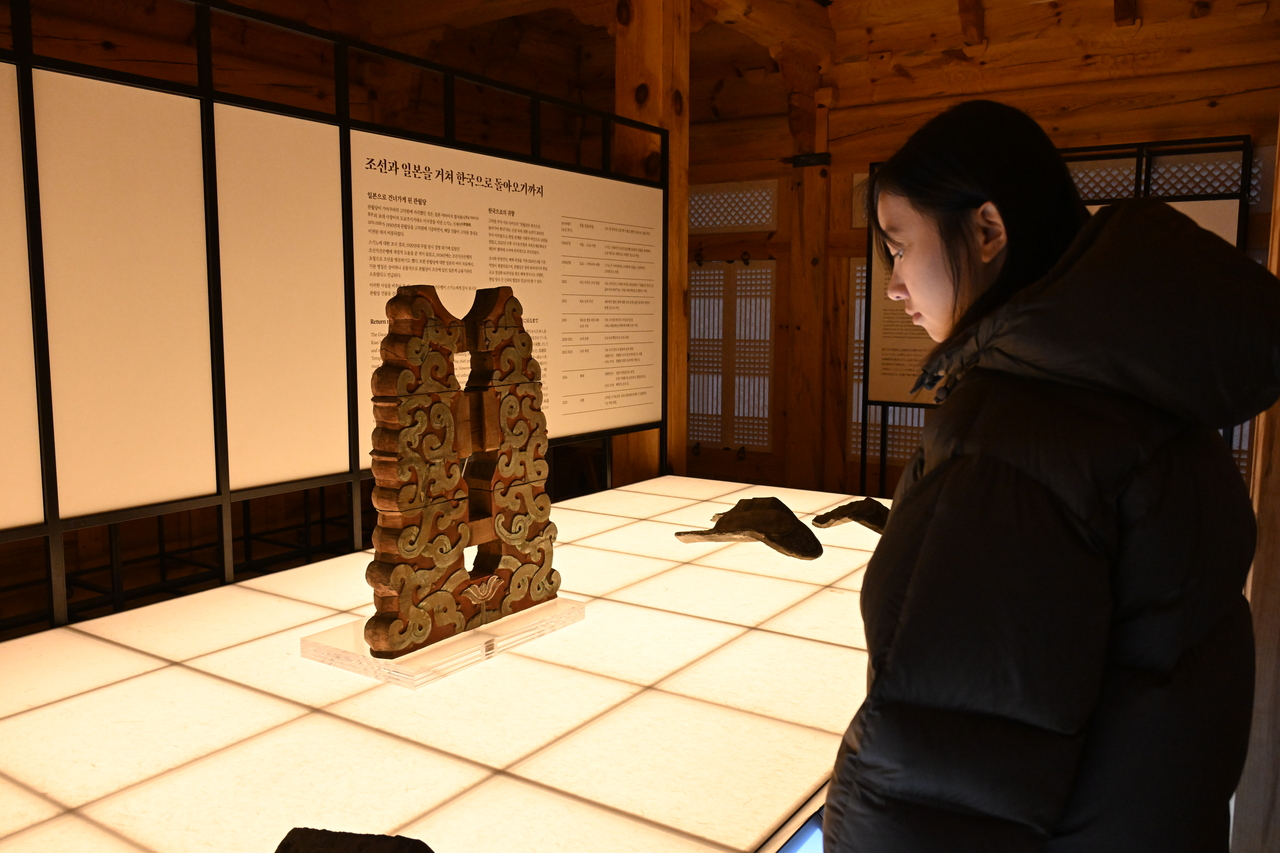
The exhibition displays major components of the building, including principal beams, supporting brackets and decorative roof elements. Particularly striking is the daegong, an architectural bracket that supports the center of the roof. The elaborately carved lotus and vine patterns are relatively large and elaborate for a small building, suggesting that the architecture was "of exceptionally high status."
Archival panels and videos installed in the gallery trace the disassembly of the structure and its journey back to Korea, illustrating the process required to transport the building piece by piece.
“This exhibition highlights Gwanwoldang’s journey through records while also expressing gratitude for the donation,” an official at the Overseas Korean Cultural Heritage Foundation said.
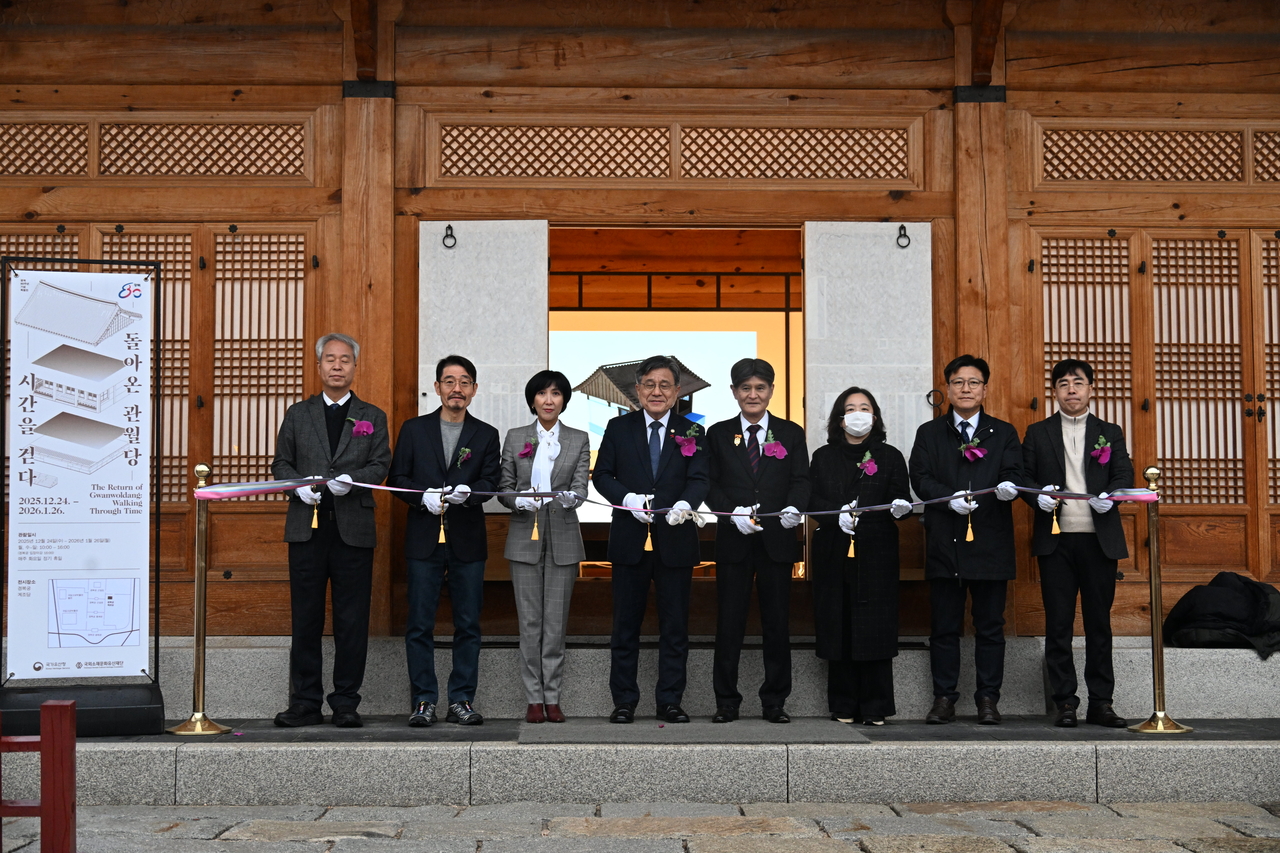
At the opening ceremony held the day before the exhibition's official opening, Huh Min, head of the Korea Heritage Service, presented Sato with a presidential citation in recognition of his unconditional donation of the structure.
“This occasion was made possible by the noble decision of the Ven. Sato Takao, who returned Gwanwoldang to its rightful home without imposing any conditions, guided by the belief that cultural heritage should return to the land of its roots,” Huh said. “In honoring his act, the Korean government seeks to recognize the trust and friendship that transcend borders and ideologies.”
“There has been an unfortunate past between our two countries, and regrettably, we cannot change it,” Sato said. “But I am convinced that the future of Korea and Japan is something we can build together.”
He expressed hope that Gwanwoldang would be preserved as a lasting symbol of friendship between the two nations. Sato also said he would donate the entire cash award accompanying the presidential citation to the foundation.
The exhibition opened on Wednesday and runs through Jan. 26. Entrance is free to all Gyeongbokgung visitors.
hwangdh@heraldcorp.com