Lee says NK fears S. Korean invasion; Minister to pursue sanctions relief
President Lee Jae Myung said Friday that the two Koreas, having once merely postured as enemies, now seem to be becoming real ones, blaming the change on an unnecessary “power-against-power” policy.
The remarks made clear his belief that inter-Korean hostility was caused by the previous Yoon Suk Yeol administration’s hardline North Korea policy, while signaling his intention to shift toward appeasement of the North.
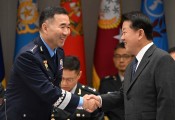
At a joint briefing by the Ministries of Unification and Foreign Affairs, Lee instructed the Unification Ministry to take the lead in "nurturing the early shoots of inter-Korean trust." He appears to be siding with the Unification Ministry in a dispute between its “self-reliance” camp, which prioritizes inter-Korean relations in North Korea policy, and the Foreign Ministry’s “alliance” faction, which emphasizes close coordination with the United States.
Unification Minister Chung Dong-young said that sanctions on North Korea have largely lost effectiveness, and that he would push for sanctions relief to bolster inter-Korean and multilateral exchanges and cooperation.
Sanctions on North Korea have indeed been weakened as Pyongyang moves closer to Beijing and Moscow amid growing US-China rivalry. Nevertheless, the US-led international community continues to uphold the sanctions regime. If it shifts in the direction Chung advocates, the collective effort to keep piling up pressure on North Korea thus far would be rendered futile.
Chung said Seoul needs to put itself in North Korea’s shoes, noting Pyongyang’s claim that it cannot accept offers of dialogue while “a knife is held to its throat.” He argued that North Korea’s nuclear and missile development progressed under conditions of sanctions and pressure.
In his view, North Korea’s threats to South Korea’s security appear to be overlooked. Sanctions and pressure were imposed in response to Pyongyang’s nuclear and missile development, not the other way around. Loosening its defense posture unilaterally to engage in a dialogue on North Korea's terms would be a gamble with its security.
President Lee said North Korea, fearing a possible South Korean invasion, is reinforcing triple-layer barbed-wire fences and installing antitank obstacles.
It is perplexing that a leader responsible for safeguarding the lives and property of South Koreans would sympathize with North Korea’s anxieties while the country remains in a military confrontation with the North. The president’s understanding of the security situation appears to be far removed from reality. Moreover, the triple rows of barbed wire appear aimed at preventing North Korean residents from escaping to the South. The president ought to address South Koreans’ anxiety over North Korea’s nuclear threats before showing concern for North Korea.
The Lee administration has maintained an appeasement policy, banning propaganda balloon launches into North Korea, shutting down anti-North radio broadcasts, and dismantling border loudspeakers.
At the briefing, Chung floated ambitious initiatives, such as a Seoul-Beijing high-speed rail link via North Korea and a “peace tour” of a North Korean seaside resort. Though meant to start dialogue, the projects would be feasible only if sanctions on Pyongyang were lifted. It is difficult for South Korea to resolve North Korea-related issues unilaterally without coordination with the United States and the international community it leads. Even if US-North Korea dialogue resumes, South Korea can best safeguard its national interests by moving in step with the United States.
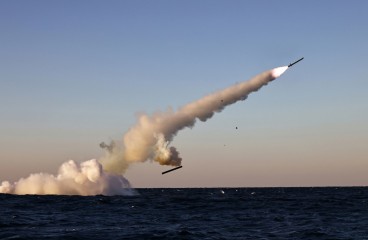
The problem is that North Korea has not altered its stance despite Seoul’s conciliatory signals. It has launched ballistic missiles twice since the current South Korean government took office and remains focused on securing advanced weapons and bolstering its nuclear and missile capabilities. In this situation, easing sanctions on the premise that they have lost their effectiveness is not persuasive and would be risky if rushed.
Sustainable peace rests on robust alliance deterrence and mutual trust between allies. Dialogue based on Seoul's one-sided lowering of its guard is prone to fail, as past breakdowns in inter-Korean relations attest.
khnews@heraldcorp.com