
At the center of viral attention, Park returns to the stage in 'Life of Pi,' discovering an unexpected emotional intensity

Tears rarely come easily to actor Park Jeong-min on film sets, by his own admission. But onstage these days, adrift in the Pacific Ocean with a Bengal tiger, Park finds himself overwhelmed with emotion.
“Every performance, I cry to the point where I can’t control it. Even I’m surprised by myself,” Park said during a group interview with reporters in Seoul, Thursday.
Park, 38, has returned to the theater for the first time in eight years, starring in the Korean premiere of the “Life of Pi” stage adaptation, now running at the GS Arts Center in Seoul.
Though Park announced earlier that he was essentially taking an acting sabbatical, he never disappeared from the media spotlight. He appeared in series and films that had been shot earlier, while also running the independent publishing house Muze, frequently making headlines.
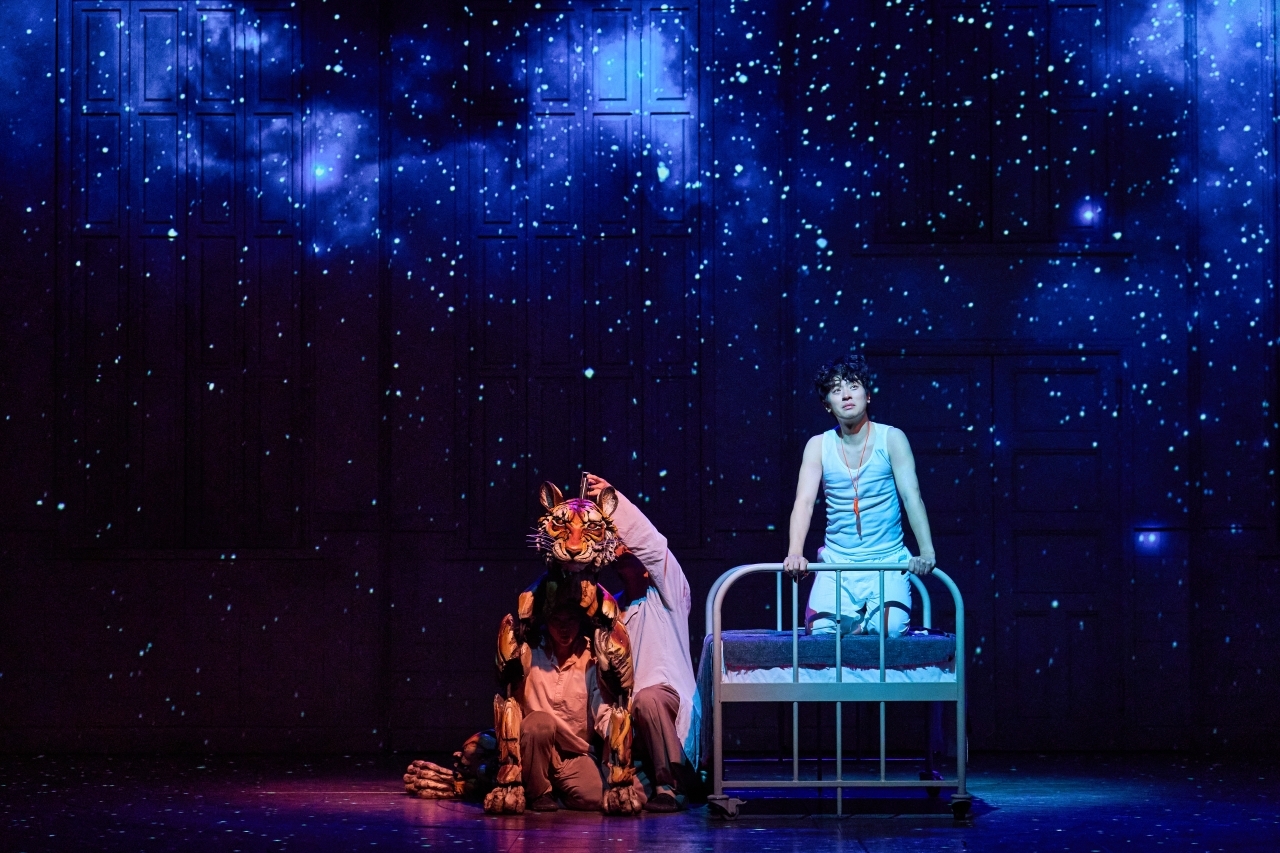
Based on Yann Martel’s novel and following the acclaimed film adaptation, “Life of Pi” tells the epic survival story of Pi, a boy stranded in the Pacific Ocean with a Bengal tiger named Richard Parker for 227 days. Park plays Pi, an intelligent and endlessly curious boy who questions the world as he struggles to survive. He alternates the role with the musical actor Park Kang-hyun.
“What makes this role so difficult is how violently Pi’s emotional state changes from joy and curiosity to despair and terror, all of it, one after another.”
Through Pi, Park said he has come to recognize emotions he had not previously seen in himself.
“I’m not a very emotional person,” Park said. “On film sets, I’m known as an actor without tears. But in this show, I cry every night. At first, I worried whether that emotional wave would ever arrive. Now I’ve learned to trust that it will.”
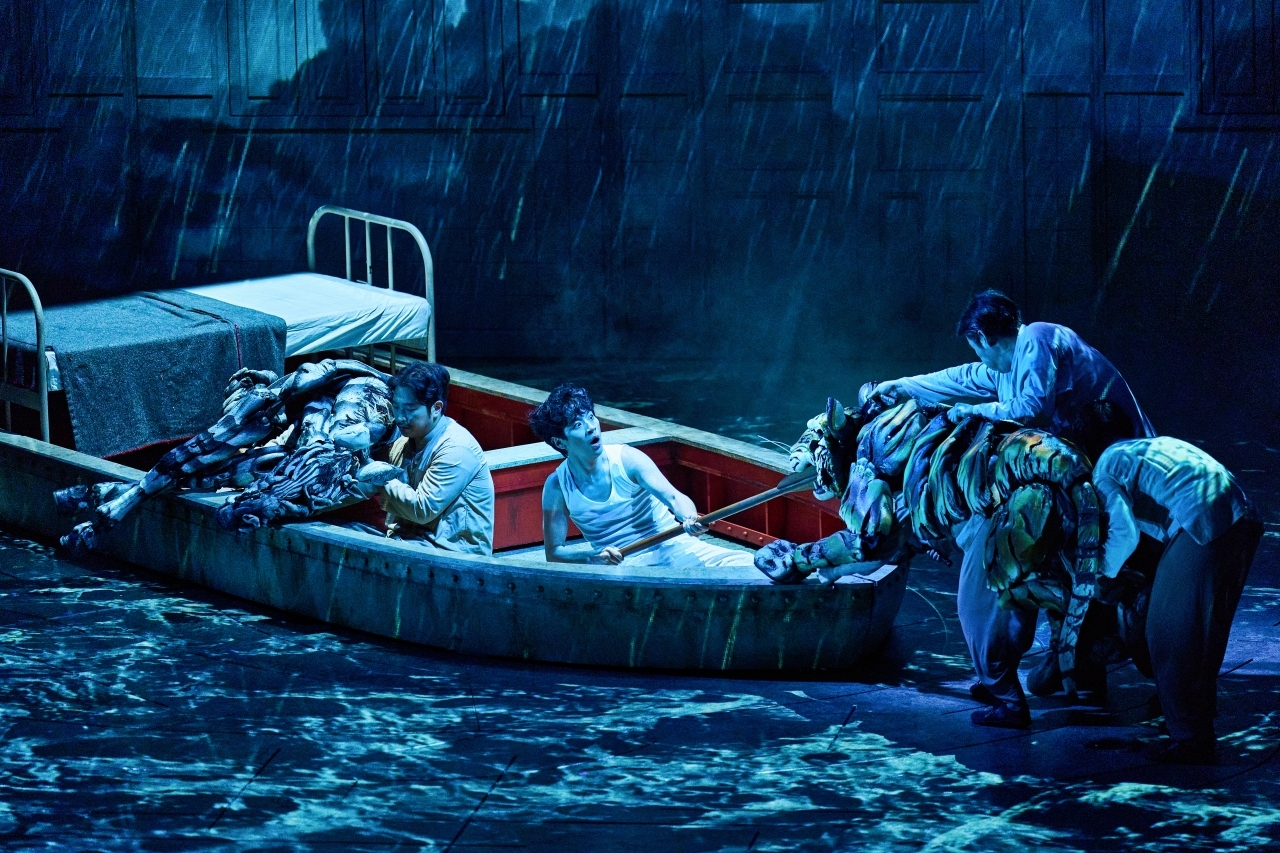
Much of that emotional exchange, he added, comes from silent communication between actors onstage, shared through their eyes. One of the defining features of the production is its use of puppetry to bring animals, including Richard Parker, operated by three puppeteers, vividly to life.
“At first, acting with puppets was incredibly difficult,” Park said. “Everything is an agreement. Every movement is carefully planned in advance. I’m essentially the fourth puppeteer. If one person breaks that agreement, the rhythm collapses.”
Park said the tiger looks different to him depending on Pi’s emotional state. “When Pi is afraid, the tiger looks more ferocious. The puppet itself doesn’t change, but how I engage with it changes how I see it. That felt almost magical.”

Park recalled receiving occasional offers to return to the stage over the years but turning them down out of fear. He said he was persuaded after watching a video of the production online.
“It was astonishing. I thought it could be something truly special," he said. “I don’t think my acting skills have dramatically improved. But time has changed my mindset. What felt unbearable before is now more manageable and more enjoyable.”
Despite being at the center of viral attention this year, Park insisted his daily life remains largely unchanged.
“Nothing about my life has really changed. On days off, I go to work (at the publishing house). On show days, I perform. I prepare, I rehearse. I’m grateful for the attention, but honestly, I’m just very busy.”
“Life of Pi” runs through March 2.
hwangdh@heraldcorp.com