
Discussions have stalled since 2021, leaving the lingering question: 'Why do we need one?'
When building a house, plans typically revolve around who will live there, how each room will be used and how large the structure should be.
The government-led project previously called the “Lee Kun-hee Donation Hall" appears to have reversed that logic: build first, decide the details later.
Temporarily renamed the “Songhyeon Cultural Center,” the project aims to house more than 23,000 works donated to the state in 2021 by the late Samsung founder Lee Kun-hee.
“The donor’s family did not wish to use the donor’s name, so the name (of the project) was changed,” an official from the Ministry of Culture, Sports and Tourism told The Korea Herald on Friday.
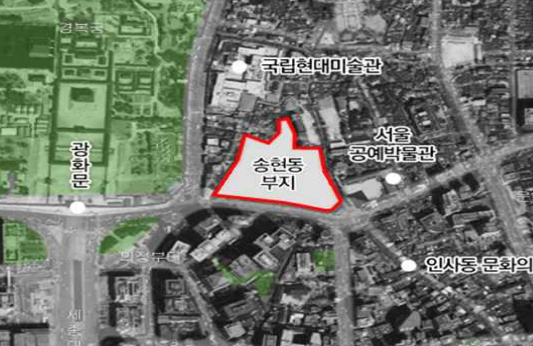
The designated site is Songhyeon Green Plaza, a 37,000-square-meter space in Songhyeon-dong, central Seoul, and the Songhyeon Cultural Center will take up roughly a quarter of the plot. The plaza is close to Samcheong-dong's art cluster and Seoul's main palace, Gyeongbokgung.
The project was launched four years ago after Lee’s family donated the artworks to the state. The donation drew considerable attention for its unprecedented scale.
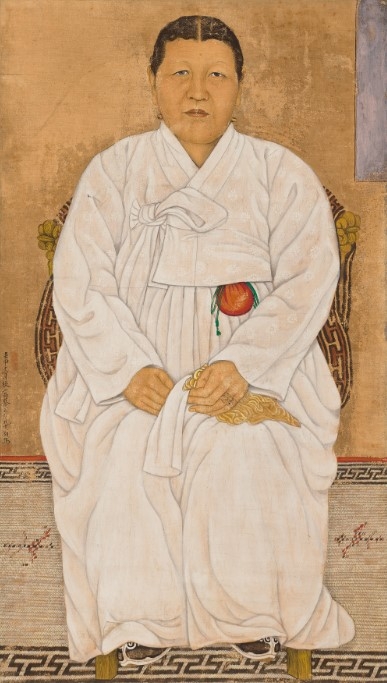
Lee, an avid collector, collected a wide range of Korean and international art, spanning from ancient to modern. Roughly 93 percent (21,600) of the 23,181 items found a home at the National Museum of Korea, including 14 National Treasures and 46 Treasures.
Some 1,488 modern artworks were donated to the National Museum of Modern and Contemporary Art, Korea, while 143 works were given to regional museums such as the Park Soo Keun Museum in Gangwon Province and Daegu Art Museum.
The donation was so exciting to Korea that the government at the time claimed a separate building was needed to house the collection in one place. The announcement was made two months after the donation.
At a related press briefing, reporters questioned the role of the hall, how it would be run, and whether works already housed in museums would be relocated to the hall.
In sum, the hall is to commemorate the donor’s will, facilitate further research on the donated works, unite the works in one place and secure ample storage. Other details have yet to be confirmed.
When The Korea Herald followed up with the Culture Ministry four years later, these answers remained largely unchanged. Key questions, including who would operate the museum and whether works already donated to museums would be transferred to the donation hall, were unanswered.
“All such issues will be discussed next year through open consultations with experts,” the ministry official told The Korea Herald on Friday.
So far, only a handful of decisions have been made: the site of the hall, the architectural firm selected through a design competition and the project’s renaming as the Songhyeon Cultural Center.
Construction, originally announced to be completed by 2027 or later, is delayed due to the rise in construction fees, but the “project is on the right pace,” the ministry official said. The estimated project cost is set at 108 billion won ($73 million).
"There was a move to reassess the plan from the beginning after the Yoon Suk Yeol administration took office, but this process was stalled following the declaration of martial law last year,” a person familiar with the matter told The Korea Herald on Friday, on condition of anonymity.
“Now, it seems no one really cares about it. The current ministry seems to have fallen into a deadlock,” he said.
Museums remain reluctant
The National Museum of Korea and the National Museum of Modern and Contemporary Art, Korea both expressed uneasiness about relocating the works to one place, suggesting loans as another option.
“Since the registration process has been completed, the works can be exhibited in other venues in the form of loans, but changing the ownership records at this stage would be an extremely cumbersome process as the registration of all 20,000 works has already been finalized,” said an NMK official on Wednesday.
“How things will move forward is still uncertain,” she added.
State museum MMCA, meanwhile, opened a permanent exhibition of Korean modern and contemporary art this year. This was largely made possible by the large-scale donation from the Lee Kun-hee collection, as it filled in some long-missing pieces of the Korean modern art puzzle.
“The Lee Kun-hee Collection helped enable a century-long survey of Korean art,” MMCA Director Kim Sung-hee told The Korea Herald.
“Amid heightened global interest in K-culture, the permanent exhibition presents Korea’s leading artists and defining works in a cohesive narrative.”
Another official from the MMCA expressed reservations about handing the donated works over to a separate entity. “Being under the ministry, we would have no choice but to follow such a decision, but the rationale has not been clearly articulated,” the official said.
Chung Joon-mo, a former chief curator at the MMCA and head of the Korea Art Authentication and Appraisal Research Center, said the entire process has been “improvised,” criticizing it for lacking a long-term vision and sufficient research on the contents of the collection.
“The collection is very vast from ancient to modern,” he said. “Building a museum that resembles a department store is not a global trend, housing them in one place,” Chung said. “Each museum needs a clear focus and its own distinct identity.”
Chung called for the establishment of a museum dedicated to Korean modern art instead of the Songhyeon Culture Center, saying that the timing appears ripe for such an institution.
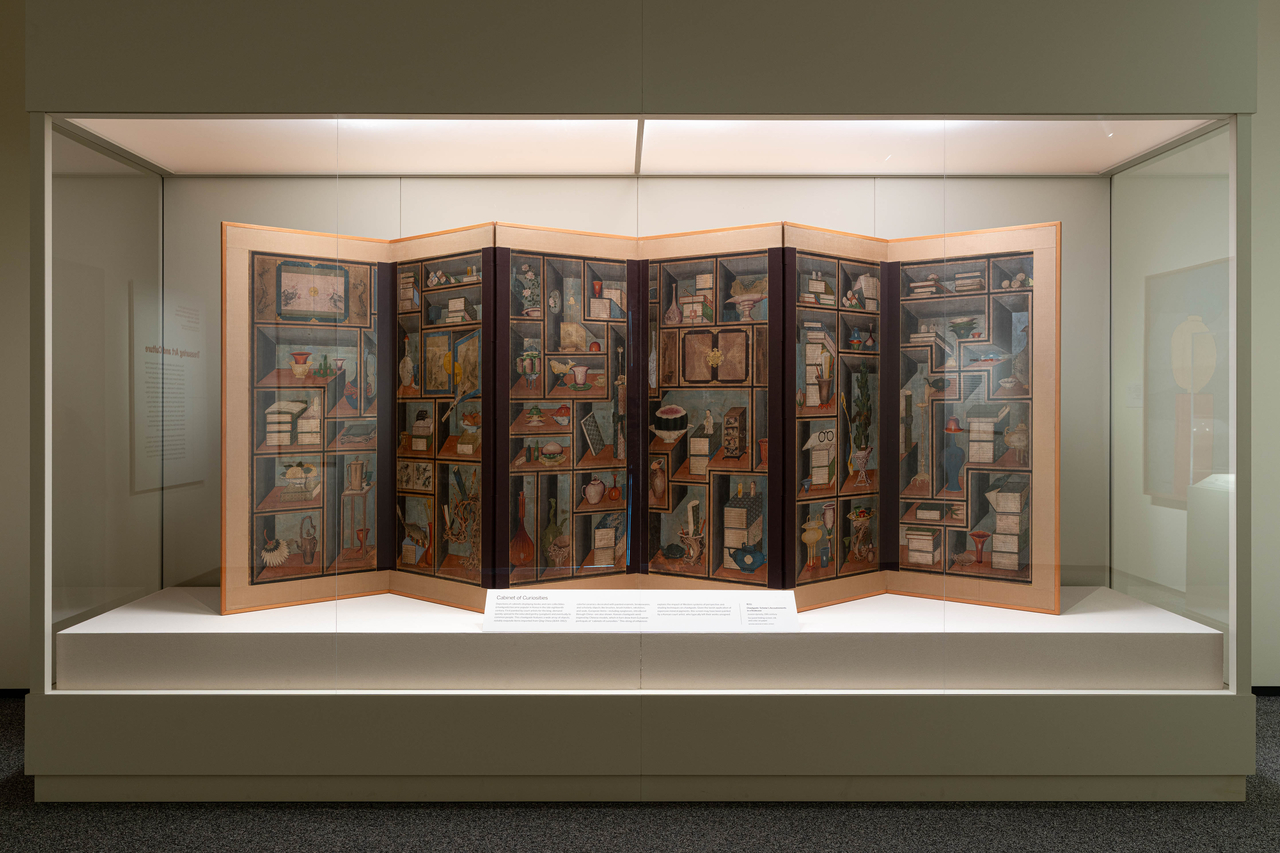
At the moment, some 200 items from the donated collection are being shown overseas for the first time at the Smithsonian’s National Museum of Asian Art, “Korean Treasures: Collected, Cherished, Shared.” Museum Director Chase F. Robinson referred to the collection as “really impressive” in its comprehensiveness during the interview with the Korea Herald in May.
The collection will travel to Chicago next, before heading to London.
yunapark@heraldcorp.com