

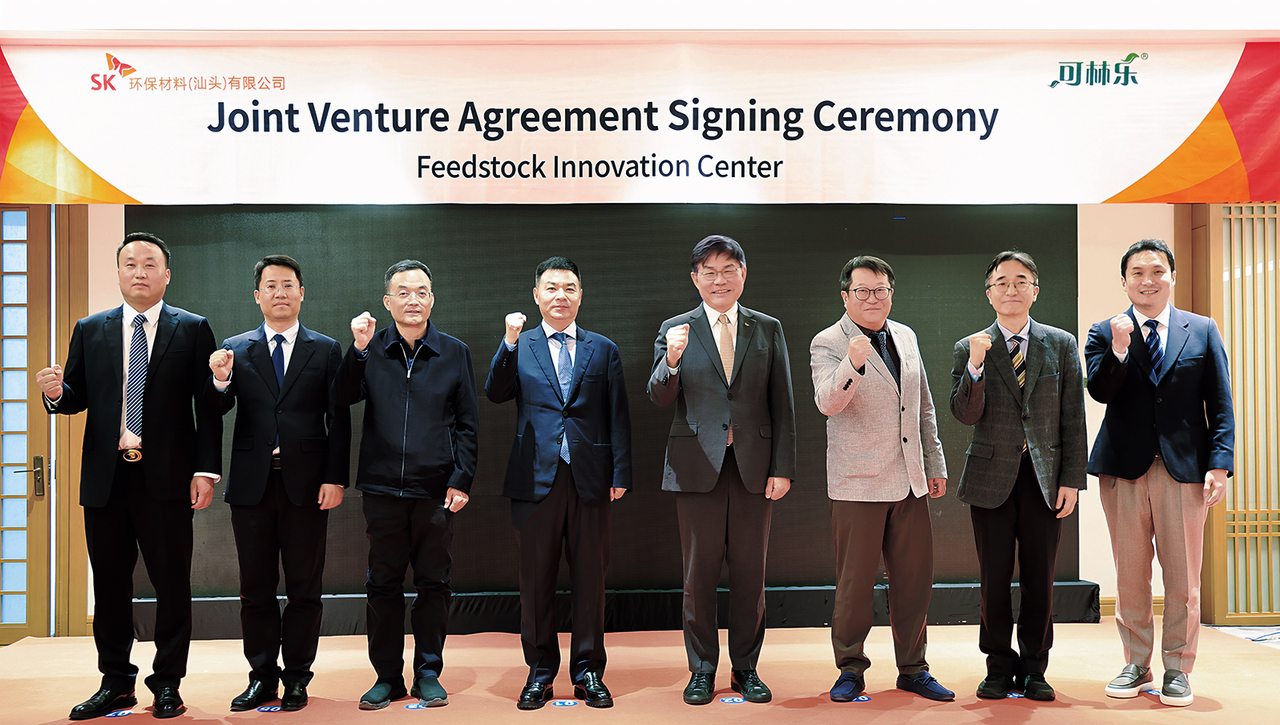
SK Chemicals said Wednesday it would launch a joint venture with Chinese plastic recycling company Kelinle to build a waste-plastic feedstock innovation center, positioning the Korean firm to become the nation’s first to source its own recycled raw materials and integrate the entire recycling value chain.
The facility, to be constructed on a 13,000-square-meter site owned by Kelinle in Weinan, Shaanxi province, will convert waste plastic into feedstock for chemical recycling. It is scheduled to be operational in the second half of next year
Unlike mechanical recyclers that rely on discarded polyethylene-terephthalate bottles, the center will use fine particles generated from crushed blankets and PET bottles, allowing more difficult-to-recycle waste to be repurposed.
Initial production capacity is expected to reach about 16,000 metric tons a year. SK Chemicals plans to double output to supply SK Shantou, a polyester chemical recycling plant in eastern Guangdong province, with most of the raw materials needed to operate the facility.
SK Chemicals noted that it will become Korea’s first chemical producer to secure an in-house sourcing base for waste plastics while pushing chemical recycling businesses such as depolymerization. The company added that it expects the feedstock center to enhance cost competitiveness and improve supply stability across its circular plastics business, fostering growth.
“With the feedstock innovation center, we have secured a full recycling value chain ranging from depolymerization and material production to raw-material procurement,” CEO Ahn Jae-hyun said. “Cost advantages gained by recycling waste blankets and other hard-to-reuse materials will help lower the price gap with petroleum-based plastics.”
andreahaneu@heraldcorp.com