

Student council survey shows nearly 9 in 10 enrolled students oppose planned shift to coeducation
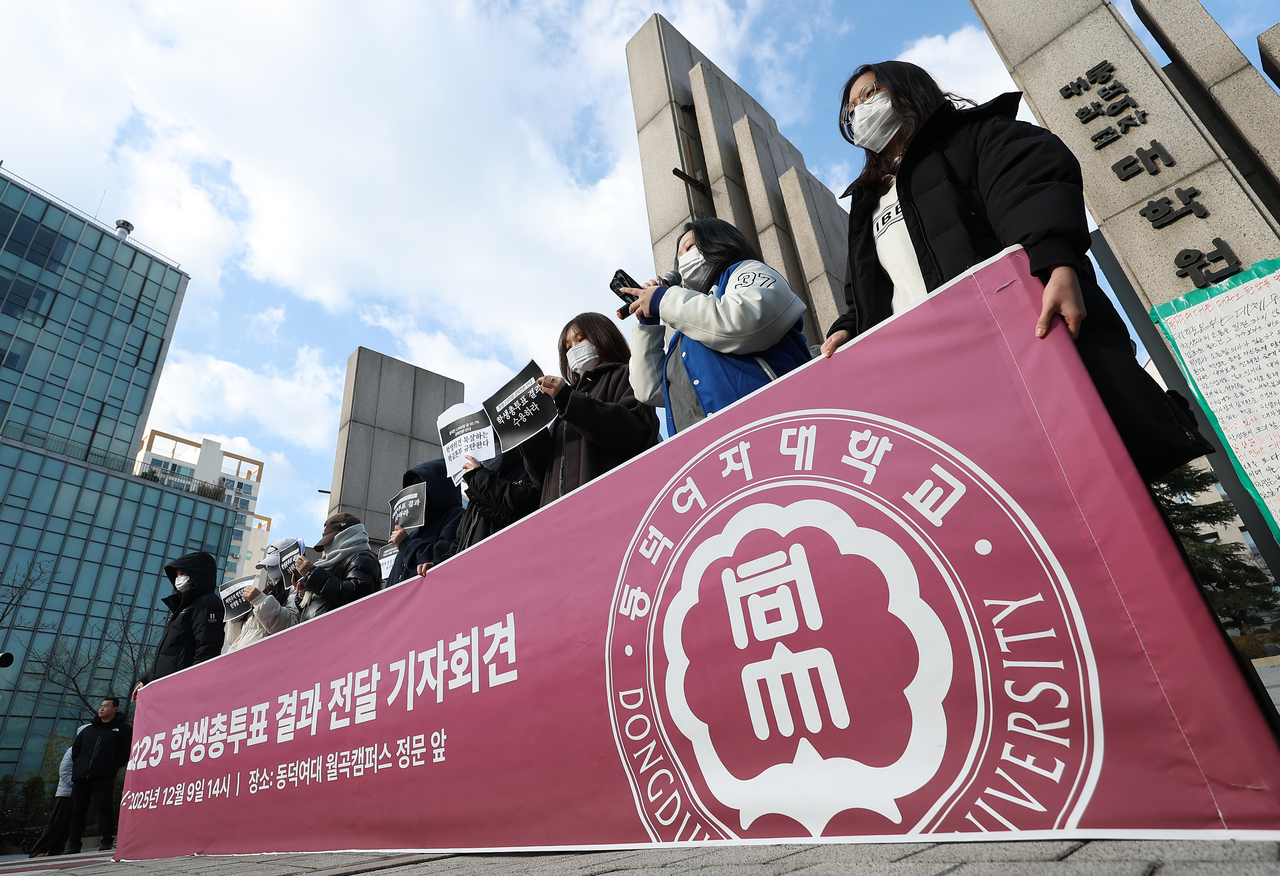
Nearly 9 in 10 students at Dongduk Women’s University voiced opposition to the school’s decision to transition to coeducation, a student-led survey showed Tuesday.
In an on-campus vote conducted by the student council from Dec. 3 to Monday, 85.7 percent of 3,470 enrolled students said they opposed the change.
A total of 280 students supported the shift, while 147 abstained and 68 ballots were deemed invalid. Voter turnout was 50.4 percent, surpassing the halfway mark.
The vote was launched just hours after the school announced its plans to admit male students from 2029 onward, following the recommendation of its Coeducation Discussion Committee.
The student council took issue with the committee’s opinion-gathering process, arguing it was based on "unrepresentative" surveys.
In the most recent survey — where 75.8 percent of 48 respondents supported the transition — the committee selected 12 participants from each of four constituencies: students, employees, faculty and alumni, according to the university's student council.
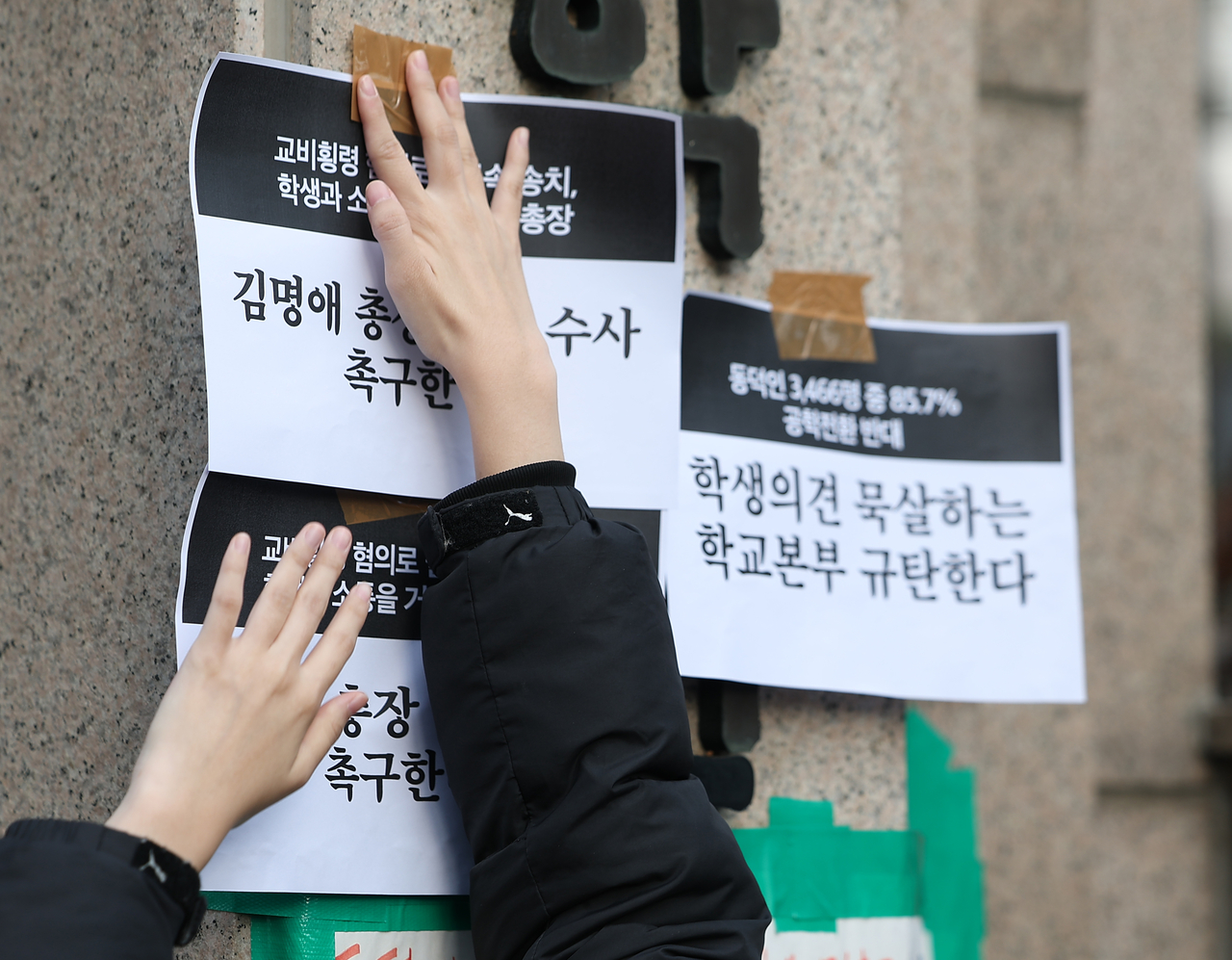
“Students are the ones most directly affected by the transition. Treating students and staff as equal in the survey is unreasonable, and the exclusion of some alumni from the deliberation process raises questions about the fairness and transparency of the decision-making," a student council member said.
The school rejected accusations that it disregarded student opinion, saying its earlier votes, which included faculty and staff, adhered to the principles of the Higher Education Act.
“Under the act, all universities in Korea are required to operate a statutory decision-making body that reviews major policies, and the relevant provision stipulates that no single group may hold a majority of seats. At most universities, these bodies follow a ratio of four faculty members, two students and two staff representatives," the school said in a statement.
“Allocating votes solely by student proportion would run counter to the intent of the act.”
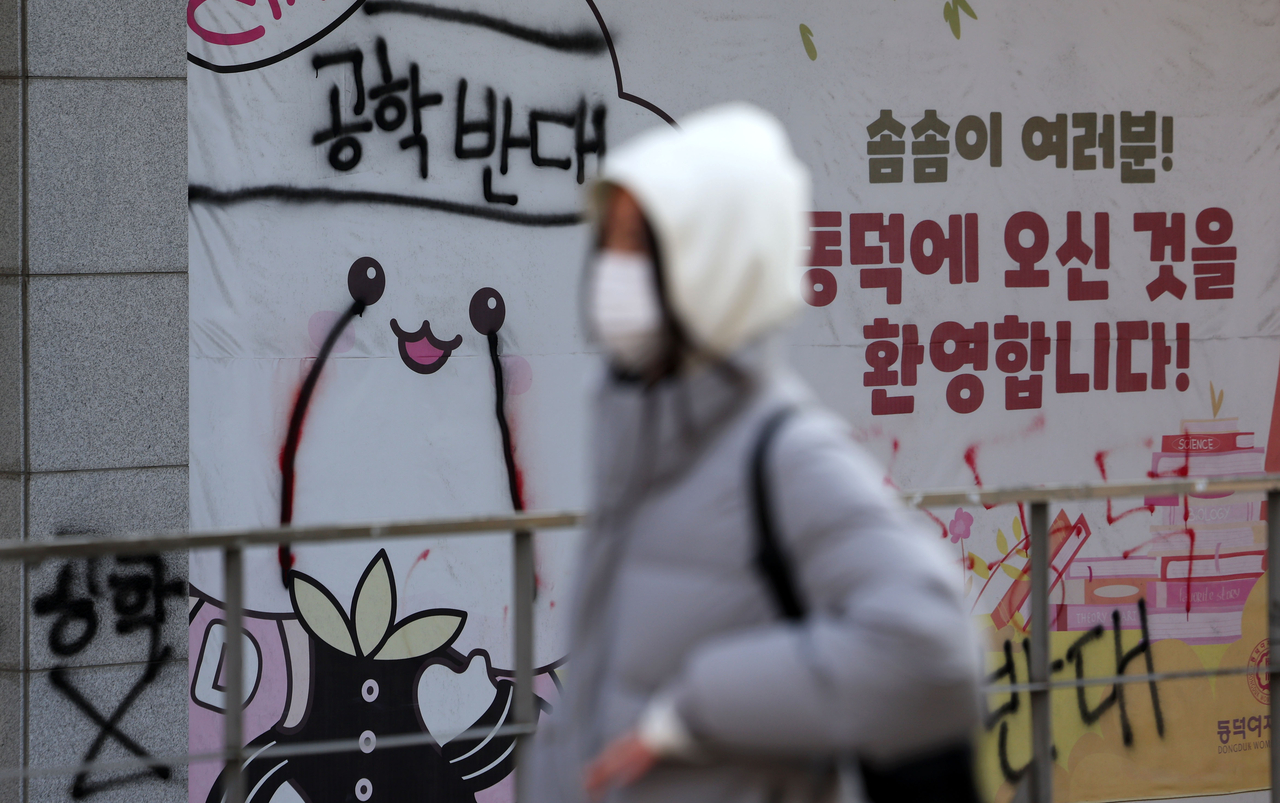
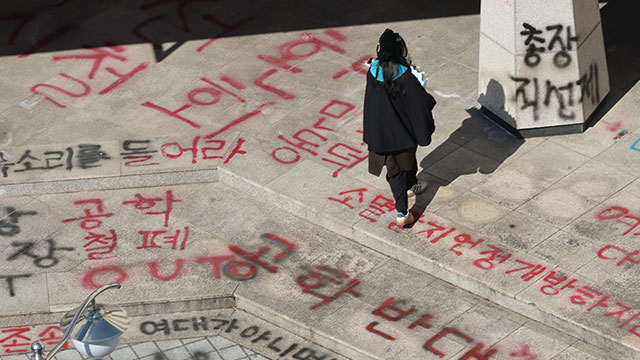
The dispute over coeducation began in November 2024, after the school launched a study on a potential transition, prompting vehement protests from students, who used lacquer to paint messages across the campus — on doors, hallways and building exteriors.
Students say women’s universities remain essential for promoting women’s rights and developing female talent.
“There are many women-related liberal arts courses such as ‘Women and Labor’ and ‘Women’s Psychology’ at Dongduk Women‘s University. We talk about feminism freely in class, but it would be difficult to even have such liberal arts courses in coed institutions,” said one student, who requested to remain anonymous.
“Also, at a women-only university, female students in male-dominated fields such as economics or engineering are more likely to feel confident and to speak openly about challenges unique to women."
Others say these institutions are still needed as long as gender gaps persist in leadership and workplace representation.
The history of women’s educational institutions in South Korea dates back to the founding of Ewha Womans University in 1886 by an American missionary.
After the 1950-53 Korean War, these institutions flourished as key sites for educating the country’s women. But starting in the 1990s, financial pressures and a growing preference for coeducational institutions began making it increasingly difficult for the schools to attract applicants and secure funding.
There are currently 14 women’s universities nationwide, including both four-year and two- to three-year institutions. If Dongduk Women’s University transitions to coeducation, the number of four-year women’s universities would fall to six: Gwangju Women’s University, Duksung Women’s University, Sungshin Women’s University, Seoul Women’s University, Sookmyung Women’s University and Ewha Womans University.
cjh@heraldcorp.com