
Leaders of judicial branch call for prudence, opposition parties slam ill-fated judicial reform push, as ruling party says it will make adjustments
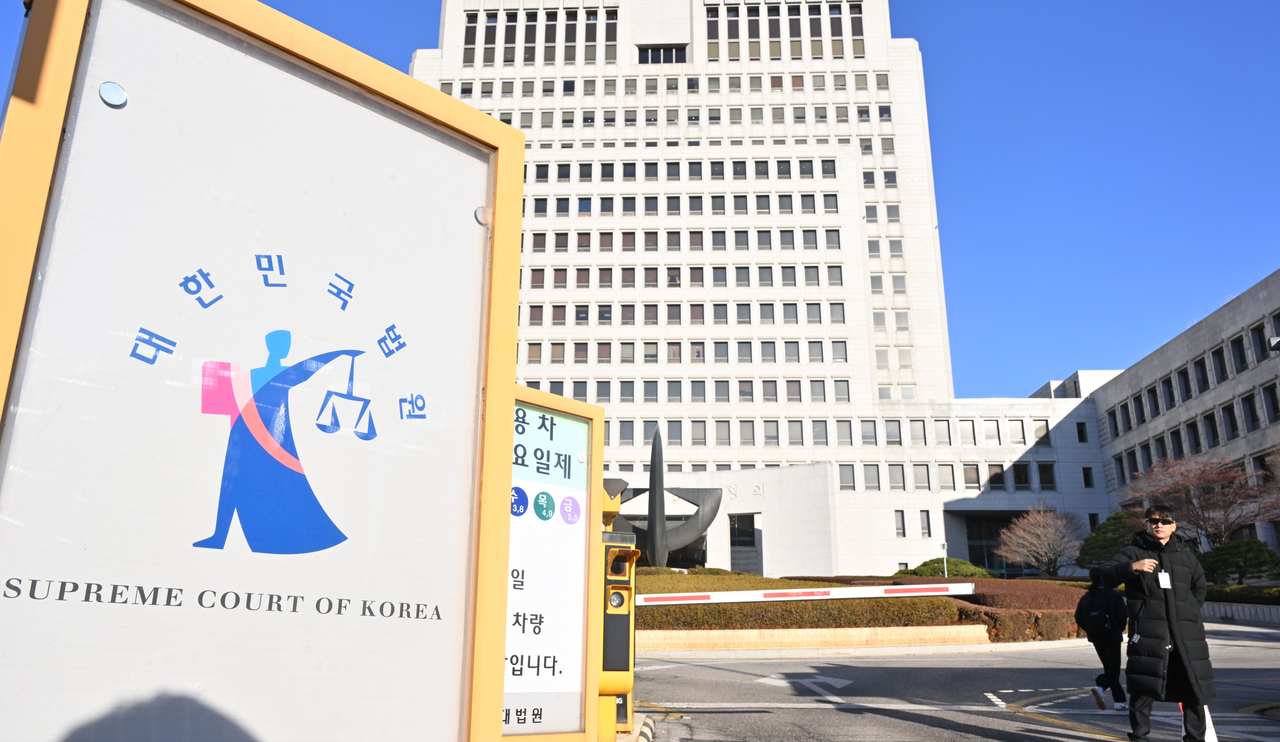
The controversy over the ruling Democratic Party of Korea's push to create a special tribunal concerning last year's martial law declaration continued Monday, as those opposed doubled down on criticism labeling the move as an ill-disguised attempt at undermining the judiciary.
Amid mounting controversy, the ruling party appears to be taking a more cautious approach, expressing openness to making adjustments Monday.
Rep. Kim Hyun-jung of the Democratic Party told reporters after a closed-door meeting of the party's lawmakers on Monday that the party had deferred its decisions over whether to continue on the current trajectory, acknowledging dissenting opinions from within the party at the meeting. Before Monday, the Democratic Party was rumored to be planning to push the bill through this week. Kim added the party would gather opinions from outside experts to see if its legislative push fails to uphold constitutional values.
Before the closed-door meeting, Rep. Jung Chung-rae, chair of the Democratic Party, said in the party's supreme council meeting on Monday, "We will supplement parts that need to be supplemented and boldly adjust parts that need to be adjusted in order to seek broader support and minimize what could potentially be seen as unconstitutional elements."
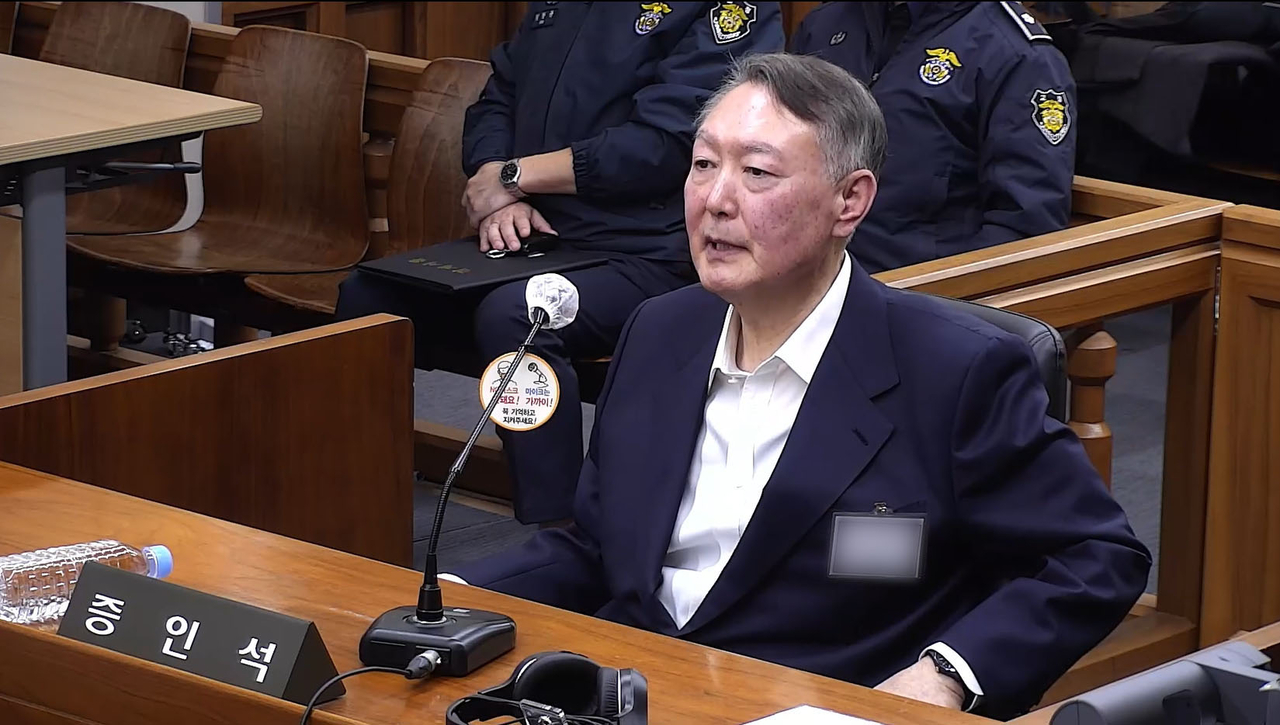
The Democratic Party has vowed to continue with legislation for the special tribunal — which would grant the Ministry of Justice the power to recommend judges — saying it is the only venue through which Yoon could be severely punished and remnants of Yoon's insurrection could be eradicated.
The party last week also embarked on a separate legislative move to strip those charged with insurrection of their rights to file for a review at the Constitutional Court.
The Democratic Party has claimed that Ji Gwi-yeon, a presiding judge in Yoon's insurrection trial at the Seoul Central District Court, had deliberately attempted to delay the court proceedings for the benefit of Yoon and other figures involved in Yoon's self-coup attempt.
As part of the broader push to reform South Korea's judicial power, the ruling party has pushed to not only launch a special tribunal for the Dec. 3, 2024, insurrection, but revise the Criminal Act to penalize a judge or a prosecutor for "wrongly interpreting" South Korean law. It also seeks to abolish the National Court Administration and create a new committee comprising public- and private-sector figures to determine disciplinary actions against a judge or prosecutor.
In response, judicial branch leaders issued a statement Monday calling for prudence in the ruling party-led parliament’s reform drive.
These moves might carry unconstitutional elements and undermine the judicial independence in South Korea, and therefore cannot be hastily carried out and should come after prudent discussions with judges and ordinary people involved, the statement warned after a six-hour meeting Monday. Seventy-nine leaders of South Korea's judicial branch attended the meeting, with the statement issued upon a majority of participants consenting to its release.

Opposition leaders on Monday also slammed the ruling bloc for its unilateral move.
Rep. Jang Dong-hyeok, chair of the main opposition People Power Party, honed in on comments from Woo Sang-ho, senior presidential secretary for political affairs, who had said in a press conference marking six months of the administration that the presidential office and the ruling party agreed on the need to minimize violations of the Constitution in introducing the special tribunal.
"This is proof that the presidential office is masterminding the move to sabotage constitutional values," Jang said in a meeting of the party's supreme council Monday, before holding a general meeting of the main opposition party's lawmakers in an apparent move to ramp up the offensive against the Democratic Party.
Jang also urged the judicial branch to stand vigilant over whether warnings from the chiefs of South Korean courts continue to go unheeded. The ruling Democratic Party, which holds a strong majority in the National Assembly, is capable of passing a bill without support from opposition parties.
The minor conservative Reform Party's leader Rep. Lee Jun-seok said in the party's supreme council meeting Monday that the Democratic Party's "dangerous attempt must be stopped," drawing a perilous parallel. He said the Democratic Party's move mirrors that of former President Chun Doo-hwan in 1980 to establish the Special Committee for National Security Measures, which effectively opened the door to dictatorship.
consnow@heraldcorp.com