

Innovator of the year
Kakao Bank
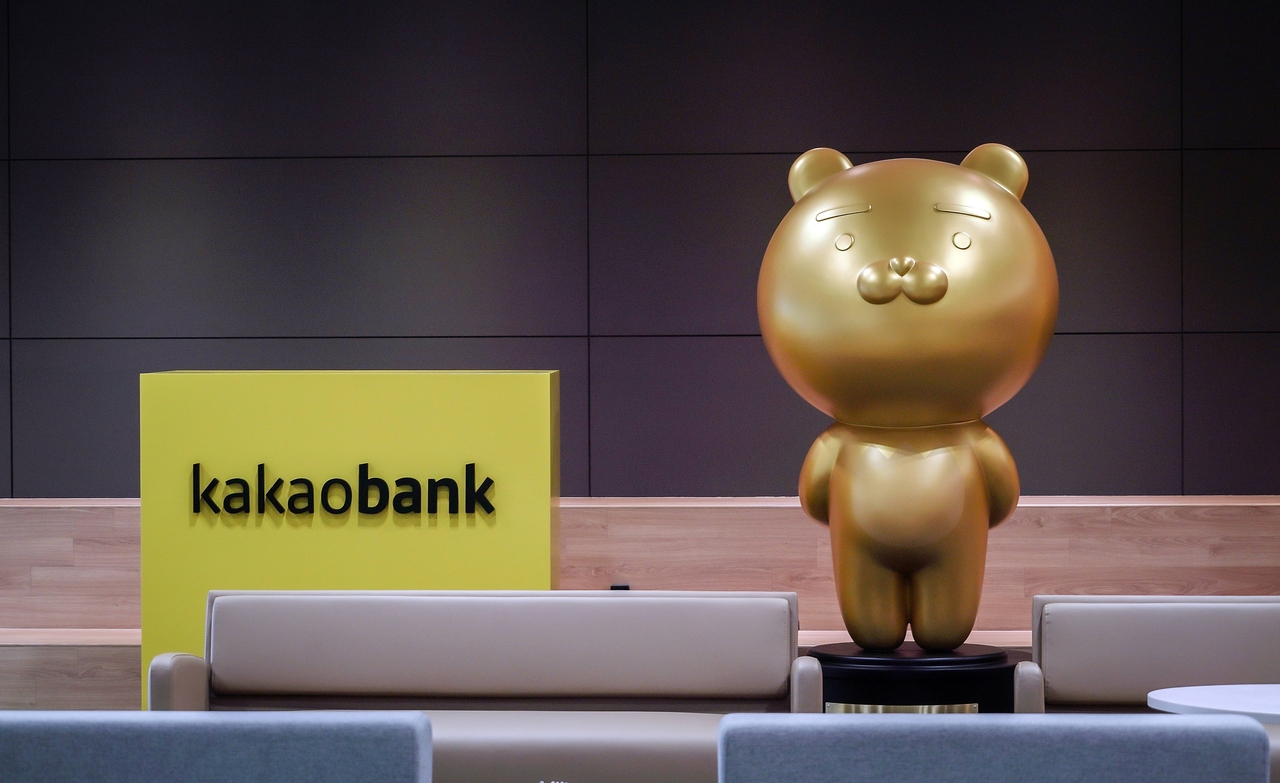
Internet-only lender Kakao Bank is accelerating its artificial intelligence push as it reshapes its service model around what it calls “AI-native banking,” aiming to make financial services simpler, more intuitive and increasingly conversational.
At the start of the year, the bank declared that AI would form the core of its operating infrastructure, spanning everything from customer-facing services to internal processes and global expansion strategies. CEO Yun Ho-young underscored the urgency of this transition at Money20/20 Asia in Bangkok in April, saying, “AI-optimized UI and UX, backed by strong data capabilities, will determine who survives. The industry and its ecosystem will reorganize around companies with AI competitiveness.”
Since then, the lender has rolled out a succession of AI-powered features — many of them firsts for Korea’s financial sector — marking concrete progress toward that ambition.
In May, Kakao Bank introduced AI Search, the industry’s first conversational search tool that allows customers to look up menus, features and banking information in natural language. Instead of navigating an app interface manually, users can ask questions such as “How do I increase my transfer limit?” or “What are today’s exchange rates?” and receive instant, tailored results.
A month later, the bank launched its AI Financial Calculator, which automatically fills fields and performs calculations for savings plans, loan payments, currency exchange and other financial scenarios. Together, the two services reached 1 million users by September and now draw roughly 1.7 million users.
Most recently, Kakao Bank announced AI Transfer, the first time it has applied generative AI to a core banking function. Customers can initiate money transfers via conversational instructions, with the AI navigating steps, verifying details and completing the transaction.
In December, the company plans to roll out AI Group Manager, which automates group-account tasks, such as tracking club membership fees or splitting shared expenses, with the potential to expand the feature into broader collaborative financial tools.
Kakao Bank is also embedding AI deeper into its internal structure. This year, the bank established an AI Group, consolidating AI-related teams under a single, higher-level organizational framework designed to streamline development and execution.
The lender has strengthened its research and infrastructure capabilities. It operates a financial technology research center launched in 2021 and an AI-specialized data center opened last year to support proprietary technology development and bolster security. Its AI-powered smishing text verification service, created by the research center and launched late last year, attracted more than 210,000 users within three months — a sign that the bank’s AI-based security tools are resonating with the public.
Kakao Bank’s AI push is also tied to its overseas expansion strategy. Superbank — the Indonesian digital lender backed by Kakao Bank and Southeast Asian mobility giant Grab — turned profitable just a year after its launch and now has around 3 million users.
In June, Kakao Bank and Thailand’s financial holding group SCBX received approval to establish a virtual bank in Thailand, with a planned rollout in the second half of 2026. Kakao Bank aims to carry its AI-driven banking model into these markets, positioning conversational AI as a competitive differentiator.
“We aim to offer a more convenient financial experience through conversational AI,” a Kakao Bank official said. “We will continue advancing our AI capabilities to drive financial innovation.”
jwc@heraldcorp.com


![[World Class] HUFS bets on Songdo, AI to redefine what a global university can do](https://wimg.heraldcorp.com/news/cms/2026/10/18/news-p.v1.20260930.7e4dbeacfc1d4d16848c0e2a441c04e6_R.jpg?type=h&h=120)
