

In an era where digital convenience and self-checkout kiosks dominate daily life, traditional markets are often romanticized as the last refuge of human warmth — places filled with haggling, banter, handwritten price tags, and friendly aunties and uncles who insist on adding “one more piece” out of affection.
But a viral YouTube video is challenging that nostalgic image, opening a public debate over pushy sales tactics and uncomfortable customer experiences that some say have driven consumers away rather than pull them in.
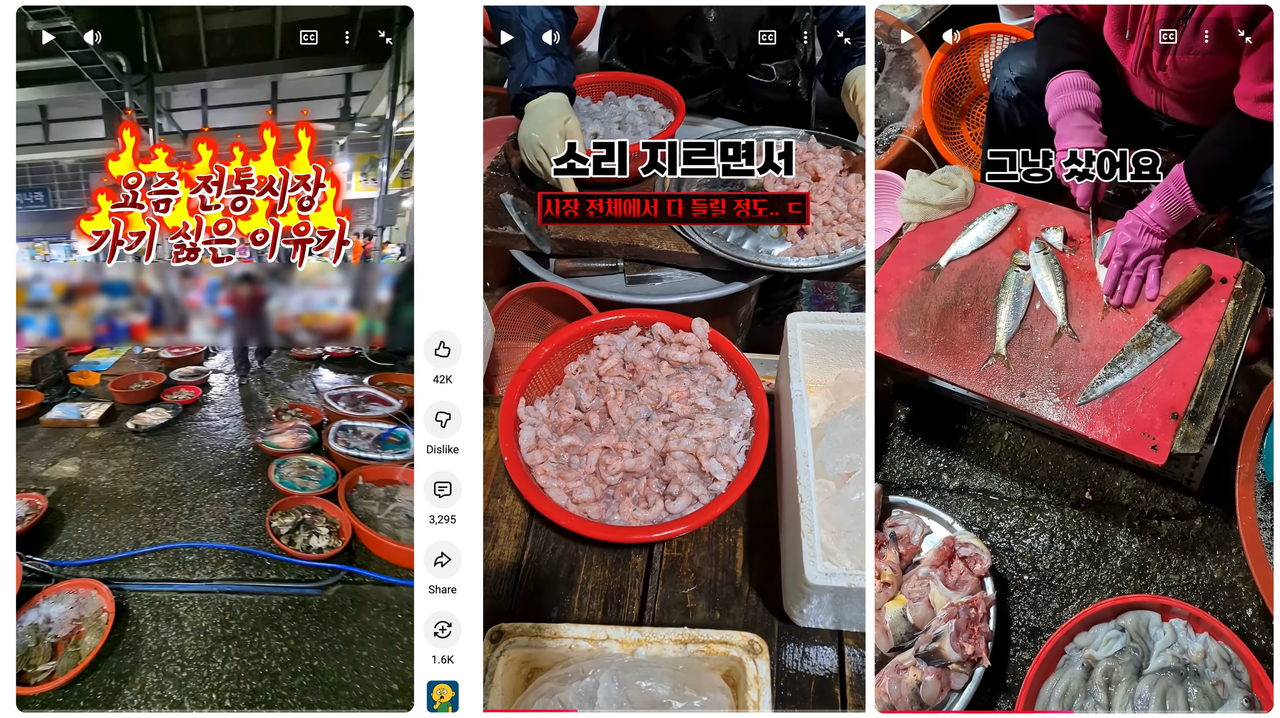
On Nov. 12, YouTuber Honjahya — whose username means “do it alone” in a Korean dialect — uploaded a video titled “Why I don’t want to go to traditional markets these days.” In it, she recounts an unnerving experience at a dawn market that left her feeling more stressed than satisfied. The video has amassed over 4.5 million views, gaining traction quickly across Korean social platforms.
Honjahya recalls approaching a seafood stall to ask for the price of red-banded lobster, but the merchant immediately started packing it without answering.
When she said it was too expensive and she wanted to look around, the vendor shouted, "Why did you make me pack it then?"
At a second stall, a similar situation unfolded. She asked for the price of gizzard shad, but the merchant scooped it out of the water and started cutting its neck right away. "I was scared she would shout at me like the previous lady, so I just bought it,” the YouTube shared in the video.
The comment section quickly filled with complaints from shoppers who, after being accustomed to fixed prices, digital receipts and clear return policies, find the traditional market’s old-school charm unappealing.
“Saying big supermarkets killed traditional markets is a false frame,” reads the top-liked response with over 6,000 likes and 41 replies. “What killed them was ripping off customers and getting caught, and instead of improving, they blamed others."
Another wrote, “Traditional markets are the most unfriendly. If you ask for the price to compare, they tell you not to come back.”
According to the Korean Statistical Information Service, more than 100 traditional markets closed between 2013 and 2023, falling from 1,502 to 1,393. During the same decade, the Korea Chamber of Commerce and Industry reported that non-store retail more than doubled from 11.8 percent to 25.7 percent, and convenience stores grew 82.7 percent.
tammy@heraldcorp.com