

American minimalist artist's first-ever major furniture exhibition in Seoul opens at Hyundai Card Storage
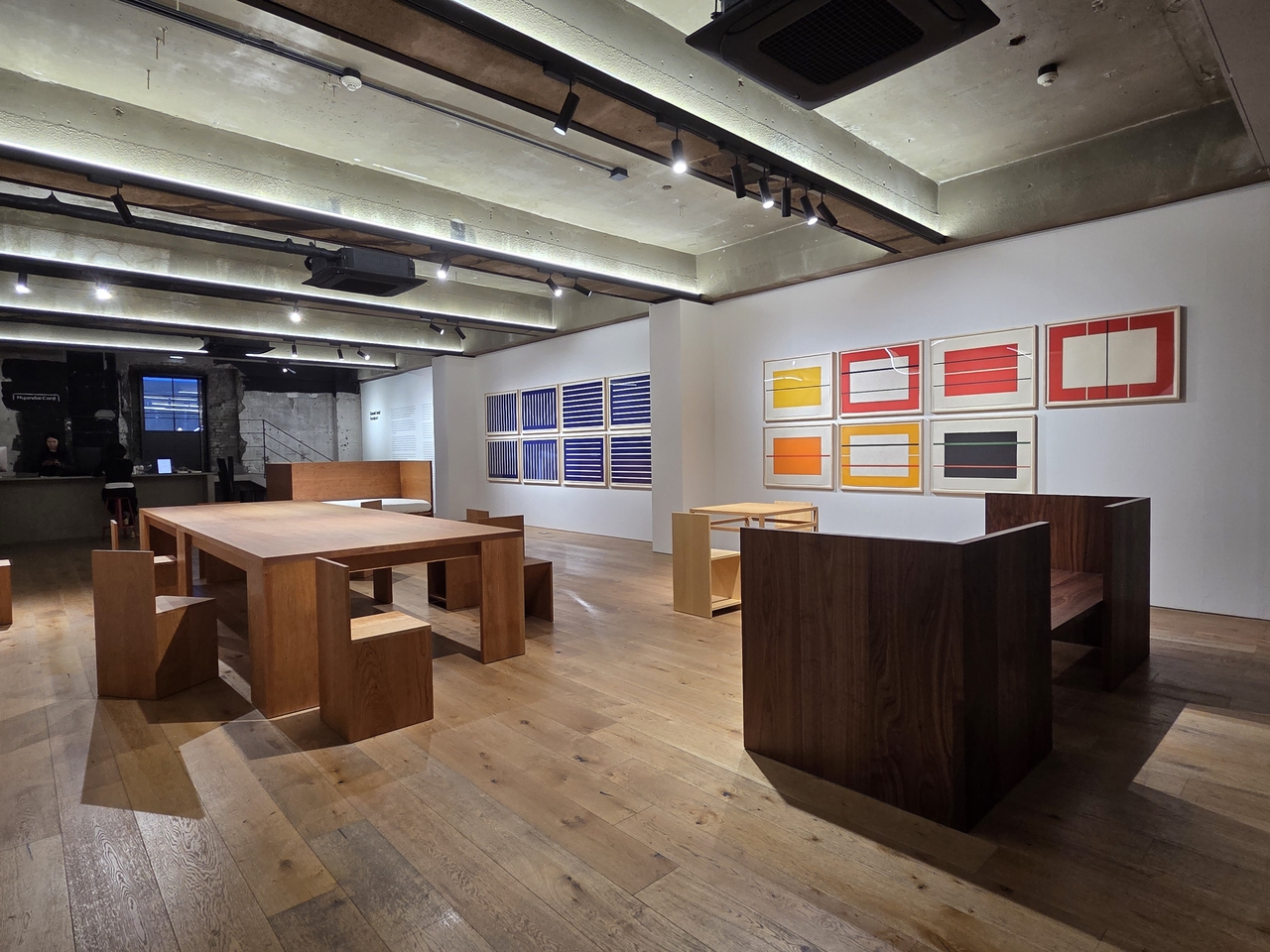
American artist Donald Judd broke with the conventions of modern art and paved the way for minimalism through radical simplicity and material clarity. While his iconic sculpture series, prints and paintings are widely recognized, his artistic philosophy also expanded to furniture.
It was honesty that the artist valued in art and design, said the artist’s son Flavin Judd, director of the Judd Foundation, in Seoul on Wednesday.
“He said a lot about materials pretending to be other materials and ‘that drives me crazy,’” the director recalled. “So for instance, he talks about using fiberglass to pretend to be stone. And for him, fiberglass is a material -- why not just use it like that?”
The art master’s first furniture exhibition in Seoul, “Donald Judd: Furniture,” at Hyundai Card Storage, shows how the artist explored furniture in the midpart of his career, having made his first piece of furniture in 1970, a bed in black walnut.
Running through April 26, 2026, the exhibition shows some 100 pieces of furniture created from the 1970s to the '90s, alongside prints by the artist.
As one of the most influential postwar artists, Judd helped shape the concept of minimalism in modern art, emphasizing radical clarity and serial form. His iconic stacks and progressions, made from industrial materials, reject illusion and symbolism, insisting art as real objects in real space.
“He was really uninterested in using the history of art -- which, to him, meant representational art. He is not interested in that at all. He wanted art that is a thing that is available to you immediately,” the Judd Foundation director said.
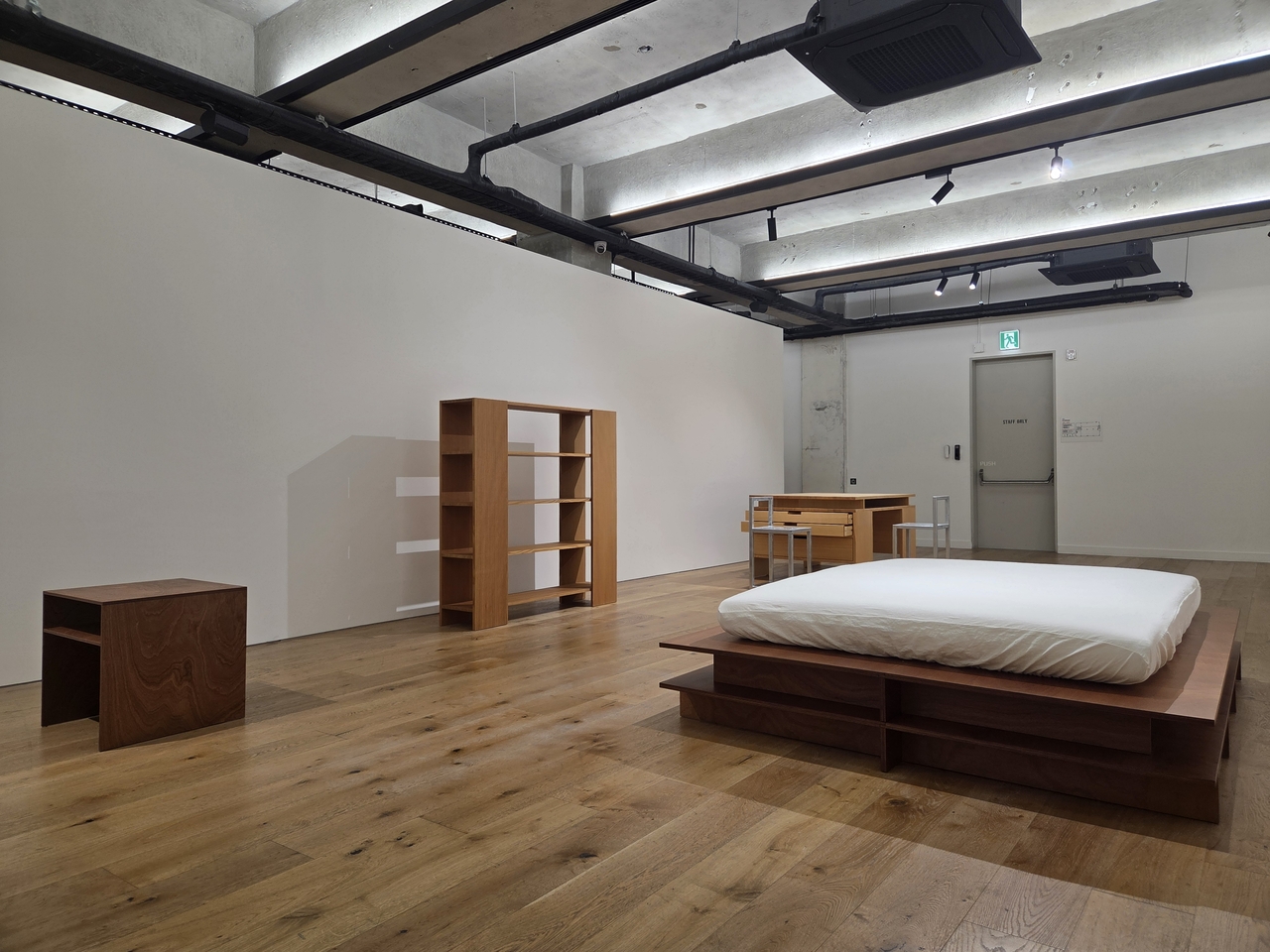
Entering the exhibition, it is immediately clear what the furniture is made of -- wood, metal or plywood -- and each piece features simple lines without any added decoration. That is because the artist was influenced by his training in philosophy at Columbia University and his upbringing as a grandson of farmers, according to Flavin Judd.
“Why would you hide something? Why would you make it complicated? If you are going to do something -- you do it something honestly, because there is so much lying in the world,” the artist’s son said, recalling what his father had told him. "Why would you add to that?"
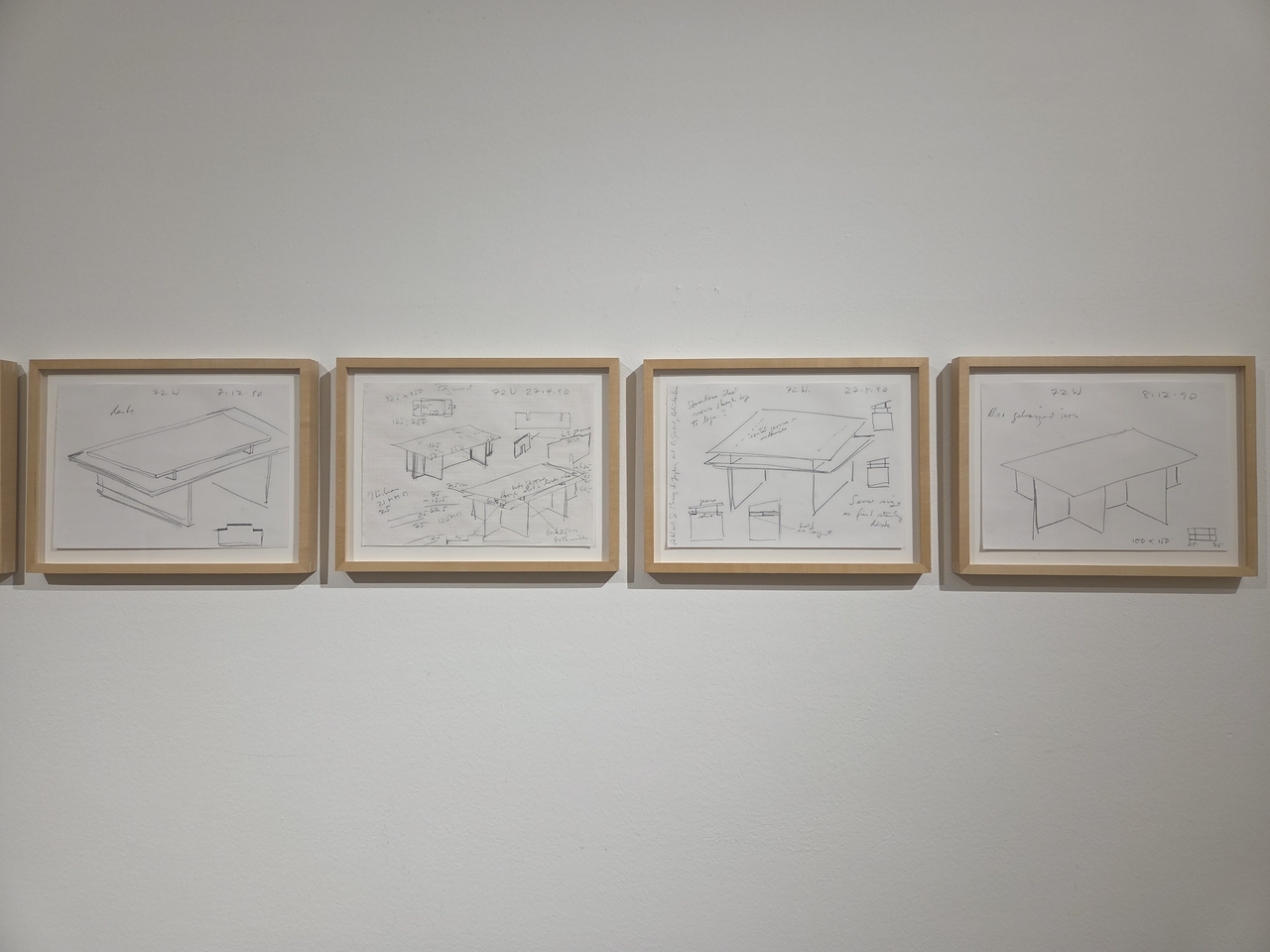
On the wall are the artist’s simple furniture drawings that functioned as instructions, giving carpenters the basic dimensions and directions needed to build the furniture. Donald Judd relied on carpenters who quickly learned to translate his minimal directions into finished furniture, according to the director.
The artist’s furniture is still being produced on a custom basis with a production time of about three months. Asked about unauthorized copies, Flavin Judd said that although the design may look simple, the specific angles, edges and level of craftsmanship make it easy to distinguish an original from a copy. The foundation would take legal actions when necessary, according to the director.
“(Donald Judd’s) underlying philosophy is the commonality,” his son said.
“They all come from the same place -- the mixture of David Hume (Enlightenment philosopher known for rational clarity) and a Midwestern farmer’s mindset that together form a kind of pragmatism, and a sense of baroque seriality inspired by J.S. Bach, building variations to create art and furniture.”
yunapark@heraldcorp.com


![[World Class] HUFS bets on Songdo, AI to redefine what a global university can do](https://wimg.heraldcorp.com/news/cms/2026/10/18/news-p.v1.20260930.7e4dbeacfc1d4d16848c0e2a441c04e6_R.jpg?type=h&h=120)
