
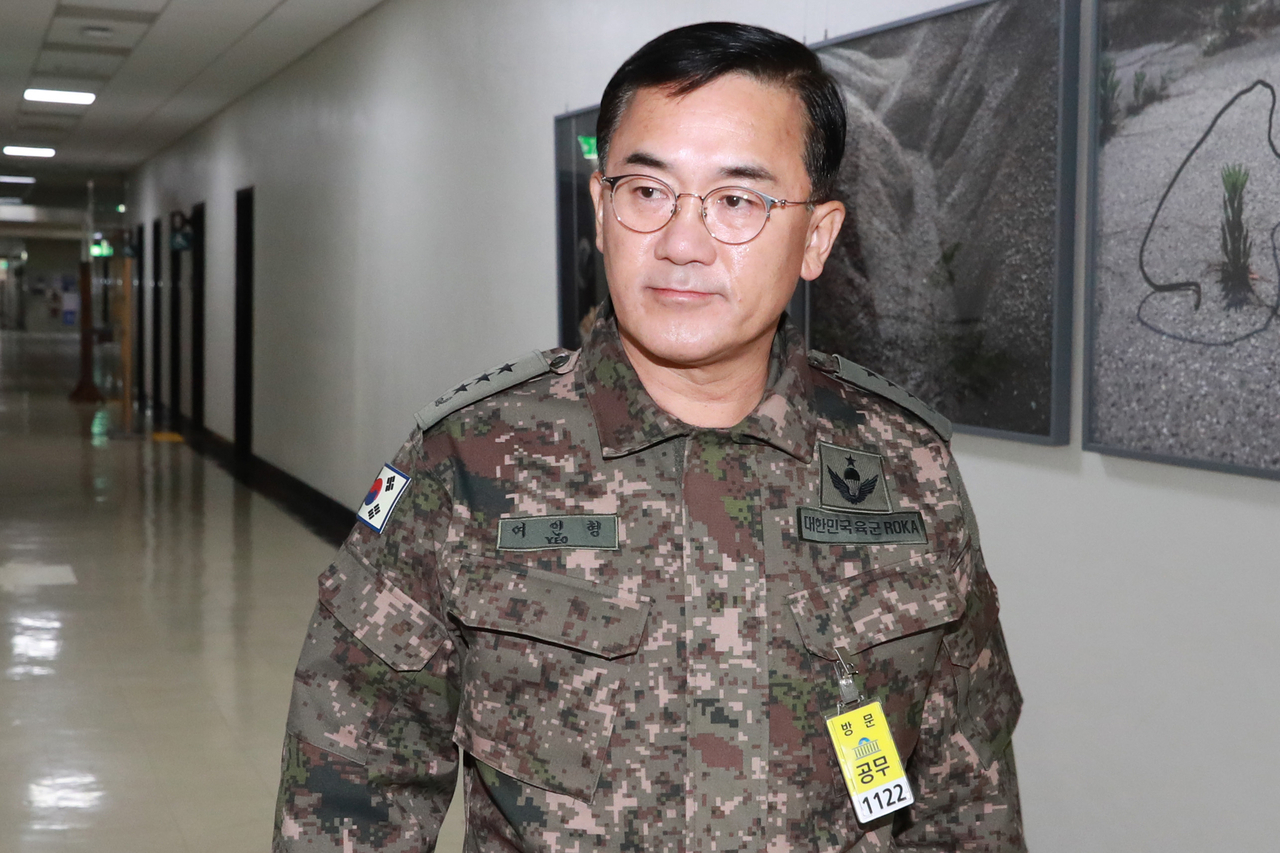
Yeo In-hyung, former head of the Defense Counterintelligence Command, testified Monday that he pushed back against then-President Yoon Suk Yeol’s suggestion of invoking martial law and emergency powers during a covert meeting in 2024, telling him the military could not be mobilized for such an action.
Appearing as a witness in Yoon’s ongoing trial, where the ousted president faces charges related to his imposition of martial law in December 2024, Yeo said Yoon first floated the idea during a private dinner between May and June 2024 at a government safe house in Seoul’s Samcheong-dong.
Former Defense Minister Kim Yong-hyun was also in attendance, he added.
Yeo testified that he immediately objected, stressing the military’s lack of capability for such an operation. The South Korean armed forces, he said, have “never trained for peacetime martial law” and would be “unprepared to carry it out.”
“I explained that among the Army’s 300,000 personnel, not one is trained or assigned to martial law operations,” he said. “People assume the military can be mobilized whenever unrest occurs, but that’s a complete misconception. Even in wartime, martial law is never imposed lightly.”
Yeo also recalled kneeling before Yoon after speaking, saying he believed he had overstepped “as a mere corps-level commander.”
Despite the exchange, Yeo said Yoon did not issue an order or discuss specific operational plans that night.
“He simply mentioned that such options existed, and I responded with facts,” he said. “It wasn’t about opposing him — I was reporting reality.”
Although Yeo repeatedly denied agreeing to assist with a declaration of martial law, he declined to answer most other questions from prosecutors, including those related to handwritten notes referencing political figures such as then-Democratic Party of Korea Chair Lee Jae Myung and then–People Power Party leader Han Dong-hoon. He said that answering those questions could affect his own ongoing criminal case.
When prosecutors presented a memo appearing to reference “getting soldiers to voluntarily support martial law,” Yeo reacted sharply, saying the implication that a written note alone could secure military cooperation was “ridiculous and offensive.”
Yeo has previously expressed regret for his participation in discussions related to the martial law plan, but continues to insist that he made clear to Yoon at the time that declaring martial law in peacetime was impossible.
lee.jungjoo@heraldcorp.com


