

Growing multiple-birth families face mounting costs and stress, prompting calls for stronger policy action
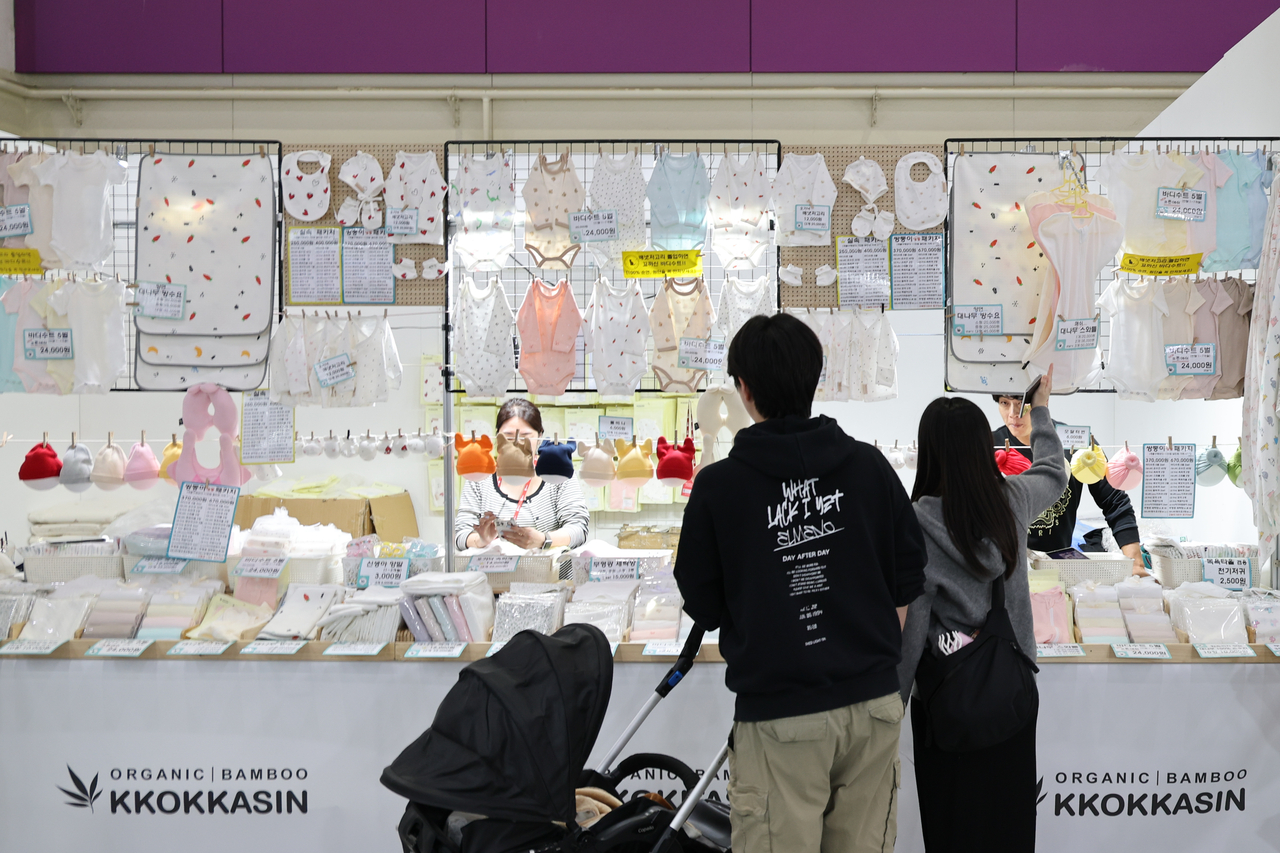
With multiple-birth families increasing rapidly in Korea, 6 in 10 twin parents reported feeling significant financial pressure, prompting renewed calls for stronger government support, a survey showed Monday.
Over 67 percent of the 718 parents raising twins surveyed by the Korea Population Health and Welfare Association in September said their biggest source of parenting stress was the financial burden of child rearing.
Among them, 45.3 percent cited child care and education as their heaviest expense, followed by food (23.3 percent), housing (13.9 percent) and health care (11.7 percent).
The strain of raising two children at once also weighs on parents emotionally.
Some 27.3 percent said they were unsure whether they could be good parents, while 44.1 percent said they felt responsible when their children showed signs of emotional anxiety. More than half of respondents (50.9 percent) said parenting would have been much easier with just one child.
Many parents of twins turn to public institutions for help with child-rearing. More than half of respondents named day care centers and kindergartens as the most helpful sources of support, while 26.2 percent pointed to local child-rearing support centers offering parenting programs and toy-lending services. Another 16.4 percent cited public kids' cafes and cultural centers.
But in emergencies, such as when a child falls ill and cannot be sent to a child care institution, many parents are left with no one to turn to.
Some 39.4 percent said they had no one who could look after their children in an urgent situation. Among the remaining 60.6 percent who said they have someone to rely on, the vast majority (93.7 percent) said they depended on grandparents or other relatives. Only 3.4 percent reported using public services such as government-hired caregivers.
With the number of twin households rising in Korea, public calls are growing for more robust government support.
The multiple-birth rate — defined as the number of twin or more births per 1,000 deliveries — stood at 26.9 in 2023, the second-highest among 27 major countries surveyed by the Human Multiple Births Database, trailing only Greece at 29.5.
The most urgently needed policy for parents of twins was strengthening at-home care systems, such as flexible work arrangements, identified by 37.5 percent of respondents. Increased financial assistance followed at 34.4 percent, along with expanded public child care at 28.1 percent.
cjh@heraldcorp.com