South Korea is preparing to loosen its union bargaining rules by permitting subcontractor unions to negotiate with employers separately, prompting pushback from both labor and business groups.
The Labor Ministry on Monday proposed an enforcement decree for the so-called "Yellow Envelope" Act that would enable authorities to split unions into separate bargaining groups before they begin the country’s single-channel bargaining procedure.
The revised law, which takes effect in March, will for the first time require principal employers to negotiate with subcontractor unions, triggering the government to clarify how talks should be structured at worksites with complex labor arrangements.
The decree is aimed at preventing smaller subcontractor unions from being overshadowed by much larger in-house unions. It would allow those unions to negotiate in their own groups based on job type, interests or organizational characteristics.
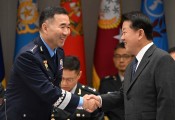
Labor Minister Kim Young-hoon said the measure seeks to “preserve autonomy in labor-management negotiations while guaranteeing subcontractor unions’ practical bargaining rights.”
Under current South Korean law, when multiple unions operate at the same workplace, they generally must merge their demands and negotiate with the employer through a single representative bargaining channel.
The ministry says it will keep that framework but wants a clearer process for cases where unions cannot reach agreement.
In those situations, labor commissions would be empowered to split unions into separate groups using factors such as job categories, employment conditions and bargaining practices.
Once separated, each group would run its own single-channel process to choose a representative union and negotiate with the employer.
The government says that approach gives subcontractor unions a meaningful path into talks rather than forcing them to compete with much larger in-house unions from the outset.
Subcontractor unions would be able to request separation, and labor commissions would also determine whether a principal employer has “substantial control” over subcontracted workers -- a key test for deciding which companies must bargain.
If an employer is deemed responsible but refuses to negotiate without cause, the ministry said it may intervene and refer the case for investigation as a possible labor violation.
The proposal has drawn criticism from both business groups and unions.
Corporate groups say the decree effectively hollows out the single-channel rule, giving subcontractor unions broad grounds to seek separate talks with parent companies.
“This provides a legal basis for subcontractor unions to demand individual bargaining with parent companies whenever they want,” a business-industry official said, adding that splitting units “may render the single-channel principle meaningless in practice.”
Labor unions argue the plan still restricts subcontractor unions because it forces them to go through multiple single-channel procedures, such as a first stage with in-house unions, then a second among subcontractor unions.
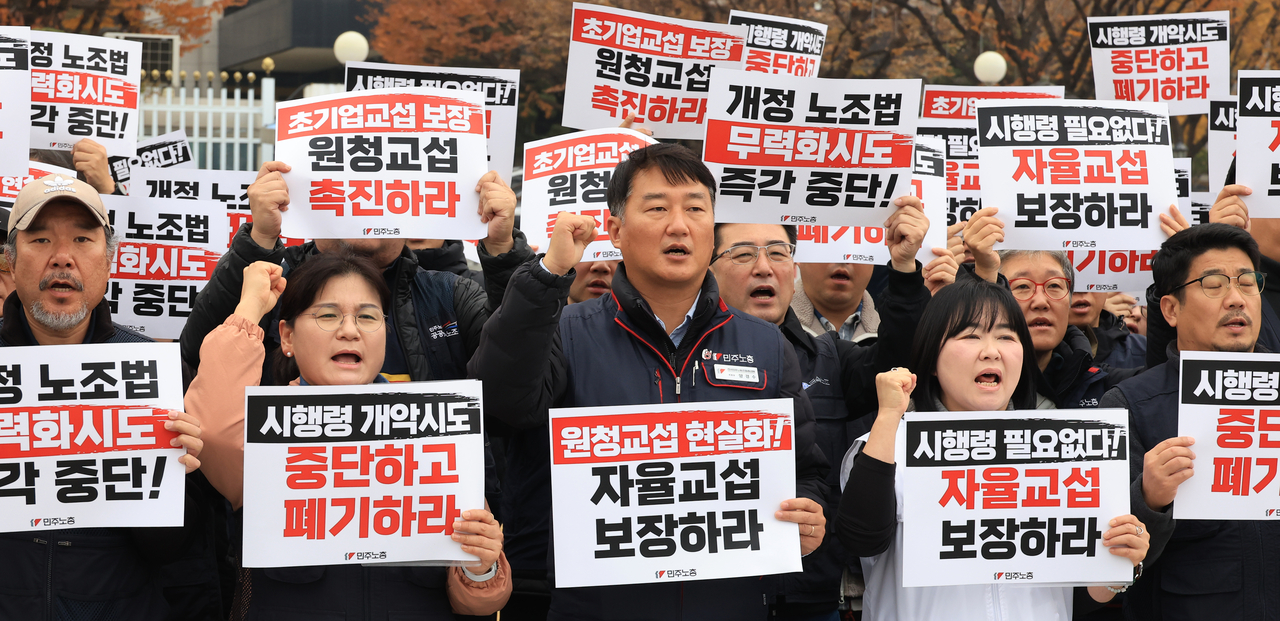
The Korean Confederation of Trade Unions held a rally in Seoul on Monday demanding the decree be scrapped. KCTU Chair Yang Kyung-soo said the draft “creates back-to-back single-channel requirements that allow employers to avoid genuine bargaining,” calling it an attempt to roll back negotiating rights “won through more than 20 years of struggle.”
hnpark@heraldcorp.com