

Seoul hosts first long-term exhibition on Islamic art in collaboration with Museum of Islamic Art in Doha, Qatar
Although Islam remains unfamiliar to many Koreans, Islamic culture has a growing presence in Korean society -- of the country's roughly 2 million foreign residents, an estimated 300,000 are Muslims.
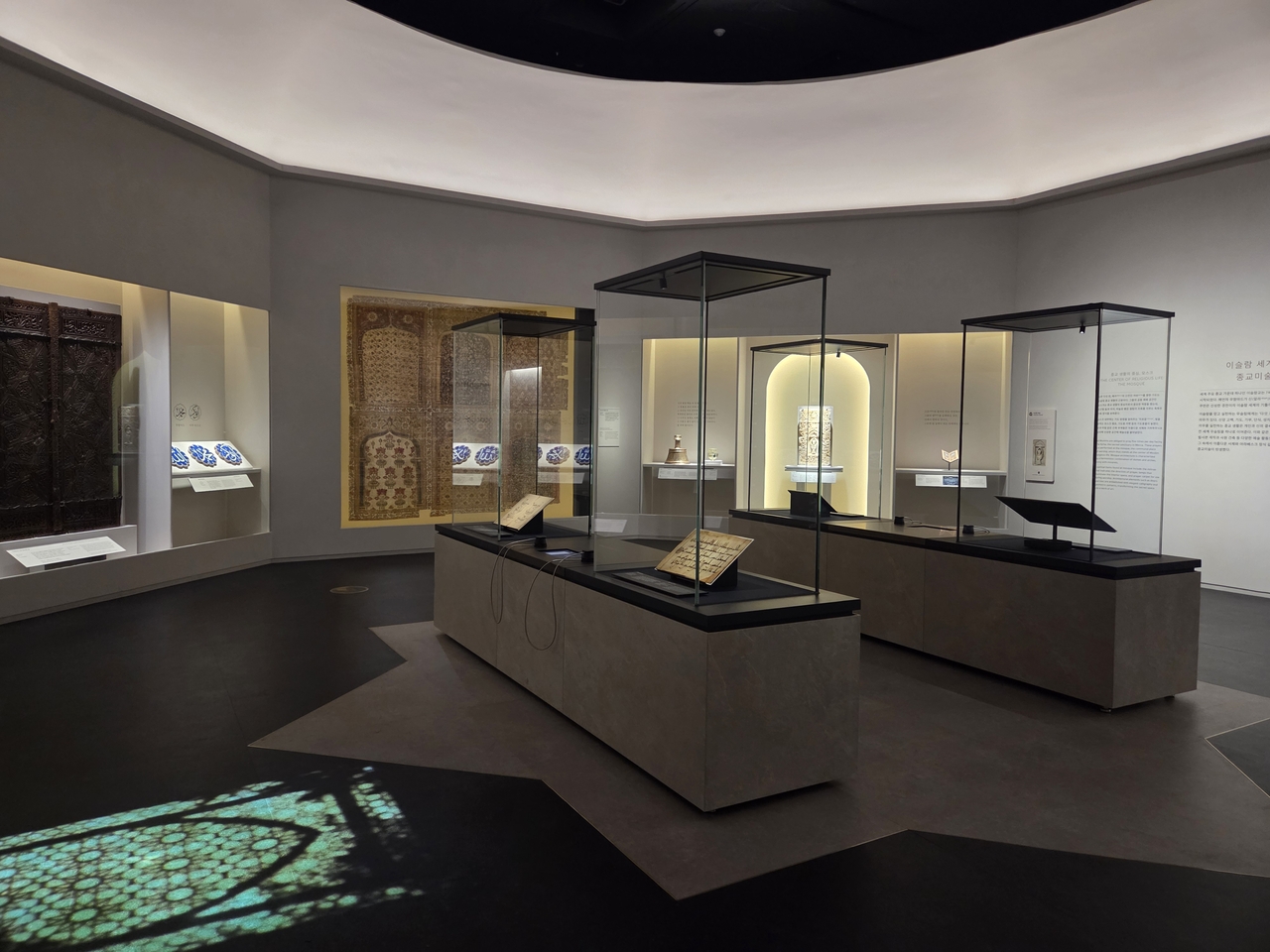
The National Museum of Korea will host an exhibition of Islamic art in its World Art section -- Seoul's first long-term exhibition dedicated to Islamic culture -- from Saturday to Oct. 11, 2026.
The 83 selected works of Islamic art are from the Museum of Islamic Art in Doha, Qatar. The exhibition's duration of 11 months reflects Qatar’s regulation limiting overseas loans of its cultural artifacts to less than one year, according to the MIA.
“We broadened the theme and reorganized the exhibition so that Korean visitors, for whom Islamic culture may still feel unfamiliar, can more easily understand it,” said NMK curator Kwon Hye-eun on Friday.

Entering the gallery, designed in an octagonal layout, evokes the atmosphere of stepping into a mosque. Architectural decorations featuring geometric patterns are installed throughout the space.
Due to Islam's prohibition of idolatry, Islamic art conveys the glory and teachings of God exclusively through script and decorative design rather than human or animal figures, according to the curator.
Islam developed a flourishing tradition of calligraphy, highlighted by resplendent transcriptions of the Quran. At the entrance is “Folio from a Monumental Quran,” one of the largest surviving Quran manuscripts, which is said to have been commissioned by Timur, the 14th century founder of the Timurid dynasty in Central Asia.

“In this small booklet, you see Medina on the left and Mecca with the Kaaba on the right,” the curator said, showing a 19th-century manuscript of the prayer book Dala’il al-Khayrat, produced in the Ottoman Empire.
“Even our use of the word ‘mecca’ comes from this Islamic city. Elements of Islamic culture, like Arabic coffee, are already part of our daily lives. I hope the exhibition helps visitors move past some of their preconceptions,” Kwon said.
Highlights include the “Throne Carpet” from the 17th century, regarded as one of the finest carpets produced under Persia's Safavid dynasty. Measuring more than 250 centimeters in length, the exquisite carpet was likely intended for use in a throne room.
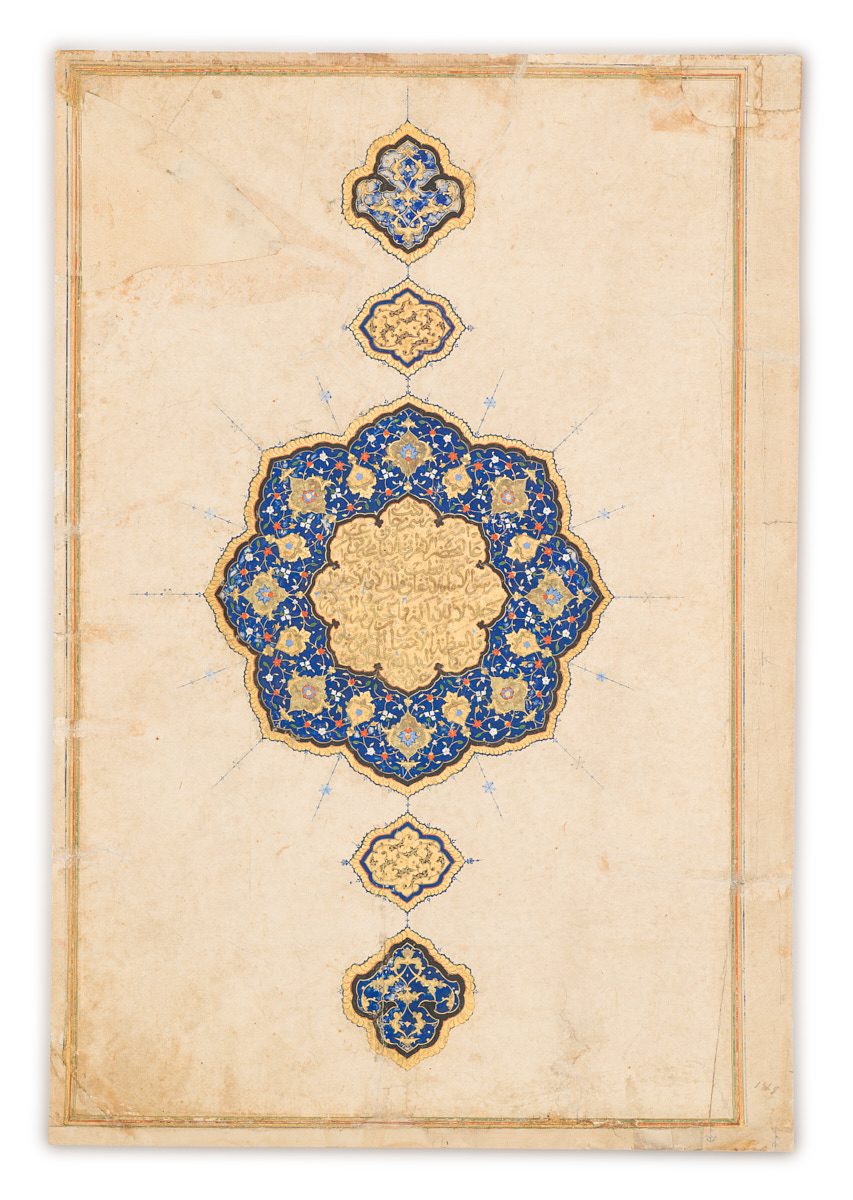
Also on display are folios from the Shahnama (Book of Kings), commissioned by Tahmasp I of the Safavid Empire, which are renowned for their dazzling beauty and intricate detail.
Among the 83 works on view, ranging from Quran manuscripts, craftworks and textiles to miniature paintings, some items, such as the manuscripts, will be rotated for conservation purposes.
Islam arose on the Arabian Peninsula in the 7th century and today has more than 2 billion believers around the world.
At the end of the gallery is an installation that recreates the typical reception room of a noble household in the late Ottoman Empire in Damascus, the modern-day capital of Syria. The "Damascus Room" is one of the signature spaces of the Museum of Islamic Art, Doha.
Museum of Islamic Art seeks deeper cultural ties with Korea
The Museum of Islamic Art, which co-organized the exhibition, was founded in 2008 as part of Qatar Museums' initiative to transform Doha into a global center for culture. Qatar Museums was founded in 2005 as a government body overseeing the country’s cultural institutions.
The MIA building was designed by the renowned Chinese American architect I. M. Pei, best known for the Louvre Pyramid.
“Qatar has a vision to become a global capital of culture and dialogue. That is why we are developing diverse programs at home and abroad, and we are very pleased to be collaborating with Korea in this effort,” Shaikha Nasser Al-Nassr, director of the MIA, told a group of reporters in Seoul on Friday.

MIA holds some 100,000 works in its collection, with 800 pieces on view, according to the director.
Al-Nassr noted that the Seoul collaboration marks the beginning of its relationship with the National Museum of Korea, expressing a strong commitment to long-term partnership with the Korean cultural scene.
“Korean culture is extremely popular in Qatar, and its presence is very strong,” the director said. “At the Qatar World Cup (in 2022), BTS performed at the opening ceremony, which received an enthusiastic response and further boosted interest.”
Dr. Mounia Chekhab Abudaya, deputy director of the MIA, expressed hope that the exhibition helps trigger a gradual change in longstanding stereotypes of Islamic culture as conservative and closed, as it has been portrayed by some in the media, especially in the past 30 years.
“Globally, there is still a very negative perception of Islam and the role of women, but if you look at historical records, women in the Islamic world often had significant rights. If you look at our delegation today (in Seoul), you have already the answer that women are empowered in Qatar. We also have women who were patrons in the arts of Islam,” she said.
“Our next exhibition (in Doha) will focus on Afghanistan, and it will include a full section on women photographers who represent the voices of the country.”
yunapark@heraldcorp.com