

Employment rate for South Korean mothers reaches all-time high of 67.3 percent, but nearly half a million women stay out of work for at least 10 years

Even as a record-high proportion of South Korean women remain employed while married and raising children, government data showed Thursday that over 40 percent of women who pause their careers do not return to the workplace for at least 10 years.
According to the Ministry of Data and Statistics, 64.3 percent of married women aged 15 to 54 who live with children under 18 were employed in the first half of 2025. The figure was up 1.9 percentage points from a year earlier and marked the highest first-half reading since the government began compiling comparable data in 2016.
Compared with five years ago, the employment rate of these working mothers has risen by 8.8 percentage points, even though the total number of mothers in this group has declined alongside a fall in the number of births.
The employment rate of married women reached 67.3 percent, up 1.3 percent from the previous year and also marking the highest figure ever.
In terms of occupation, the largest group comprised managers, professionals and related jobs at 35.1 percent. Wage workers accounted for 83 percent of employed working mothers, and most of them, 80.6 percent, were in regular, full-time positions.
Mothers of teenagers were far more likely to be employed than those with preschool children, with employment rates of 70.4 percent and 57.7 percent respectively.
The number of “career break women,” defined as married women aged 15 to 54 who left work due to marriage, pregnancy, childbirth or childcare, stood at about 1.11 million in the first half, down 110,000 from a year earlier. They accounted for 14.9 percent of all married women in that age group, the lowest share since 2014.
Among married women with children, about 885,000 had experienced a career break, also a record low share of 21.3 percent.
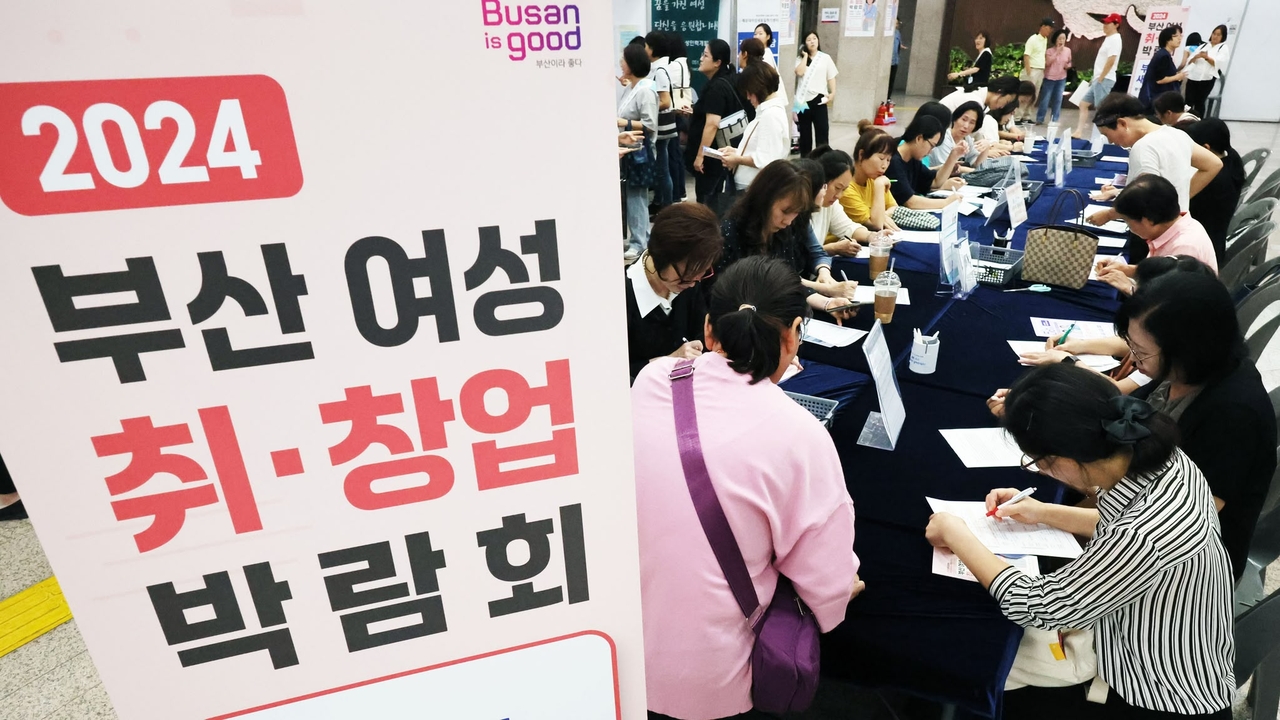
However, career interruptions remain lengthy. Among women with interrupted careers, 42.1 percent had been out of work for at least 10 years, the largest single group, while the second-largest group (22.3 percent) had been inactive for five to ten years. Women in their early 30s showed the highest incidence of career breaks, with 21.8 percent of married women aged 30 to 34 classified as having left work for family reasons.
Childcare was cited as the main reason for all respondents, accounting for 44.3 percent of career breaks, followed by marriage at 24.2 percent and pregnancy or childbirth at 22.1 percent.
Career interruption has long been one of the defining challenges of South Korea’s labor market. Maternity protections exist on paper, but uptake remains limited due to rigid work cultures, long hours and still limited access to affordable childcare.
mjh@heraldcorp.com