

In the lead-up to South Korea’s local elections in June next year, Gwangju’s top education official and a district mayor are facing backlash from civic groups for using the nationwide college entrance exam and public broadcasts to promote themselves well before official campaigning begins.
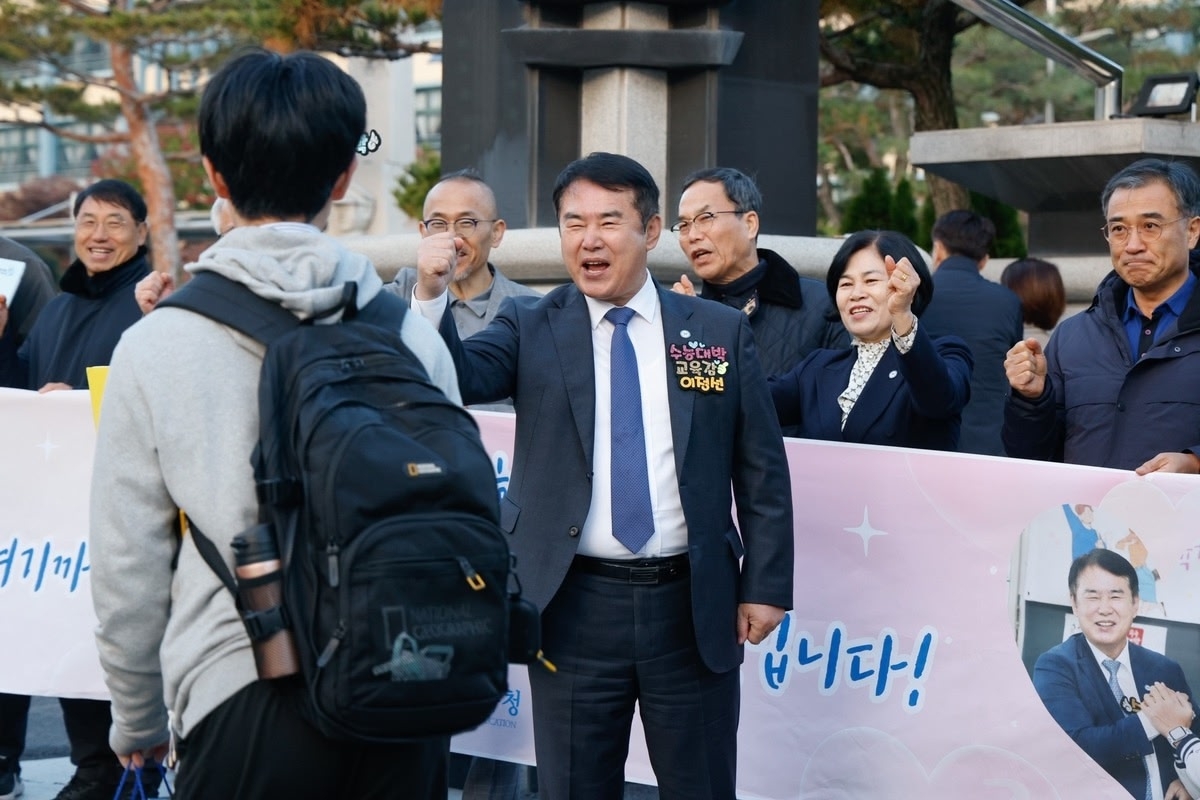
Gwangju Education Superintendent Lee Jung-seon came under scrutiny for staging a high-profile appearance on Thursday, the same day of Suneung. Positioned outside a local test site, Lee greeted students alongside senior education officials holding large banners prominently featuring his name and face.
Though framed as encouragement, the timing and format of the event raised concerns about politicizing a day traditionally reserved for student support.
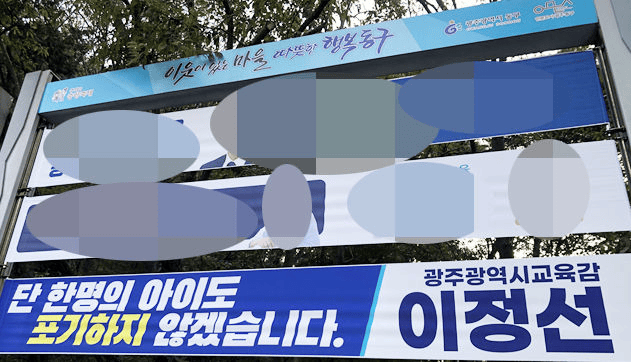
The controversy deepened when local civic group Anti-Hakbul revealed that Lee had personally funded the installation of 197 promotional banners across the city a few weeks before exam day. One banner read, “We will not give up on even a single child,” prominently featuring his name and title.
The group filed a formal complaint with the National Election Commission, arguing that the volume and placement of the banners suggested a political motive inconsistent with the intent of routine public communication.
Lee’s office countered by saying it had received prior legal guidance from the commission and was told the banners were not in violation of election law. The office also stated that such messaging has been used in past education initiatives, regardless of election or national exam timing.

A separate incident earlier in the month added to public unease.
On Nov. 6, Mun In, mayor of Gwangju's Buk-gu, sang a retro pop song on stage for a recording of KBS' "Korea Sings," also known as "National Singing Contest," at Dongkang College, accompanied by eight senior female public officials who acted as backup dancers. The women, wearing wigs and sunglasses, had officially registered the appearance as a "work trip," prompting criticism from labor unions, the city council and even the Ministry of the Interior and Safety, which demanded an explanation.
Mun initially defended his performance as a "long-standing practice" and said the participation of the officials was "entirely voluntary."
But on Monday, Mun issued a formal apology to Buk-gu’s 1,700 civil servants via an internal message board. “I regret that my lack of judgment damaged the reputation and morale we have built together,” he wrote. “The criticism is valid, and I will reflect deeply.”
mjh@heraldcorp.com


![[World Class] HUFS bets on Songdo, AI to redefine what a global university can do](https://wimg.heraldcorp.com/news/cms/2026/10/18/news-p.v1.20260930.7e4dbeacfc1d4d16848c0e2a441c04e6_R.jpg?type=h&h=120)
