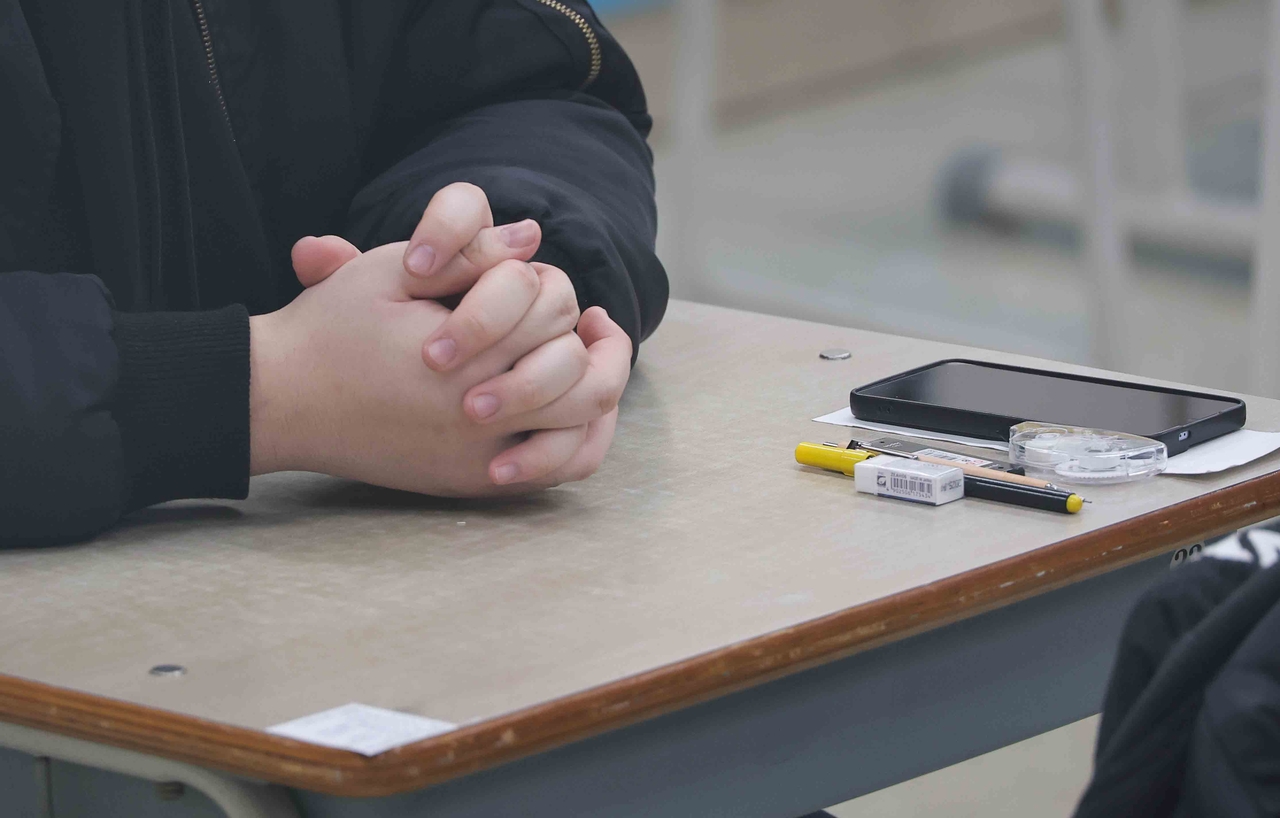
Students prepare for the 2026 CSAT at Yongsan High School in Yongsan-gu, Seoul, on Thursday. (Yonhap)

The annual college entrance exam was held nationwide Thursday with the largest number of applicants in seven years due in part to an unusually high birth rate in 2007.

The College Scholastic Ability Test, seen as one of the nation's most important academic events, began at 1,310 test centers across the country at 8:40 a.m. and is set to end at 5:45 p.m.

A total of 554,174 people have applied for this year's exam, up 31,504, or 6 percent, from last year and the highest figure since 2018, according to the education ministry.

High school seniors and graduates account for 67.1 percent and 28.9 percent of the total, respectively, it said.

Competition for admission to top colleges is expected to be fierce due to the large number of test-takers and the government's backtracking on a medical school quota increase.

Last year, the quota was increased by 1,497 slots to 4,610 under former President Yoon Suk Yeol's policy to address a shortage of doctors.
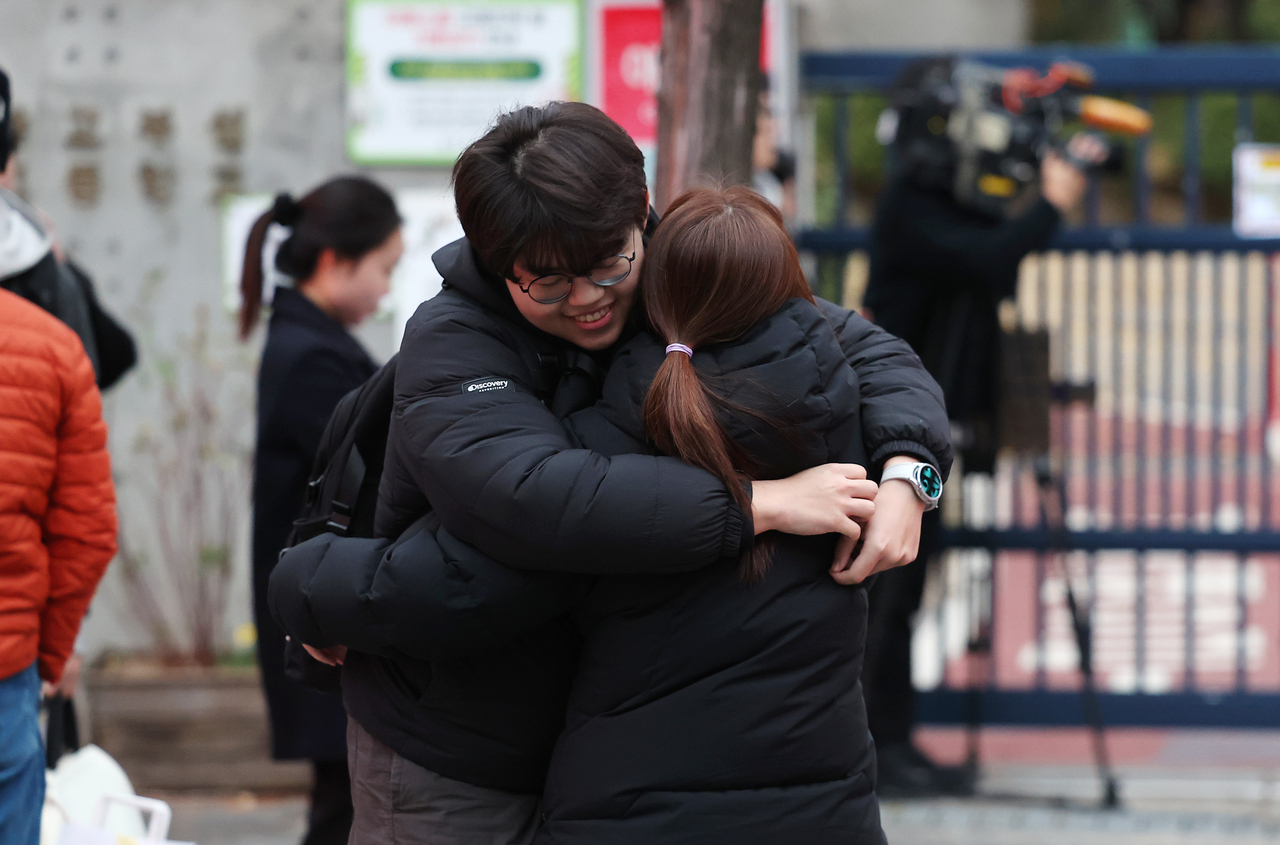
A student taking the 2026 CSAT hugs their mother in front of the test center set up at Kyungbock High School in Jongno-gu, central Seoul, on Thursday. (Yonhap)
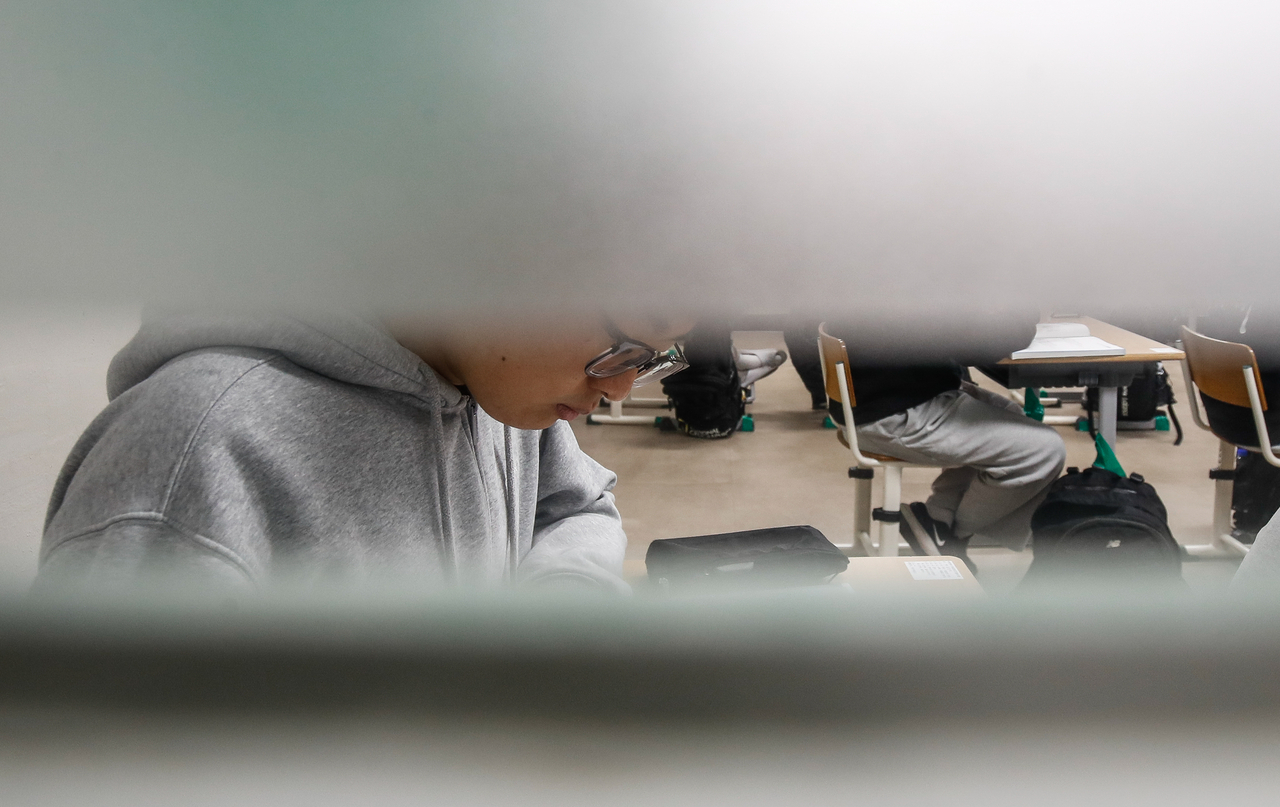
Test-takers make final preparations for the College Scholastic Ability Test at Jeju Jeil High School on Thursday. (Yonhap)

The plan backfired, however, forcing a return to the previous level of 3,123 seats.

Meanwhile, the number of test-takers is up in part because most people born in 2007, the year of the auspicious Golden Pig that saw an unusually high birth rate, are now in their third year of high school.

The CSAT is the culmination of years of grueling studies for many students, and the government makes every effort to cater to their needs on exam day.

All aircraft takeoffs and landings across the country will be banned from 1:05 p.m. to 1:40 p.m. to minimize noise during the English listening portion of the exam.

Aircraft in flight, excluding those in emergency situations, must remain in the air at an altitude of 3 kilometers or higher under the direction of air traffic control authorities.

In Seoul, the subway service was increased by 29 runs, mostly between 6 a.m. and 10 a.m., to help students get to their test centers on time.

Stock markets, which are typically open from 9 a.m. until 3:30 p.m., will open and close one hour later to ease morning rush-hour traffic.
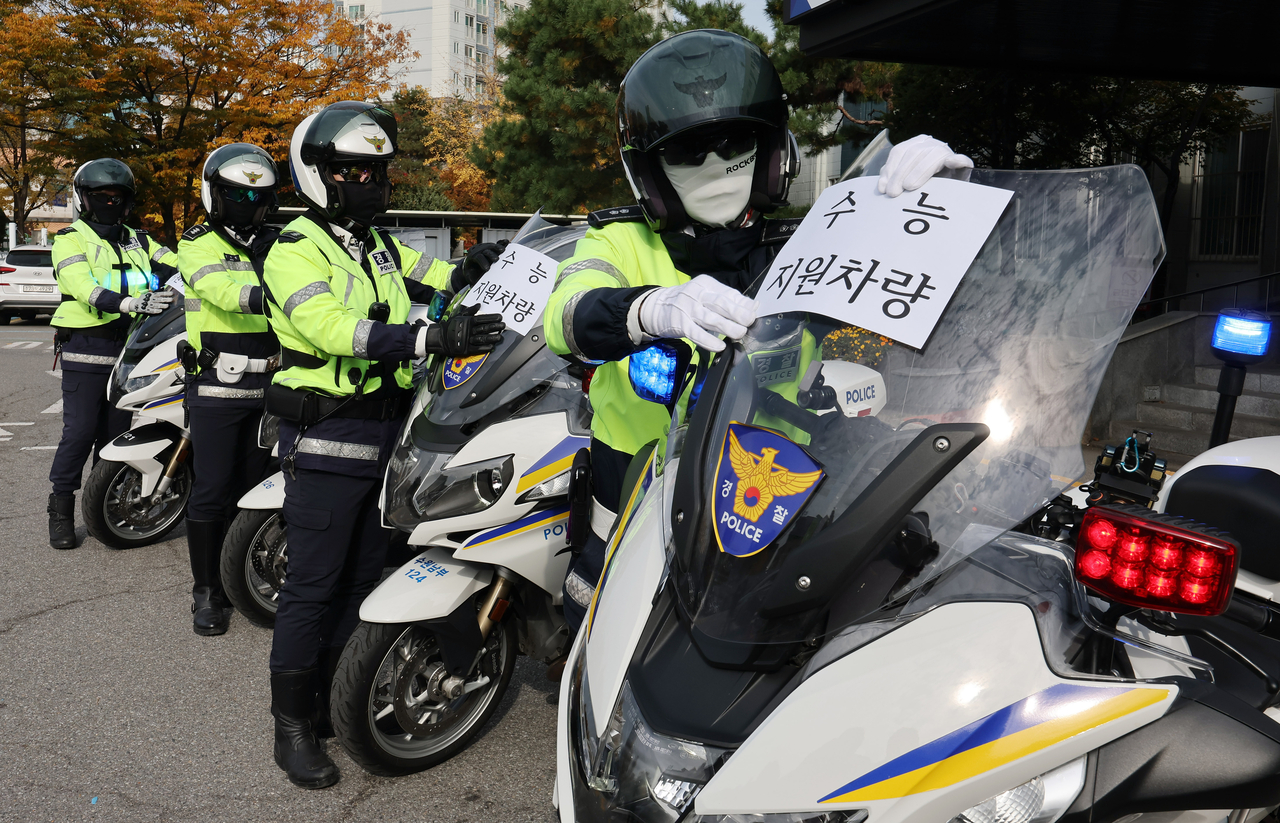
Police officers in Suwon, south of Seoul, attach signs to motorcycles on Tuesday, to set them apart for traffic control purposes for the day of the annual college entrance exam on Thursday. (Yonhap)

The CSAT is the culmination of years of grueling studies for many students, and the government makes every effort to cater to their needs on exam day.

All aircraft takeoffs and landings across the country will be banned from 1:05 p.m. to 1:40 p.m. to minimize noise during the English listening portion of the exam.

Aircraft in flight, excluding those in emergency situations, must remain in the air at an altitude of 3 kilometers or higher under the direction of air traffic control authorities.

In Seoul, the subway service was increased by 29 runs, mostly between 6 a.m. and 10 a.m., to help students get to their test centers on time.

Stock markets, which are typically open from 9 a.m. until 3:30 p.m., will open and close one hour later to ease morning rush-hour traffic. (Yonhap)
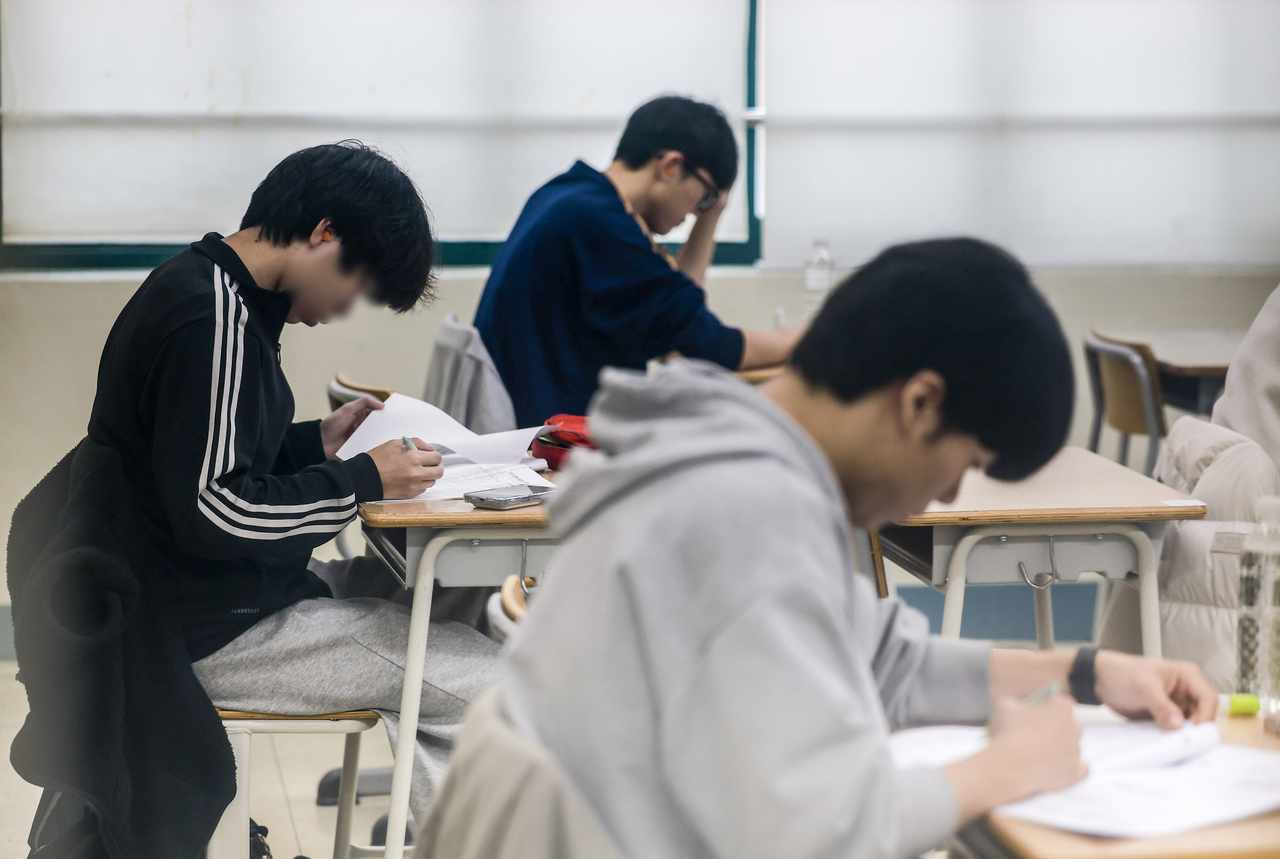
Students prepare for the 2026 CSAT at Yongsan High School in Yongsan-gu, Seoul, on Thursday. (Yonhap)
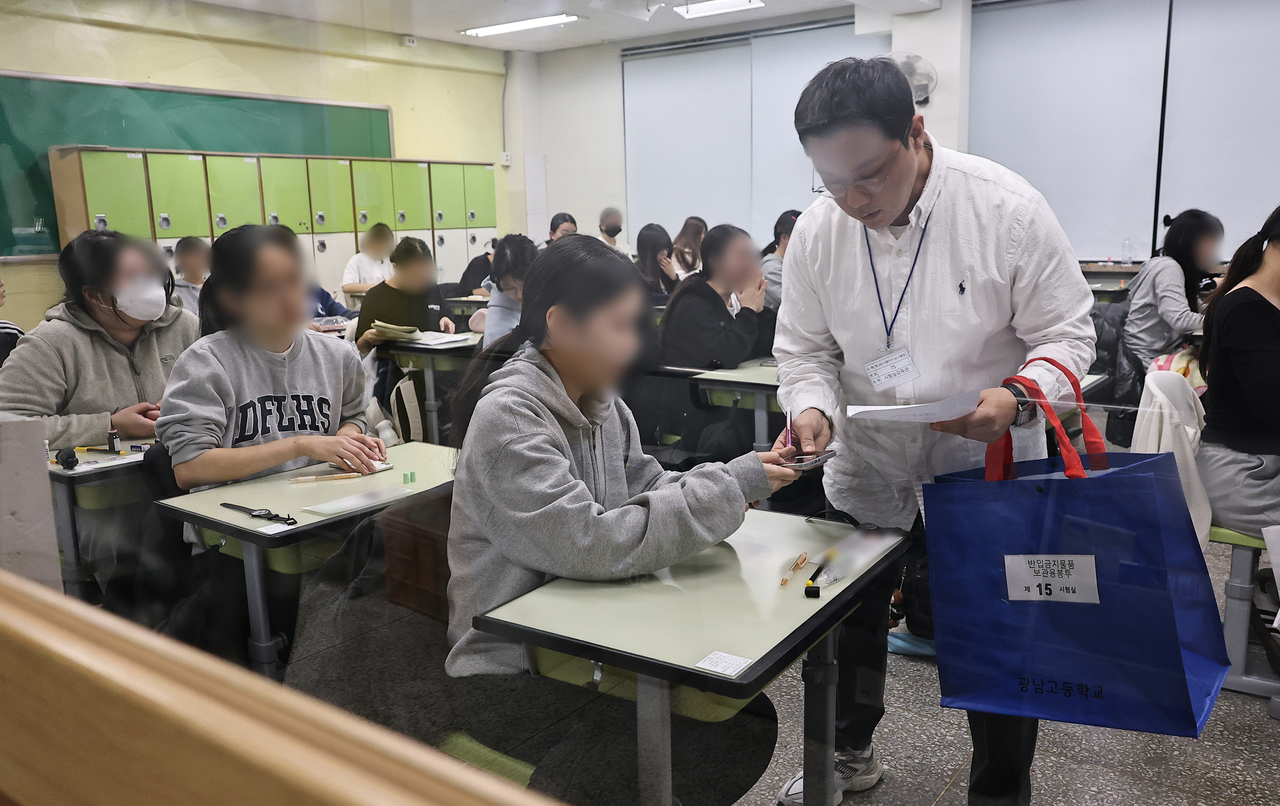
An exam supervisor collects students’ mobile phones at Gwangnam High School in Gwangjin-gu, Seoul, during the 2026 CSAT on Thursday. (Yonhap)
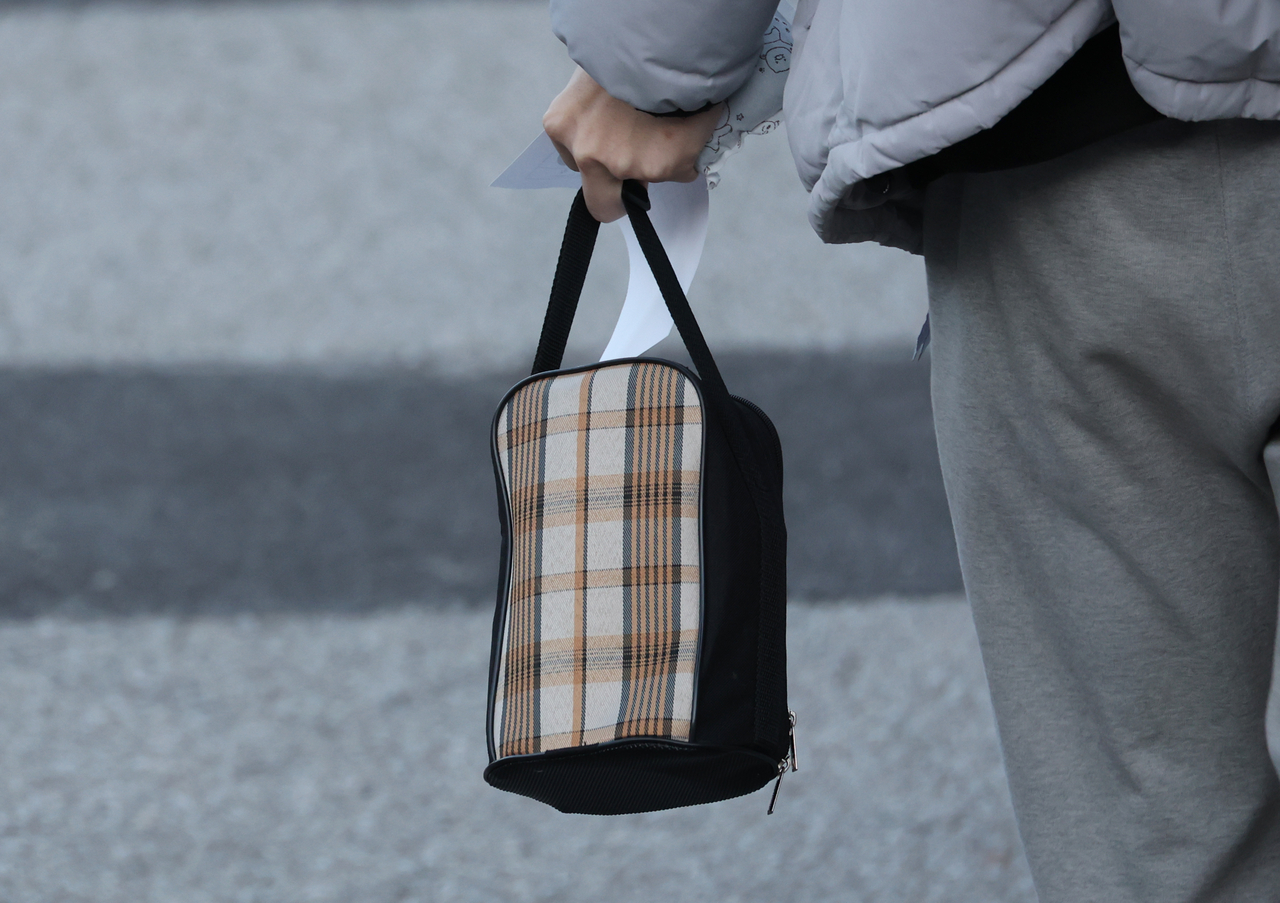
A student holding a lunch box and exam slip enters Jeonju Youngsaeng High School, which serves as Test Site No. 8 in District 67 under the North Jeolla Provincial Office of Education, on the day of the 2026 CSAT, Thursday (Yonhap)
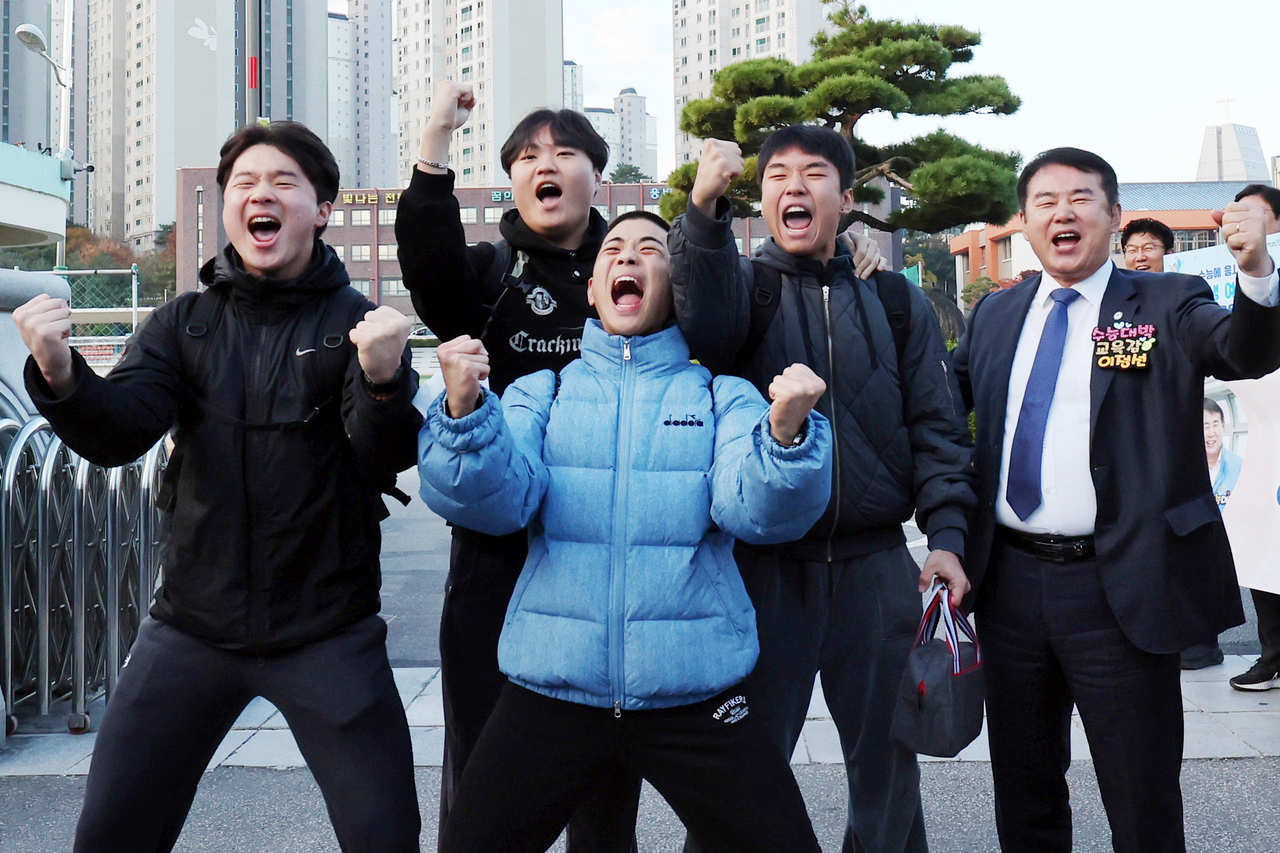
Students cheer with Lee Jung-seon, superintendent of the Gwangju Metropolitan Office of Education, in front of the main gate of Seoseok High School in Seo-gu, Gwangju, where a test center was set up for the 2026 CSAT on Thursday. (Yonhap)
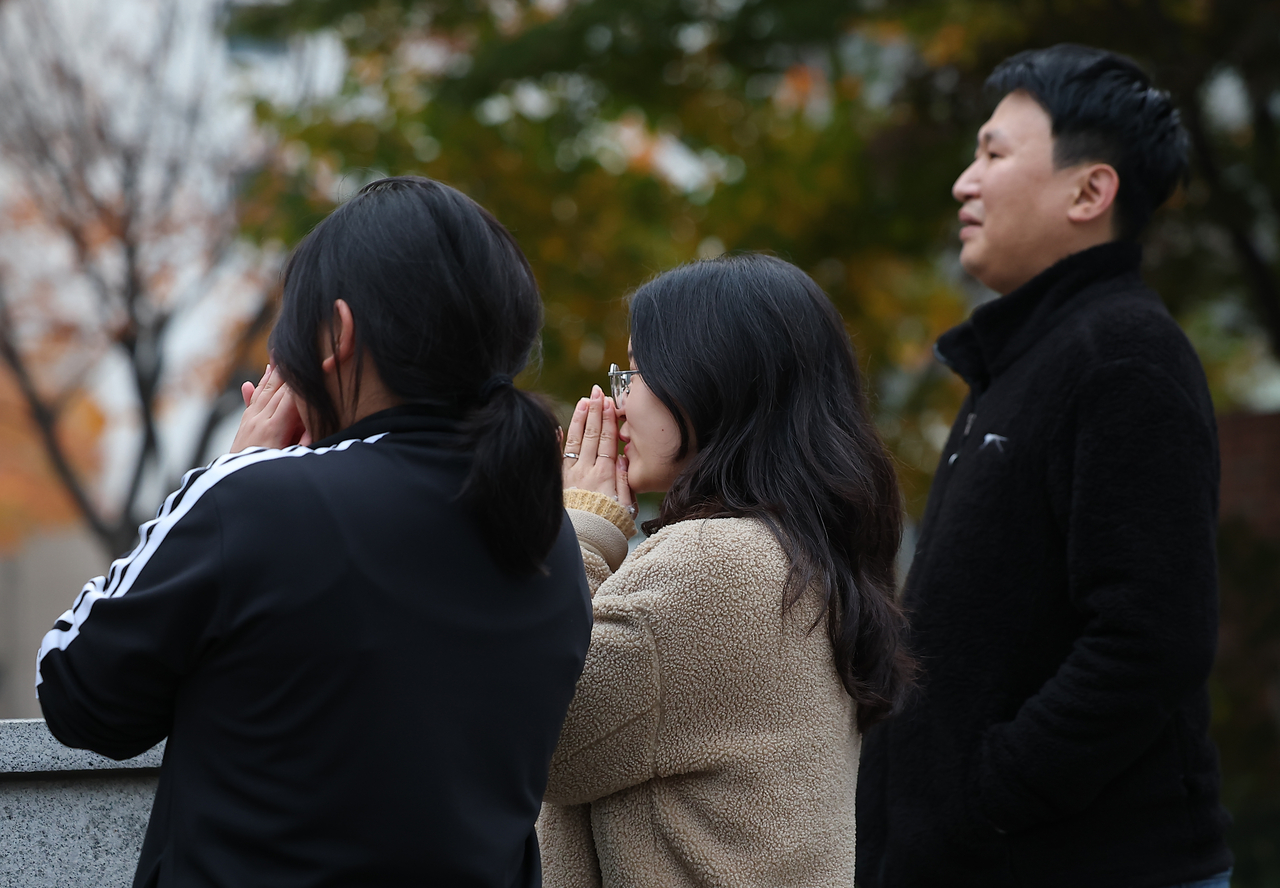
A family prays in front of Ewha Girls’ Foreign Language High School in Jung-gu, Seoul, where the 2026 CSAT was held on Thursday. (Yonhap)