
Korean automaker expected to suffer substantial loss in 3Q due to levy
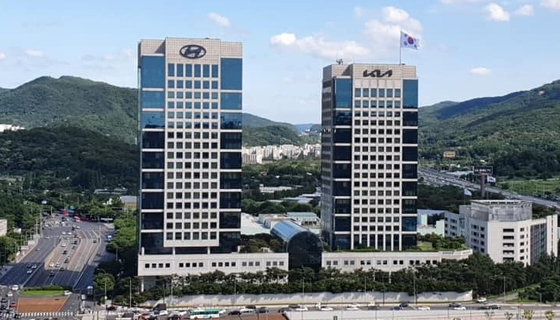
Hyundai Motor on Wednesday breathed a sigh of relief after United States President Donald Trump indicated that Washington and Seoul had reached an agreement on the prolonged tariff negotiations earlier in the day.
When asked if a trade deal had been made with President Lee Jae Myung at a dinner with Asia-Pacific Economic Cooperation leaders in Gyeongju, Trump said, “We did.”
Although the US leader did not give any more details on the specifics of the agreement, he said that the two sides reached a deal, adding, “We pretty much finalized our trade deal. … And I think we came to a conclusion on a lot of very important items.”
Korea has been struggling to strike a levy deal with the US since the Trump administration imposed a 25 percent reciprocal tariff on Korean imports in April. Seoul has been working to lower the tariff to 15 percent, on par with that of the European Union and Japan.
Korea's presidential office said that the auto tariffs were lowered to match those of Japan and the EU so that the Korean auto industry would be at the same level of competition, noting that the tariffs on auto and auto parts were set to be lowered to 15 percent. However, when the implementation timing of the newly agreed tariffs were not disclosed.
"We thank the government for relentlessly working towards reaching a deal through a tough process of negotiations," said a Hyundai Motor official.
"Hyundai Motor and Kia will push for various strategies to minimize the impact of tariffs while strengthening the fundamentals by strengthening the quality and brand competitiveness."
According to market intelligence FnGuide, Hyundai Motor and its sister affiliate Kia were forecast to log a combined operating profit of about 4.8 trillion won ($3.4 billion) in the third quarter earnings this year, down approximately 25 percent from the same period last year.
Hyundai Motor and Kia are set to release their third-quarter earnings and hold a conference call on Thursday and Friday, respectively.
The downfall was attributed to the impact of the 25 percent tariff on auto exports, as the automakers were estimated to have suffered about 2.45 trillion won in losses in the third quarter alone. The automakers were able to weather the tariffs in the second quarter thanks to the prestocked inventory.
Market watchers expect the 15 percent tariff deal to have an impact of about 4 trillion won for the Korean automakers.
“If the tariff deal was not reached during the APEC week and continued to drag out, the Korean auto industry would have been at a huge disadvantage when compared to European and Japanese automakers,” said Kim Pil-su, an automotive engineering professor at Daelim University.
hwkan@heraldcorp.com