
Tensions rise ahead of APEC summit in Korea, with implications for ongoing Korea-US tariff talks
The latest tit-for-tat trade measures between the United States and China are rattling South Korean chipmakers, as Beijing tightens controls on rare earth exports and Washington retaliates with sweeping tariffs — deepening fears over the stability of global technology supply chains.
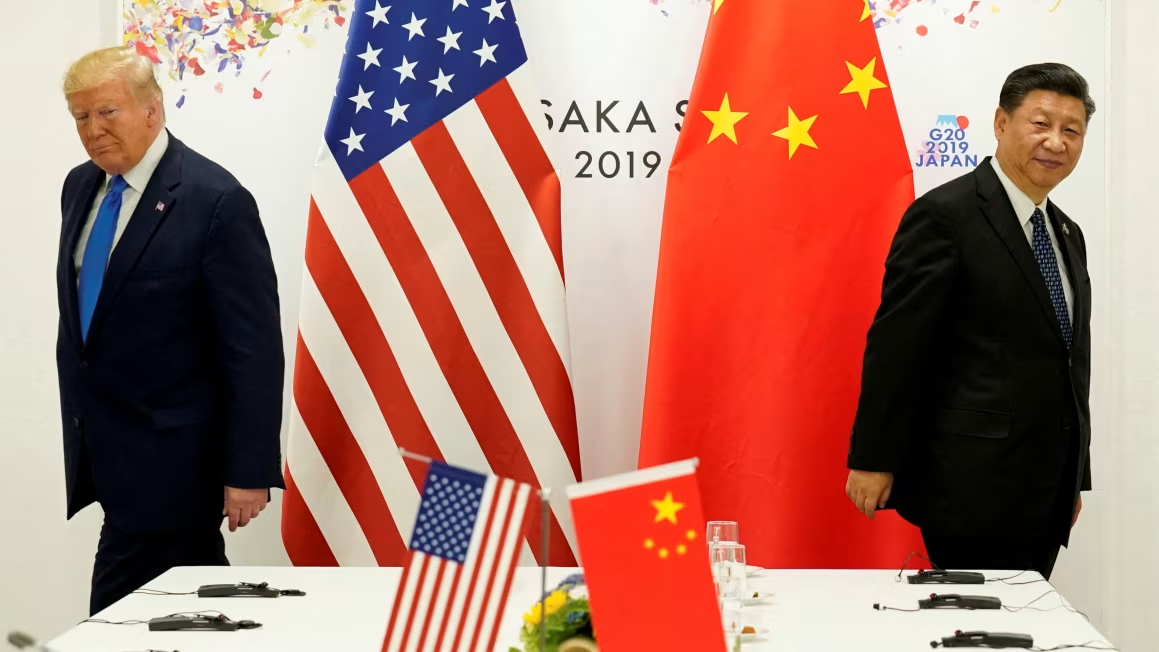
China last week imposed new export restrictions on rare earth minerals and related intellectual property, just weeks ahead of a potential meeting between Chinese President Xi Jinping and US President Donald Trump in Korea.
The new rules require foreign companies to obtain licenses to export products containing more than 0.1 percent of Chinese-sourced rare earths, or that were produced using Chinese extraction, refining, magnet-making or recycling technologies. Beijing also said it would reject applications for materials with potential military uses.
Washington quickly responded with plans to impose a 100 percent tariff on all Chinese imports starting Nov. 1 — a move Trump described as “over and above any tariff they are currently paying.”
The semiconductor industry is watching closely, as the curbs target materials used in equipment for advanced chips — those under the 14-nanometer node and memory chips with more than 256 layers, both crucial for artificial intelligence applications. Beijing said it would review all export applications involving such technologies on a case-by-case basis, making clear that no foreign company would be exempt.
While some analysts dismiss the dispute as political theater, the escalation has triggered alarm in Seoul, home to leading global chipmakers that rely heavily on Chinese rare earths. Korea’s Trade Ministry said Monday it is analyzing the details and potential impact of Beijing’s latest curbs.
China’s Ministry of Commerce now requires approval for exports of rare earth alloys such as samarium-cobalt and terbium-iron, in addition to seven elemental rare earths, including samarium and dysprosium.
Experts warn that tighter controls could drive up prices of rare earth magnets, disrupting the semiconductor equipment supply chain. Advanced tools from companies such as Applied Materials and ASML depend on these materials for precision lasers and magnets, which chipmakers — including Samsung Electronics and SK hynix — use to produce high-end semiconductors like high-bandwidth memory chips.
According to the Korea International Trade Association, Korea imported nearly 80 percent of its rare earth metals and 47.5 percent of its rare earth compounds from China last year.
“Even for civilian-use technologies, delayed or prolonged export approvals could inflict significant damage on companies,” said Jang Sang-sik, head of the International Trade and Commerce Institute at KITA.
While US Treasury Secretary Scott Bessent said Monday that the summit between Trump and Xi “will still be on,” the timing of the latest measures has heightened concerns in Seoul, which is set to host the Asia-Pacific Economic Cooperation meetings in Gyeongju, North Gyeongsang Province, later this month.
Officials fear that a collapse in US-China talks could disrupt Seoul’s planned summits with key partners, including both Washington and Beijing, particularly as follow-up negotiations on US tariff measures remain unresolved.
Trump is expected to attend the APEC CEO Summit on Oct. 29 after visiting Japan, but industry officials said his stay in Korea could be shortened if the US-China meeting falls through.
Experts say the escalating standoff could indirectly influence Korea-US tariff negotiations.
“If tensions with China deepen, the US may feel greater urgency to show progress with allies,” said Kim Tae-hwang, an international trade professor at Myongji University. “From Korea’s perspective, it could ultimately work in its favor.”
herim@heraldcorp.com