
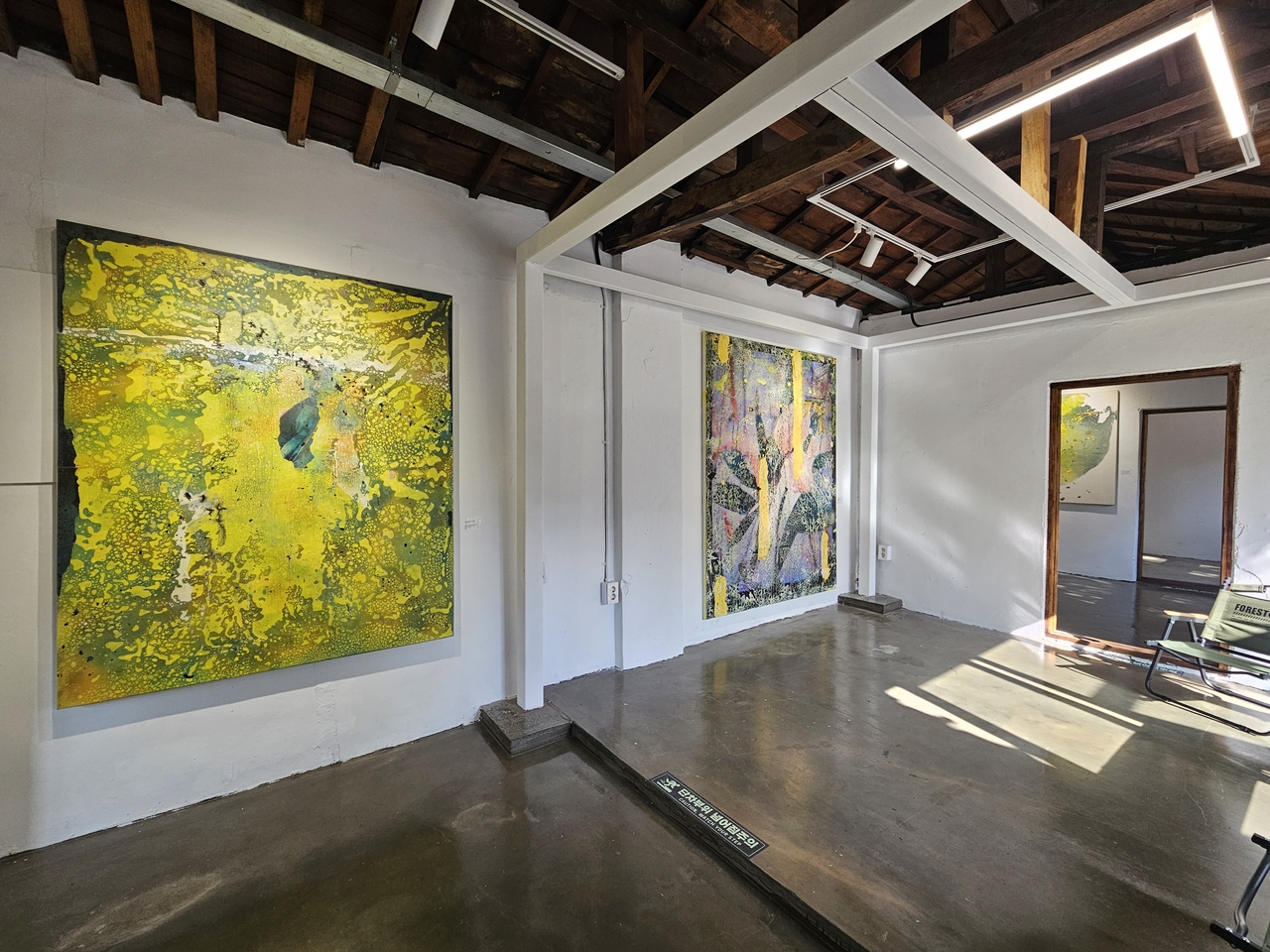
A residence for factory workers built in the 1960s has been left unused for around 10 years in Seongsu-dong, a neighborhood that once housed a cluster of factories but is now a hotspot for younger crowds.
The dormitory that once held the passions and dreams of workers living there has been transformed into Namu Seoul. The two-story art space sits around a small courtyard featuring a 90-year-old ailanthus tree — a remnant of the site’s long history.

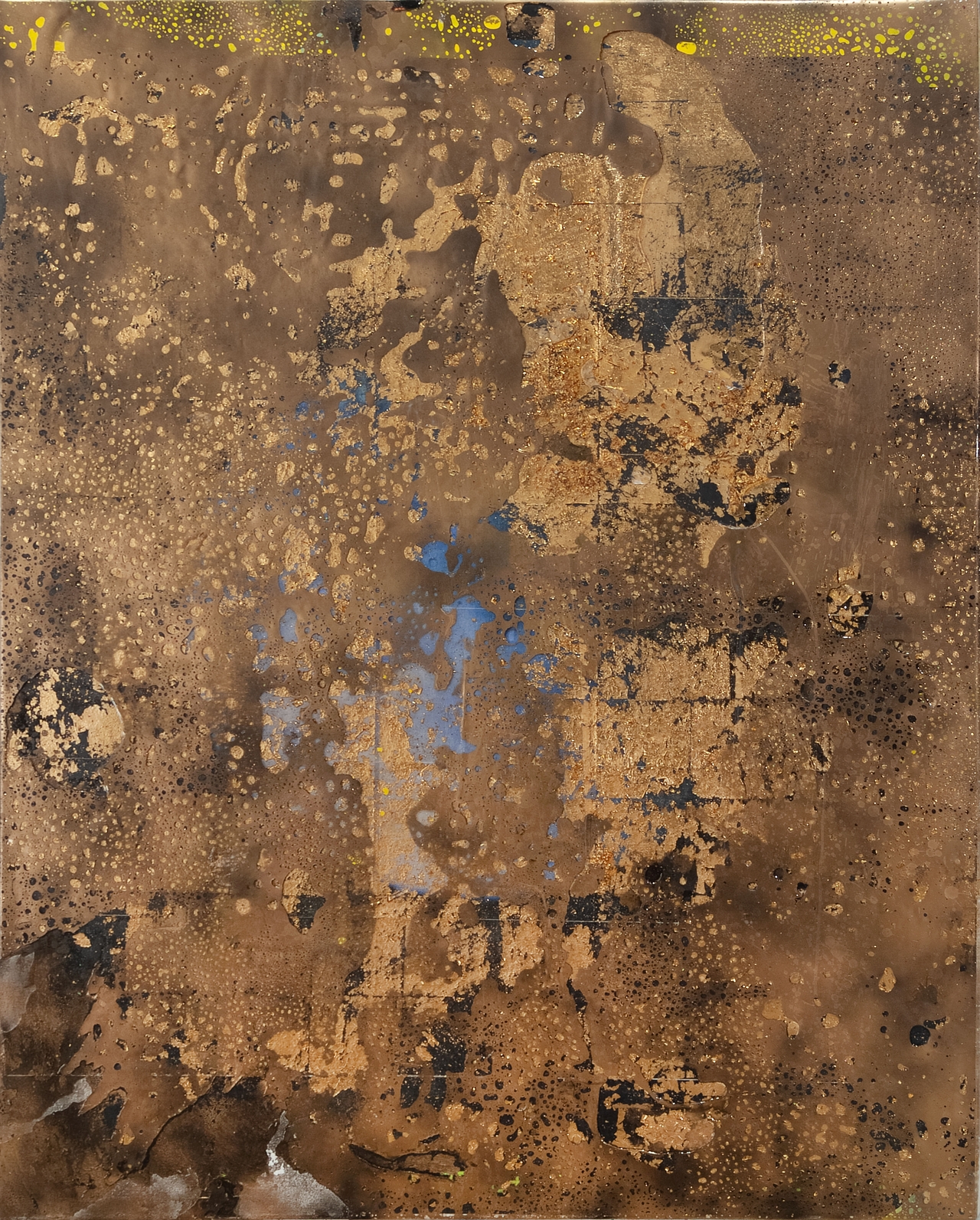
The art space’s inaugural exhibition, “Residue,” shows Korean artist Park In-seong’s collage works. Park constructs layered collages that blur the boundary between image and object. Most of the works on view are created with pigment-printed photo paper, layered with acrylic and epoxy resin.
Park's exhibition reimagines the old dormitory as a living record of fading memories. Park uses a film camera to photograph a specific color displayed on a monitor — chosen entirely by the artist.
The developed film is scanned into digital form, and through repeated scanning and printing, the image becomes a tangible surface that evolves into a painterly form on canvas. In the final stage, Park coats the surface with transparent resin and applies physical pressure, creating deliberate cracks that reveal the tension between control and chance.
An artist talk with Park will be held at 3 p.m. on Oct. 18, where the artist — an avid reader — will discuss books that have inspired his work.
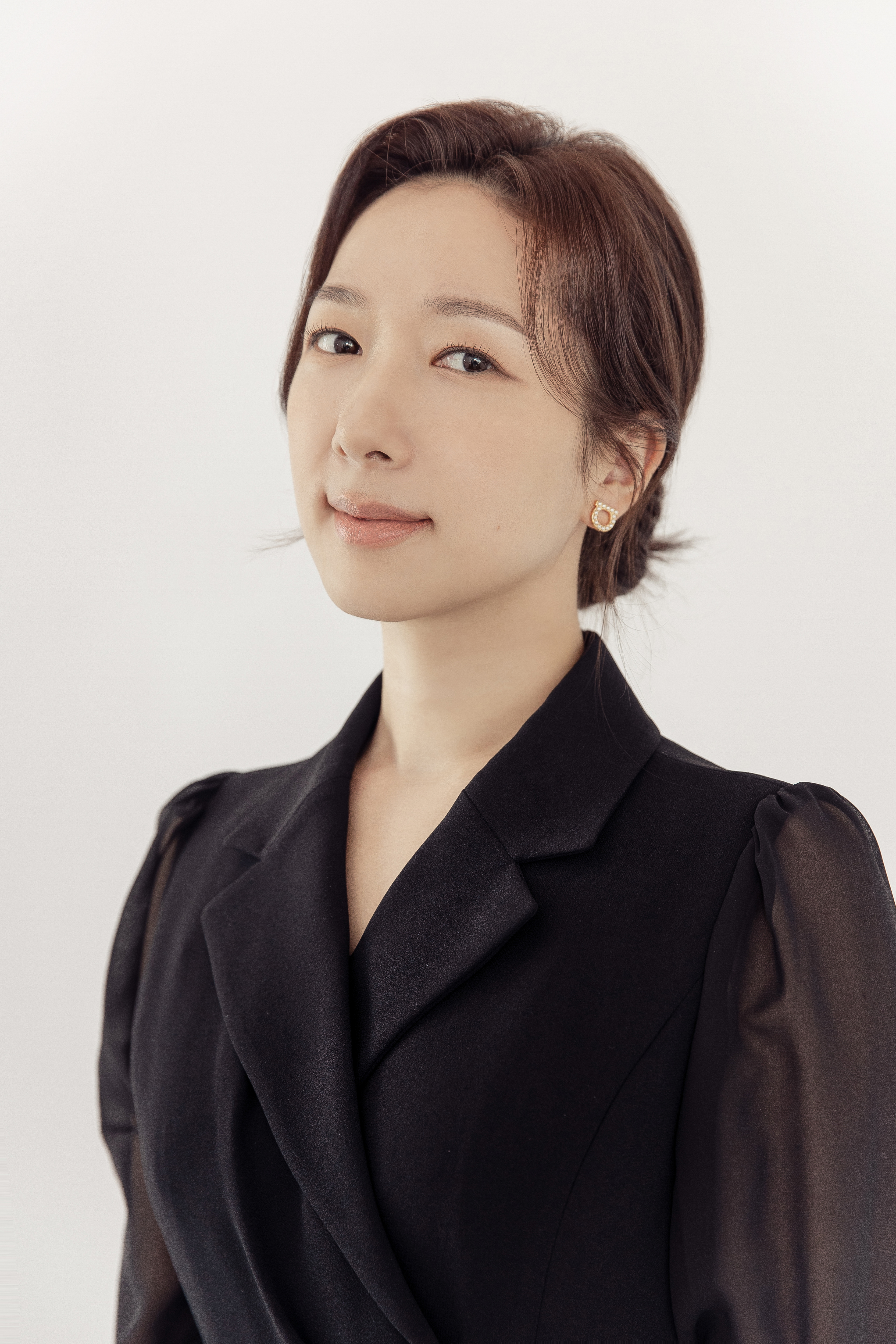
“As redevelopment plans move forward, the neighborhood is expected to look completely different in the next decade,” said Grace Minkyung Bak, founder of Namu Seoul and A-Lens. “Starting in Jeju next year and extending to artist residencies in Gangwon Province, we aim to help artists in Korea and beyond grow and thrive freely like trees.”
“Residue” runs through Oct. 26.
yunapark@heraldcorp.com


![[World Class] HUFS bets on Songdo, AI to redefine what a global university can do](https://wimg.heraldcorp.com/news/cms/2026/10/18/news-p.v1.20260930.7e4dbeacfc1d4d16848c0e2a441c04e6_R.jpg?type=h&h=120)
