

Value-first approach in beauty rests on simple logic: less cost, more quality
At a time when Korean cosmetics are going global, a new mantra has taken hold across the domestic beauty market: keep it cheap, but make it count.
Earlier this week, the nation’s leading online fashion retailer, Musinsa, launched a low-priced skincare line under its house brand, Musinsa Standard Beauty. The eight-product lineup is priced between 3,900 and 5,900 won ($2.80 to $4.20).
The company said Friday that several of the newly released skincare sets, mostly essential skincare items, sold out within just three days of launch, a testament to the growing consumer appeal of value-focused offerings.
Much of this pricing flexibility is made possible by Korea’s world-class manufacturing ecosystem, where contract manufacturers such as Cosmax and Kolmar Korea allow brands to reduce costs by overseeing everything from product planning to production.
“Our partnership with trusted manufacturers to deliver high-quality products at an affordable price point helped drive customer interest,” a Musinsa official said.
Musinsa’s low-cost skincare push, far from an outlier, signals an industry-wide changing tide as value-driven beauty gains ground in Korea.
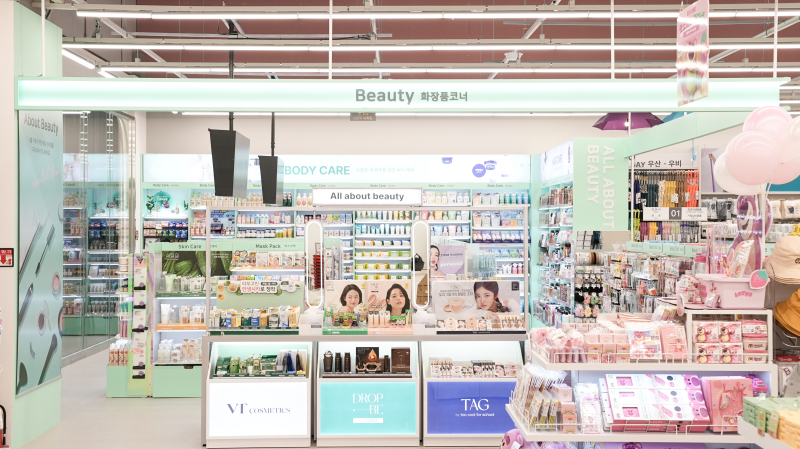
The epicenter of Korea’s beauty price war may well be Daiso, the country’s dollar-store chain, where dozens of beauty makers are staking out shelf space in a bid to capture every possible consumer, all within the store’s strict 5,000 won price ceiling.
Major players such as Amorepacific, LG Household & Health Care and Aekyung Industrial have already joined the fray, rolling out Daiso-exclusive lines under trusted sub-brands. Well-known local brands like Dr.G and Medipeel have also contributed to the segment’s explosive growth.
In the first half of this year, the number of beauty brands stocked at Daiso surpassed 100, a 66 percent jump from a year earlier, with over 800 cosmetic products now on its shelves. Sales in Daiso’s beauty category surged 144 percent last year, and climbed another 110 percent in the first half of this year.
“For beauty makers, entering Daiso, with its large base of younger customers, offers a way to track trends and test consumer response,” said one industry insider, calling shelf space at the retailer a key strategic advantage.
Making low-priced beauty products even more ubiquitous are convenience store chains like CU, GS25 and 7-Eleven, all of which now carry skincare and color cosmetics in the 3,000 to 5,000 won range.
Industry officials view it as part of a broader diversification strategy, with beauty positioned to capture younger demographics and stimulate cross-category spending. “Cosmetics have long shelf lives and high profit margins,” one industry official noted.
Adding to the budget beauty boom, which continues its climb, is mounting pressure from abroad, particularly from China.
Platforms like Temu and AliExpress now deliver price-savvy beauty options straight to Korean doorsteps. According to Statistics Korea, online purchases of Chinese cosmetics reached 21.6 billion won in the second quarter of this year, up 38.1 percent from a year earlier.
This month, Flower Knows, a Chinese color cosmetics brand known for its fairytale packaging, is opening a pop-up in Seongsu-dong, Seoul, with an online store soon to follow.
“Chinese cosmetics used to be cheap and poorly made,” said one industry insider. “Now they’re stylish, surprisingly good and still affordable.”
minmin@heraldcorp.com