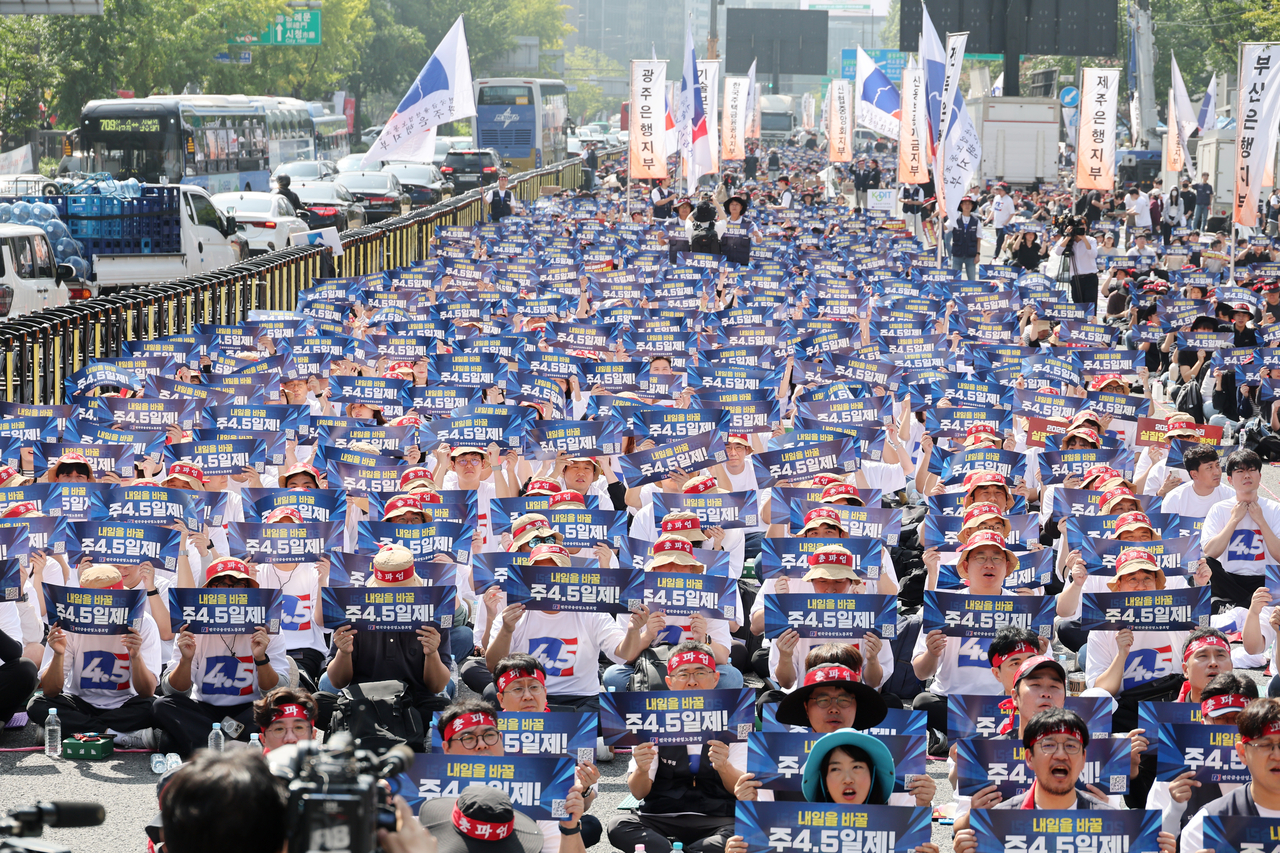
The government is pushing for legislation of a 4.5-day workweek this year.
정부가 올해 안에 주 4.5일제 도입을 위한 법제화를 추진한다.
The Ministry of Government Legislation on Wednesday said that it will submit a new bill to support working hours reduction to the National Assembly this year as one of 123 legislative tasks of the government.
법제처는 수요일, 정부의 123개 입법 과제 가운데 하나로 근로시간 단축을 지원하는 새로운 법안을 올해 국회에 제출하겠다고 밝혔다.
The Ministry of Employment and Labor on Thursday said that it had set aside a related budget and that it plans to revise the law on working hours this year.
고용노동부도 관련 예산을 이미 배정했으며 올해 안에 근로시간 관련 법 개정을 추진할 계획이라고 목요일 밝혔다.
Current statutory working hours are 40 hours per week, and companies can extend this to a maximum of 52 hours by adding 12 hours of overtime.
현행 법정 근로시간은 주 40시간이며, 기업은 여기에 연장근로 12시간을 더해 최대 52시간까지 늘릴 수 있다.
As a presidential candidate, Lee pledged to reduce standard working hours to 36 hours, or 4.5 days, as a transitional stage to the ultimate goal of a 32-hour or 4-day workweek.
이재명 대통령은 대선 후보 시절 표준 근로시간을 36시간, 즉 주 4.5일로 줄이겠다고 공약했다. 이는 최종적으로 주 32시간, 즉 주 4일제를 도입하기 위한 과도기적 단계로 제시된 것이다.
The 4.5-day workweek aims at improving work-life balance. Of course, the purpose itself is positive. But it is necessary to listen to the concerns of businesses that the system, if rushed, could undermine their competitiveness.
주 4.5일제의 목적은 일과 삶의 균형을 높이는 데 있다. 그 취지 자체는 긍정적이다. 그러나 성급히 도입할 경우 기업의 경쟁력을 약화시킬 수 있다는 기업들의 우려에도 귀 기울일 필요가 있다.
A reduction in working hours will be burdensome for companies if it leaves pay levels unchanged and rigid overtime restrictions and low labor productivity unaddressed. And there is no guarantee that workers' concentration will get any better if they work less.
임금 수준은 그대로 두면서 경직된 연장근로 규제와 낮은 노동 생산성을 방치한다면, 근로시간 단축이 기업에 큰 부담으로 작용할 수 있다. 또한 근로시간이 줄어든다고 해서 노동자들의 집중력이 반드시 높아진다는 보장도 없다.
Experts have repeatedly indicated problems in inflexible working hours, for example, preventing research and development manpower in high-tech industries from working intensively for periods. Due to the strict enforcement of a 52-hour workweek, they must stop working and leave laboratories on time, which is rarely the case in South Korea's rival countries. Flexible working hours are essential for ventures and startups, too, but that is not allowed, either.
전문가들은 경직된 근로시간 제도의 문제점을 여러 차례 지적해왔다. 예를 들어, 첨단 산업의 고강도 연구개발 인력이 일정 기간 집중적으로 일하는 것을 막는다는 것이다. 주 52시간 근무제를 엄격히 적용하면 연구원들은 정해진 시간에 일을 멈추고 연구실을 떠나야 하는데, 이는 한국의 경쟁국들에서는 거의 찾아보기 어려운 일이다. 벤처기업이나 스타트업에도 탄력근무제는 필수적이지만, 현 제도에서는 이를 허용하지 않고 있다.
Above all, the country's labor productivity falls short of the Organization for Economic Cooperation and Development average. According to an analysis by the Korea Productivity Center, South Korea ranked 24th out of 37 OECD members in 2023 — a low ranking for a global top-10 economy.
무엇보다 한국의 노동생산성은 경제협력개발기구(OECD) 평균에도 못 미친다. 한국생산성본부 분석에 따르면, 2023년 기준 한국은 OECD 37개 회원국 가운데 24위에 그쳤다. 이는 세계 10대 경제 규모에 걸맞지 않은 낮은 순위다.
push for: 추진하다
submit: 제출하다
budget: 예산
revise: 개정하다
statutory: 법으로 정한
company: 기업, 회사
extend: 연장하다, 확장하다
candidate: 후보
pledge: 약속하다
reduce: 줄이다
ultimate: 궁극적인
balance: 균형
burdensome: 부담스러운
productivity: 생산성
concentration: 집중
research: 연구
laboratory: 연구실
essential: 필수적인
khnews@heraldcorp.com