Korea's customs chief Lee Myeong-ku vows real benefits for exporters
South Korea is placing the Global South at the center of its trade strategy, turning to customs diplomacy and digital transformation to build what officials term as “practical and future-oriented partnerships.”
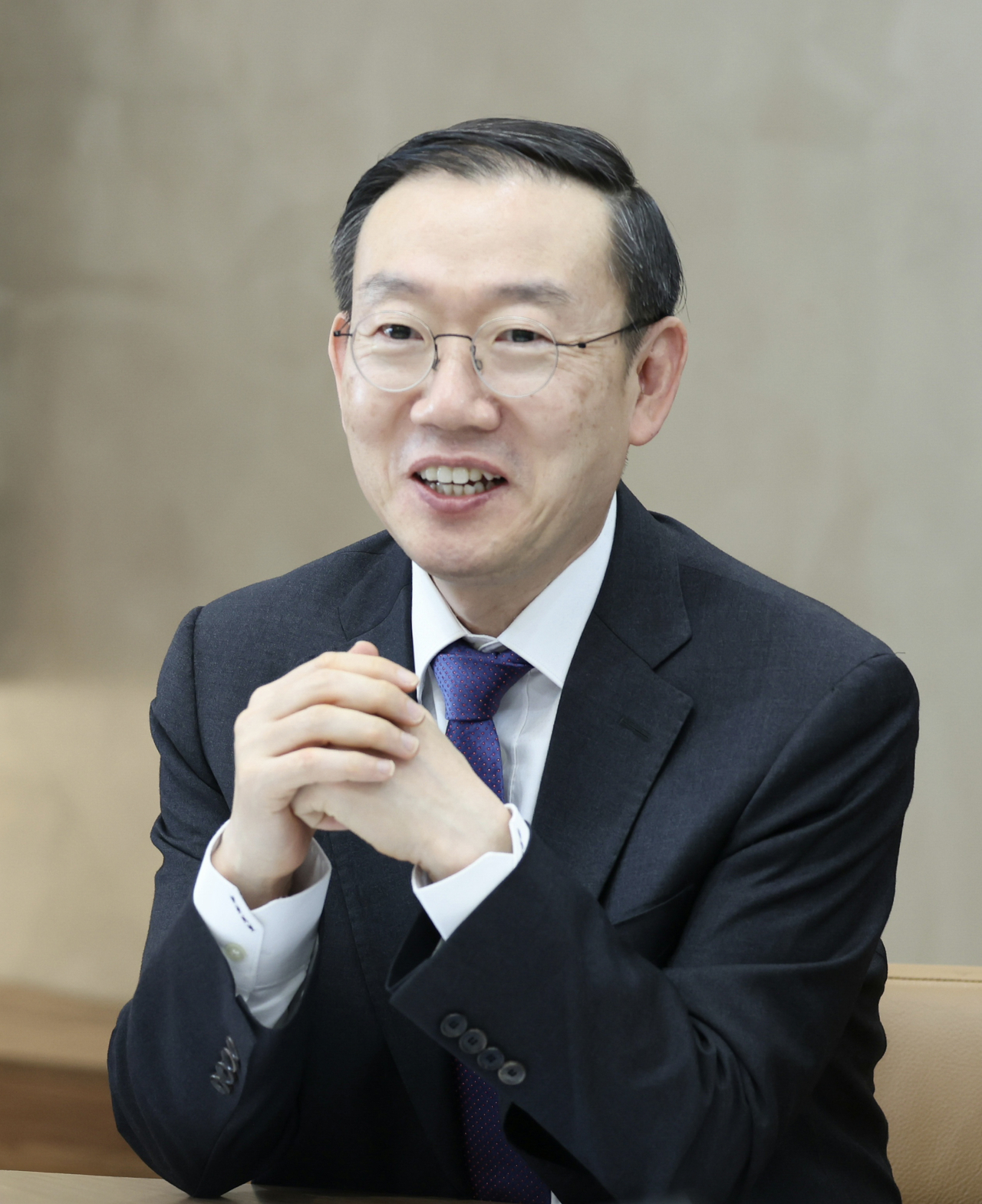
At the forefront of this initiative is Lee Myeong-ku, commissioner of the Korea Customs Service, who says Korea’s role as a digitally advanced trading nation is now being matched by a stronger sense of global responsibility.
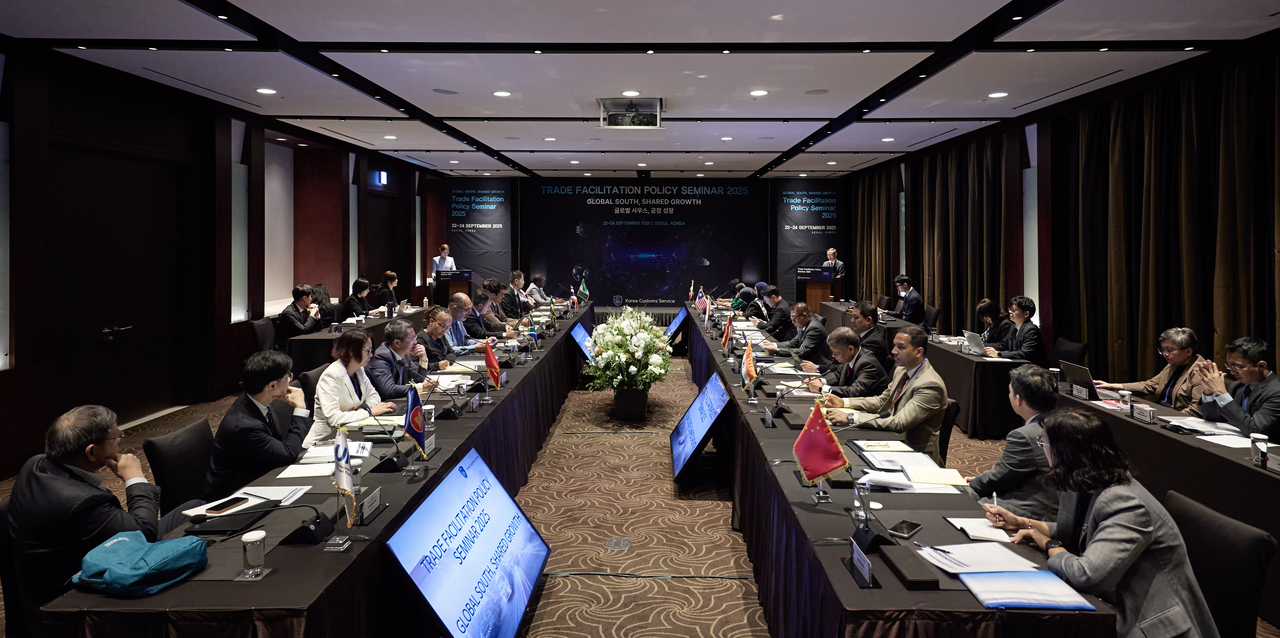
“This is a pivotal moment,” Lee told The Korea Herald in an interview Monday, during the opening day of the Trade Facilitation Policy Seminar, titled "Global South, Shared Growth," in Seoul. “We are moving beyond symbolic engagement. These countries are essential trade partners, and our collaboration must be real, strategic and mutually beneficial.”
The three-day seminar, which ran from Monday to Wednesday at the Shilla Seoul hotel, brought together customs chiefs and senior officials from 10 key Global South economies — China, Vietnam, India, Malaysia, Mexico, Indonesia, Thailand, Brazil, South Africa and Nigeria — alongside representatives from international organizations including the Association of Southeast Asian Nations Secretariat and the UN Network of Experts for Paperless Trade and Transport in Asia and the Pacific.
Together, the participating countries represent nearly half the world’s population and account for 37 percent of global trade for Korea, numbers that underscore what Lee called "Korea’s key partners for growth."
“In a time of geopolitical tension and increasing trade uncertainty, especially surrounding major partners like the United States, the Global South offers not only stability, but growth,” he said. “We’re talking about vibrant, youthful economies that are reshaping global supply chains.”
From digital customs to shared growth
Themed “Promoting Trade Facilitation with the Global South through Digital Customs Innovation,” the seminar is the first international forum aligned with KCS’ newly declared vision: “A Customs Service Leading Fair Growth through AI.”
The phrase “fair growth” is not just a slogan, Lee stressed, “It’s about sharing the benefits of development, which is creating systems where both sides win. Korea has benefited greatly from open trade, and now we want to help build the infrastructure that allows others to do the same.”
Digital customs is the centerpiece of this plan. Korea is using the seminar to promote its Electronic Origin Data Exchange System, a real-time digital platform that enables countries to electronically exchange free trade agreement-related certificates of origin. This reduces customs delays and ensures that Korean companies can properly claim tariff benefits under free trade agreements.
“FTA-related issues account for nearly 90 percent of trade complaints from our exporters,” Lee said. “EODES solves this problem at the root.”
Korea currently operates EODES with China, Vietnam, India and Indonesia. Talks are now underway with Thailand and other ASEAN countries to expand the network. The benefits are already measurable: Paper-based certificates of origin, which used to take four to five days to verify, can now be processed instantly.
According to a 2022 study by Korea’s Origin Information Center, this digitalization has saved Korean businesses over 130 billion won ($93.3 million) in logistics costs.
Lee said the long-term goal is to create a seamless origin verification network across the Global South, allowing for faster, more transparent trade processes.
Removing nontariff barriers through trust
But paperwork isn’t the only challenge. Nontariff barriers, such as customs inspections and burdensome procedures, remain a major hurdle for Korean exporters. To address this, Korea is expanding Mutual Recognition Arrangements for Authorized Economic Operators, which allow certified companies to enjoy simplified customs procedures in both countries.
“AEO MRAs function like Hi-Pass on the highway. They allow trusted traders to move goods without getting bogged down in red tape,” Lee explained.
The impact is substantial. On average, participating companies have seen import inspection rates drop by 75.4 percent and customs clearance times cut by two-thirds. Korea already has MRAs in place with several countries, and during this seminar, discussions were held with Brazil, the largest economy in Latin America, to explore a new agreement.
“We want Korean companies to be able to drive straight through the Global South trade highway without unnecessary stops,” said Lee.
Exporting Korea’s customs model
Korea is also leveraging its experience in customs modernization as a tool of development diplomacy. Through its official development assistance programs, KCS has introduced systems like UNI-PASS — its world-renowned electronic customs platform — and the One-Stop Origin Management System, designed to streamline free trade agreement compliance.
These systems are already in place across parts of Africa and Asia. Korea has also been providing consulting and training to help partner countries build their own national customs agencies. The long-term goal is to roll out customized digital systems for Nigeria, South Africa and other emerging partners.
Aligning with Korea’s broader foreign policy
The seminar fits into a larger realignment of Korea’s foreign policy priorities. Under its national policy platform, Seoul is emphasizing “economic diplomacy centered on national interest,” with a focus on expanding engagement with the Global South. The customs service, often overlooked in foreign policy discussions, plays a crucial role in turning priorities high on the agenda into tangible, on-the-ground outcomes.
“Customs is where policy becomes reality,” said Lee. “It’s one thing to sign an agreement, and it’s another to ensure that goods actually move, that exporters see benefits and that businesses trust the system.”
To that end, KCS is institutionalizing high-level policy seminars like this one, hosting regular dialogues with customs agencies across Asia, Africa and Latin America. Lee said these forums are not just ceremonial, but designed to create measurable improvements for businesses.
“Our exporters need to feel the difference — faster processing, fewer inspections, lower costs. That’s the metric we care about,” he said.
Long-term vision for shared prosperity
Lee concluded by emphasizing that the seminar is not the end, but the beginning of Korea’s deeper integration with the Global South.
“This isn’t just about trade. It’s about co-creating a future,” he said. “Fair growth means sharing opportunities, technologies and systems in a way that benefits everyone. The Global South is not on the periphery of our strategy. It is the strategy.”
As the seminar ends, KCS will continue bilateral consultations, capacity-building programs and digital cooperation initiatives, with a view toward turning customs diplomacy into a pillar of Korea’s export success.
By Lee Kwon-hyung (kwonhl@heraldcorp.com)
kwonhl@heraldcorp.com
hyelimchung@heraldcorp.com