

Policy headwinds threaten Korean duo’s cost edge despite record sales in US
Hyundai Motor and Kia are buckling up for a tougher battle in the United States amid the stalling tariff negotiations between Seoul and Washington, with the US federal subsidies for electric vehicles set to end this month.
Although Korea and the US agreed to lower the tariffs imposed on Korean-made US-bound auto exports to 15 percent from 25 percent at the end of July, the two countries have failed to finalize terms to bring the agreed levies into effect.
For non-US automakers like Hyundai and Kia, the 25 percent tariffs imposed on auto imports into the US market since April this year have already damaged their cost-competitiveness. The same logic has been applied to Japanese automakers Toyota and Honda, which had faced a 27.5 percent tariff on US-bound vehicles.
However, Japanese automakers are now in a better position in the US market as Tokyo and Washington came to a final agreement to lower the tariff to 15 percent, with the executive order taking effect on Tuesday. That put Hyundai and Kia at a 10 percentage point tariff disadvantage.
According to Edmunds, an American online resource for automotive industry data, the manufacturer's suggested retail prices of the Hyundai Tucson, Kia Sportage and Toyota RAV4 and Honda CR-V -- arguably each brand’s most popular sport utility vehicle -- were estimated at $32,060, $30,885, $33,910 and $36,350, respectively, as of Wednesday.
If the lower tariff of 15 percent were applied to the Japanese carmakers, the MSRPs of the Toyota RAV4 and Honda CR-V would drop to about $29,671 and $31,806, respectively.
The tariff handicap is not the only problem faced by Hyundai and Kia. The US government subsidy of up to $7,500 for EV purchases, which was established during the previous Joe Biden administration, is set to expire by the end of this month.
The Korean automakers have been expanding their EV lineup and presence in the US market as Hyundai Motor Group’s three brands -- Hyundai, Kia and Genesis -- sold about 123,000 battery-powered all-electric cars in the US last year, accounting for approximately 10 percent of the market and retaining their place as the second-largest EV seller behind Tesla for two years in a row.
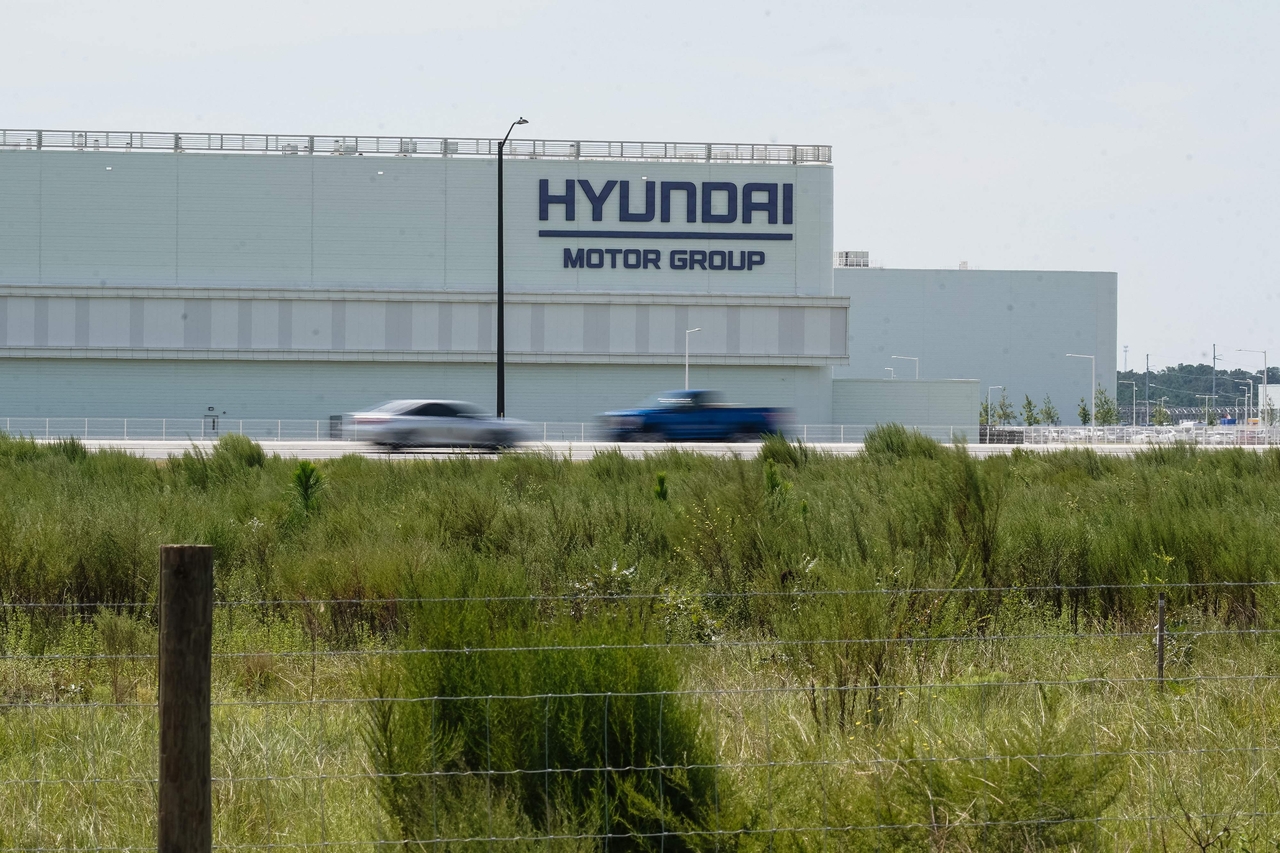
With EV subsidies coming to an end, Hyundai Motor has turned to hybrid vehicles as an alternative to counter the potential blow to their EV sales. The company will utilize the Hyundai Motor Group Metaplant America, an EV-dedicated auto manufacturing plant, to roll out hybrid cars and has announced a plan to expand its production capacity to 500,000 units per year from the current 300,000 units.
The twin challenges for Hyundai and Kia come as the Korean automakers logged record-high monthly sales in the US market with a combined 179,455 units sold in August, up 10.9 percent from the same month last year. The automakers saw a 51.8 percent year-on-year increase in their eco-friendly car sales, including hybrid vehicles and EVs, to log 49,996 units sold in August.
Hyundai Motor CEO Jose Munoz is expected to unveil the automaker's plans to weather the storm in the US during the company’s investor day event in New York on Thursday, marking the first time Hyundai has held its annual investor event overseas.
“(If Hyundai and Kia) continue to bear the burden of tariffs throughout the year, they are looking at a loss of 5 trillion won ($3.6 billion),” said Kim Pil-su, an automotive engineering professor at Daelim University.
“The government must move ahead with the tariff talks quickly or this may drag on until (the APEC summit in late October).”
Kim added that the Korean automakers should focus on markets outside the US, such as Europe.
“That’s why Hyundai participated in the IAA Mobility 2025 (in Munich) with a large exhibition. Once the Ukraine war ends, Hyundai will have to get back to the Russian market.”
hwkan@heraldcorp.com