
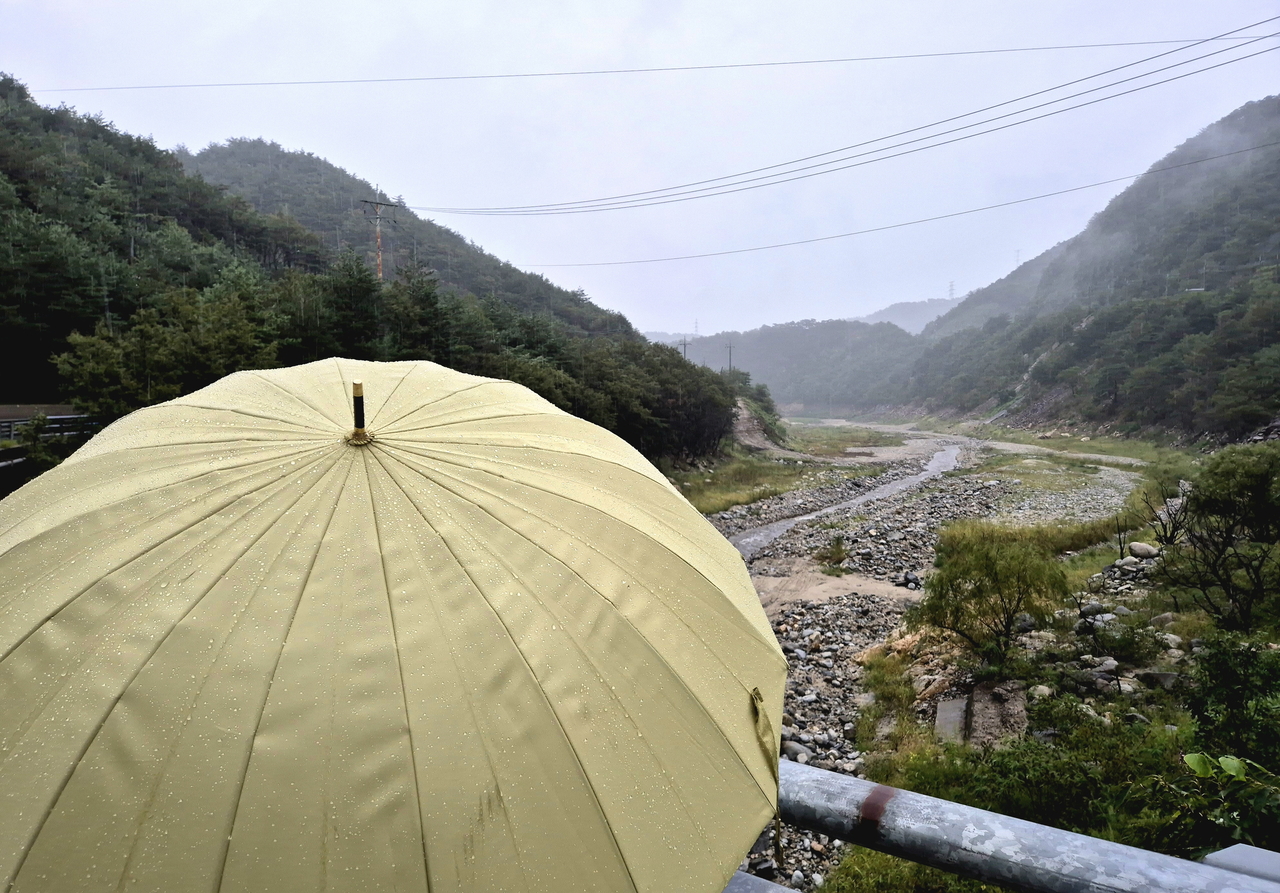
A brief spell of rain swept through Gangneung, Gangwon Province, over the weekend, offering a short-lived reprieve to a city gripped by its worst drought in years. But overall water levels remain low.
According to the Gangwon Regional Meteorological Administration, from Friday noon to Saturday evening, northern Gangneung saw 131.5 millimeters of rainfall, trailed by 115.5 mm in Gyeongpo, 112.3 mm in central Gangneung and 82.5 mm in Okgye.
It marked the first time in 60 days that the city recorded more than 30 mm of daily rainfall, the last instance being 39.7 mm on July 15. A heavy rain advisory was briefly in effect early Saturday, but was soon lifted.
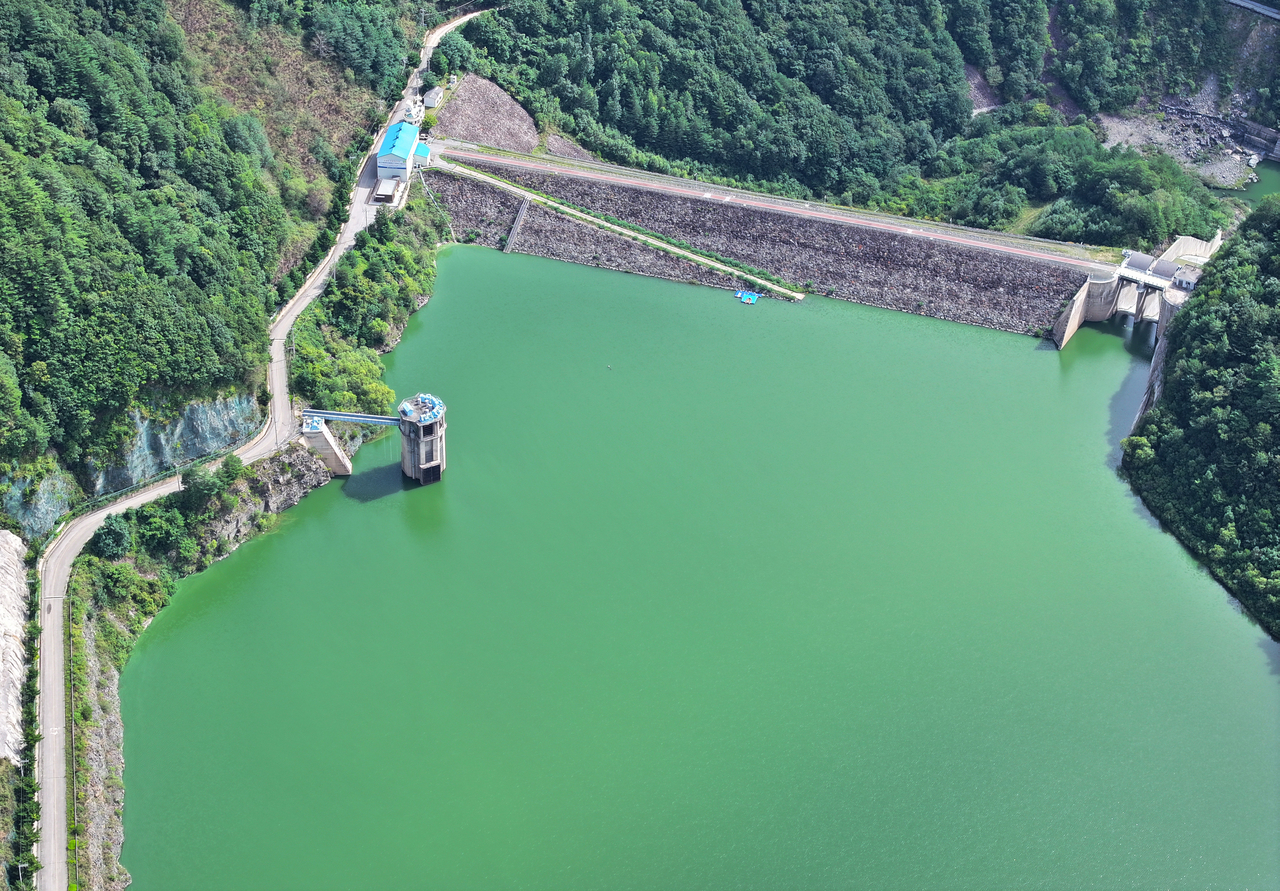
The rain contributed to a modest rise in the water level at the Obong Reservoir, which supplies about 87 percent of the city’s household water.
As of 1 p.m. Sunday, the reservoir’s level stood at 15.8 percent, up from 11.8 percent on Thursday and 13 percent on Saturday, according to the Rural Agricultural Water Resource Information System.
The reservoir had been on a steady decline for 52 consecutive days since July 23. The average level for this time of year is around 71.4 percent.
The national weather agency has forecast rainy conditions to persist, with light rainfall expected from Tuesday through Thursday.
Thanks to the weekend rain, the Gangneung city government adjusted its water supply restrictions, extending supply hours from two one-hour blocks to two three-hour blocks per day — now operating from 6 to 9 a.m. and again from 6 to 9 p.m.
The restrictions apply to large-scale water users such as apartment complexes and hotels with water tanks exceeding 100 metric tons.
However, the rainfall was not enough to ease all emergency response efforts.
Since the drought was officially declared on Sept. 1, the government has operated on-site response teams. It allocated 1.5 billion won ($1.08 million) on Friday in emergency relief funding for the region.
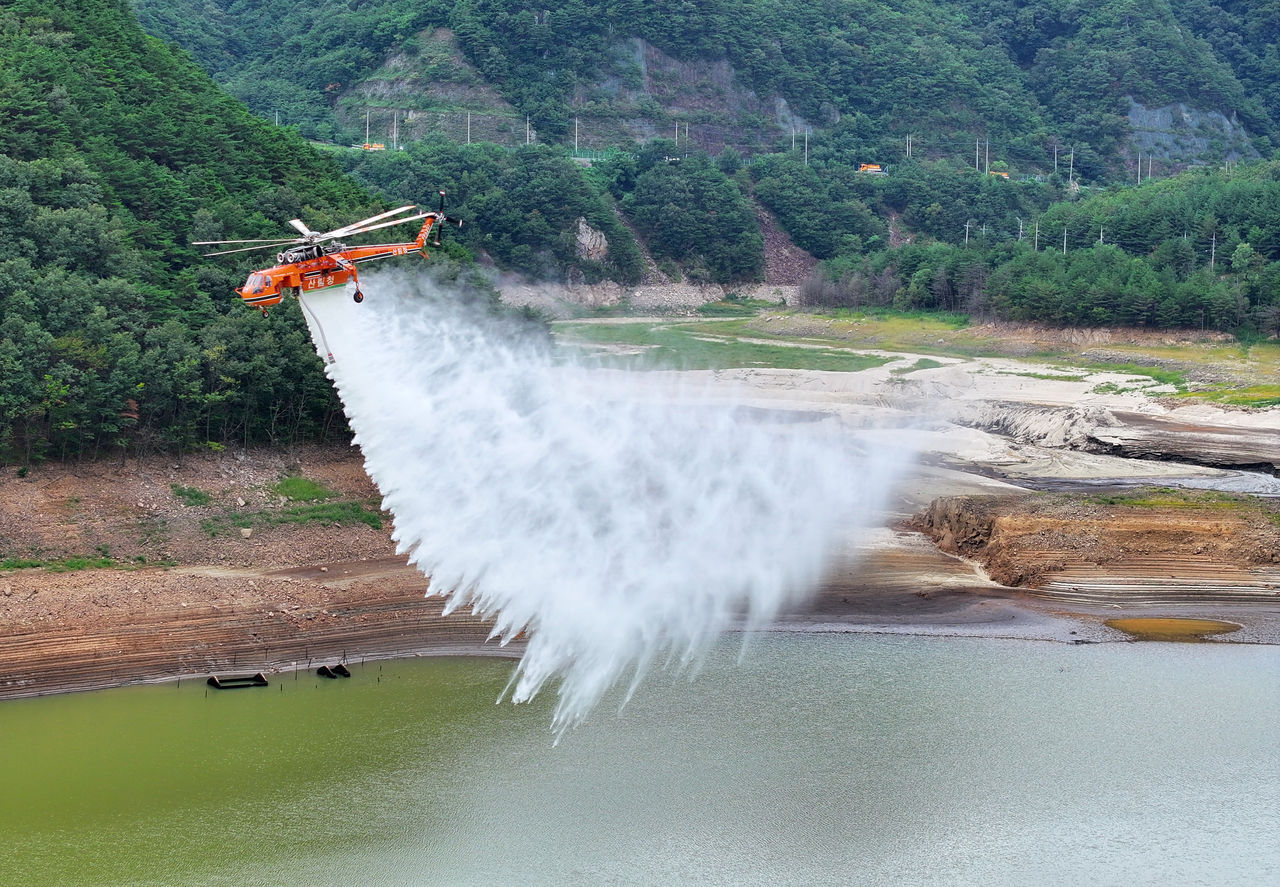
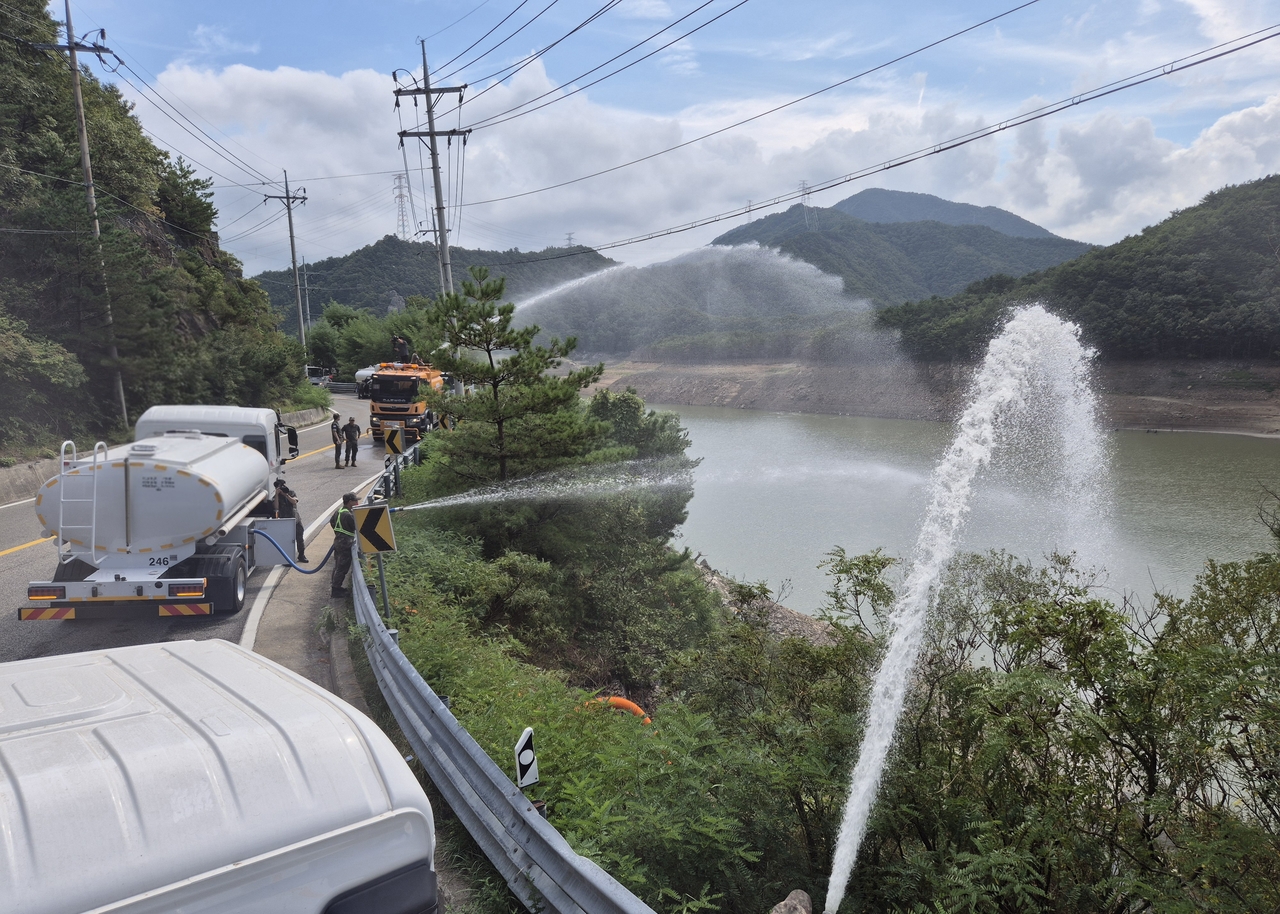
Water delivery operations by the military and fire authorities also resumed Sunday after a one-day suspension on Saturday due to the rain.
According to the Ministry of the Interior and Safety, a total of 537 vehicles and pieces of equipment have been mobilized to transport water to the region. These include 101 fire trucks, 340 military vehicles, five helicopters and 70 local government vehicles.
Additional relief is expected from the Doam Dam in Pyeongchang, Gangwon Province, starting Sept. 20. Water will be transferred through an existing tunnel that connects the dam to the Obong Reservoir.
The system allows for the transfer of up to 150,000 tons of water, with 10,000 tons scheduled for daily supply. The Doam Dam currently holds approximately 30 million tons of water.
The Environment Ministry last month said water from the Doam Dam, planned for transfer, was deemed suitable for drinking after purification. To further ensure safety, the city government also plans to establish a water quality review committee comprising academic experts and civic groups.
As part of its emergency response, the city has secured 8 million 2-liter bottles of drinking water. So far, 1.98 million bottles have been distributed, with over 6 million remaining in stock. Households with infants under 24 months are eligible to apply for an additional 24 bottles per child through Tuesday.
Concerns are now growing that drought conditions could spread beyond Gangneung.
As of Sunday, Gangneung remained under the “severe” drought classification — the highest of five levels — according to the National Drought Information Portal.
Neighboring areas, including Jeongseon-gun, Samcheok and Taebaek, were placed under the fourth-highest drought level.
These coastal municipalities, including Gangneung, lie on the eastern side of the Korean Peninsula and are separated from inland regions by the mountains of Taebaeksan, which can limit the amount and consistency of rainfall.
The presidential office said Sunday it will add facilities and take long-term steps to address the ongoing drought.
“A much-needed rain fell on Gangneung. While insufficient, we hope it offers some relief to those affected by the prolonged drought,” presidential spokesperson Kang Yu-jung said during a press briefing Sunday afternoon.
“The government will work to expand available water sources by installing additional facilities and pursuing long-term measures in response to climate change,” Kang added.
flylikekite@heraldcorp.com