

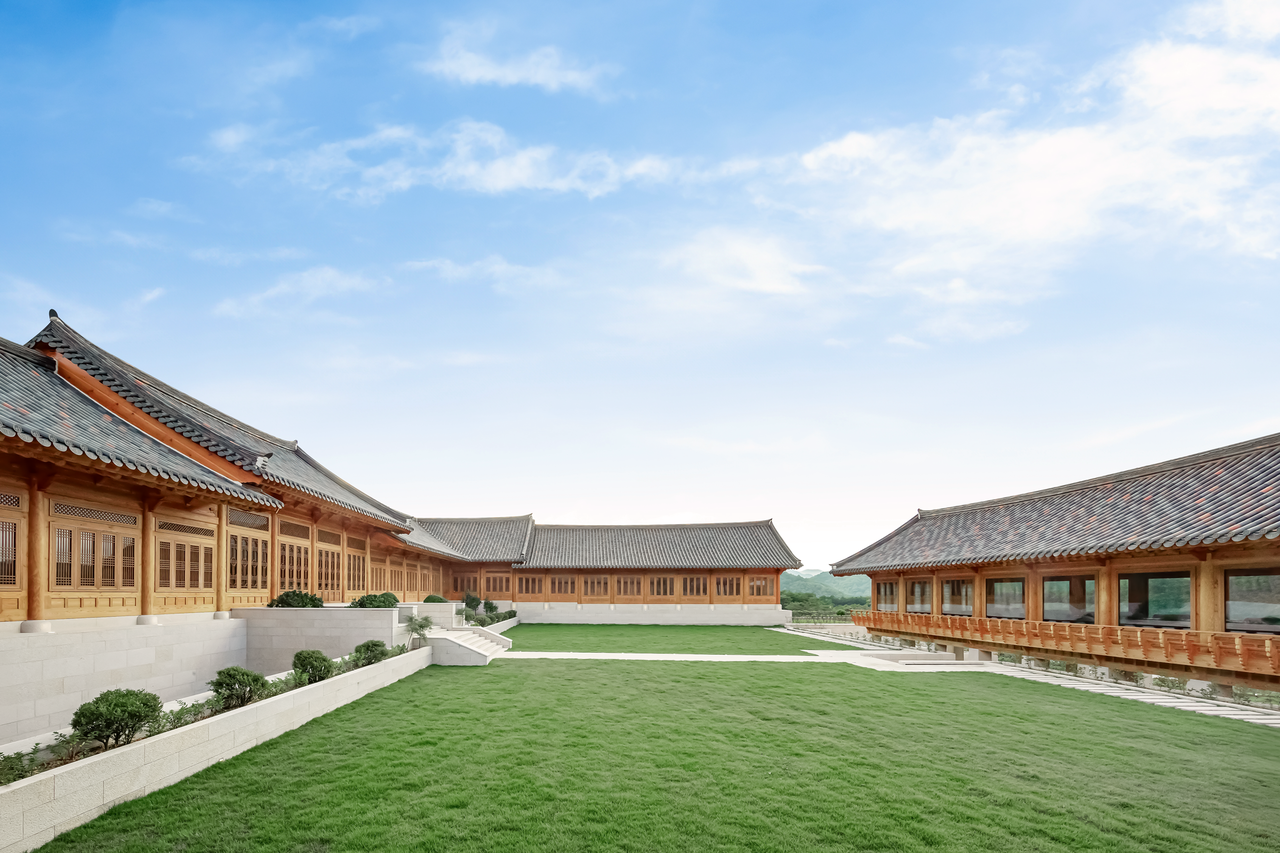
YEONGWOL, Gangwon Province -- A bold reinterpretation of Korea’s 1,000-year-old hanok tradition has emerged in the quiet mountain village of Mungaesil in Yeongwol, Gangwon Province. On Tuesday, The Hanok Heritage Co. opened The Hanok Heritage Hotel, a first-of-its-kind cultural retreat that blends ancient architecture with modern luxury to create what it calls “New Heritage.”
Previously operated as a members-only collection of private villas, The Hanok Heritage has now entered the hotel industry with 14 newly opened rooms, becoming the largest hanok cultural space in South Korea. Located on a 102,000-pyeong (approximately 337,000-square-meter) estate, this hotel is more than a place to sleep — it is a curated cultural experience.
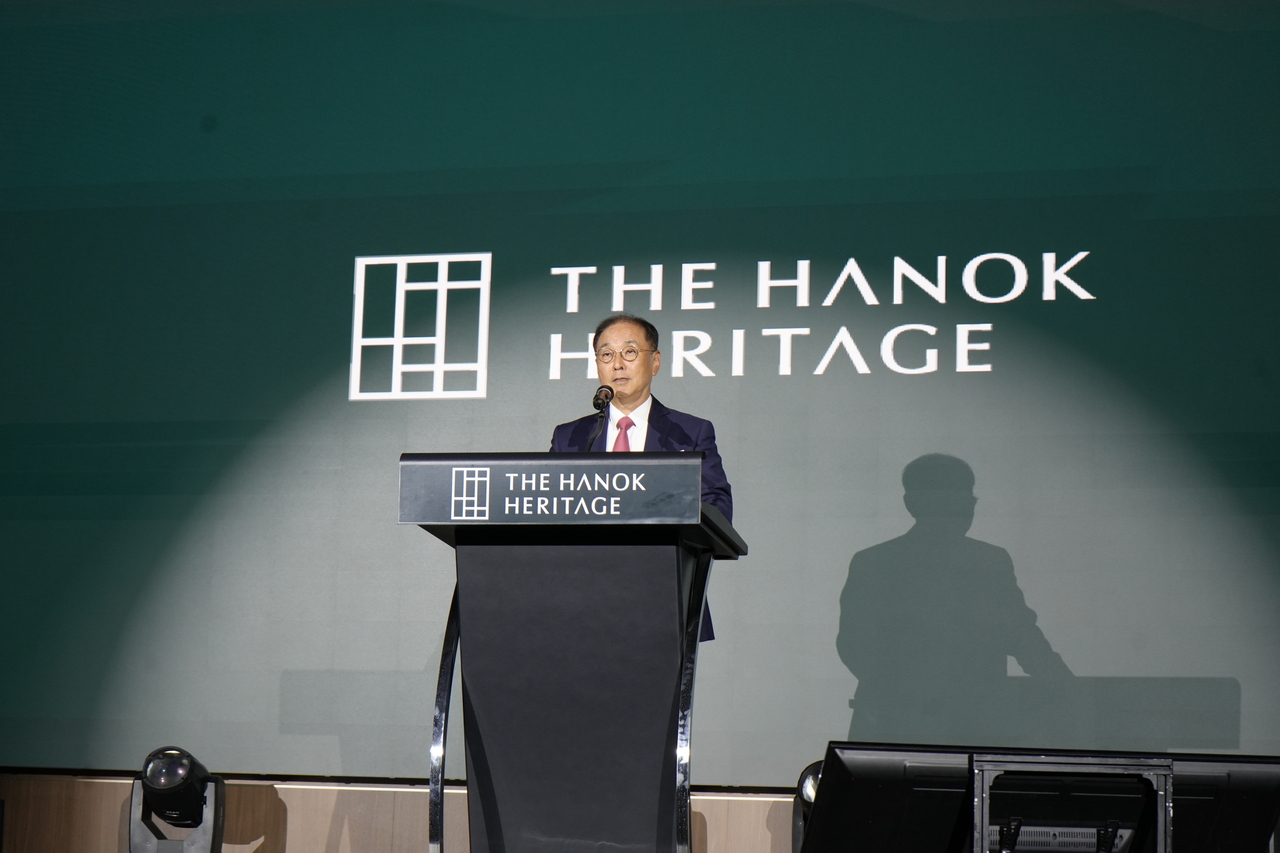
“This is not just accommodation,” Cho Chung-il, architect and founder of The Hanok Heritage, told The Korea Herald during the space’s grand opening event held at The Hanok Heritage Hotel. “It is the beginning of a new chapter in Korean culture, a living heritage that connects our architectural roots with the future.”
Where nature, tradition and design meet
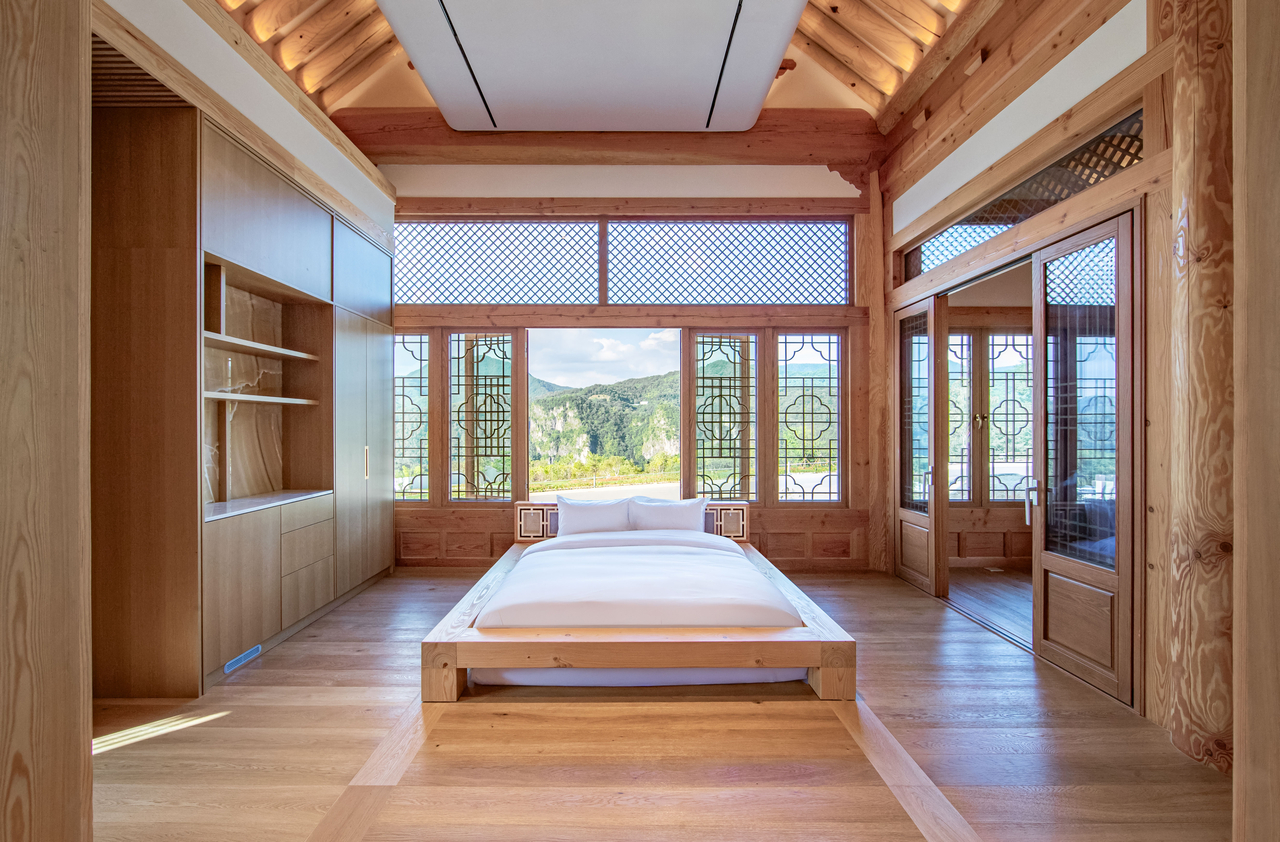
Set amidst the serene forests and mountain vistas of Gangwon Province, the hotel’s architecture was designed to reflect harmony with nature. Four room types are available — the corner suite San, and Gaon, Sol and Sodam — each offering tranquil views of the gardens, mountains or traditional stone walls. The interior is furnished with custom-made pieces designed specifically for the space. “In a hanok, finding suitable furniture is like reaching for the stars,” Cho said. “So we designed and built over 90 percent of it ourselves, including what’s inside the restaurants.”
The rooms come with breakfast, a curated minibar, welcome drinks and access to gallery exhibitions, a hanok docent tour and a nightly "Soolsi" experience — a reimagined Joseon-era traditional liquor and food tasting held in Byuljae, the hotel’s signature open pavilion.
Byuljae, meaning "a separate space," offers a sweeping view of the grounds through countless windows framing the starlit sky — a defining feature of the hotel’s nighttime charm. At 10 p.m., all exterior lights are turned off, allowing guests to fully immerse themselves in Yeongwol’s unpolluted starlight.
Room rates range from 1.2 million to 2.7 million won per night, depending on the room type and season.
World-class architecture, amenities
The hotel’s architectural footprint is equally impressive. With a building area of 1,697 square meters and a total floor area of 11,860 square meters, the Hanok Heritage Hotel rivals even Jongmyo Shrine, a UNESCO World Heritage site.
Among its standout features is an 84-meter hoerang, or hallway, that connects different wings of the property. “The chance to walk through a hanok hallway of this scale is extremely rare,” said Cho. “Our design philosophy is based on the principle of ‘modesty without shabbiness, elegance without extravagance.’”
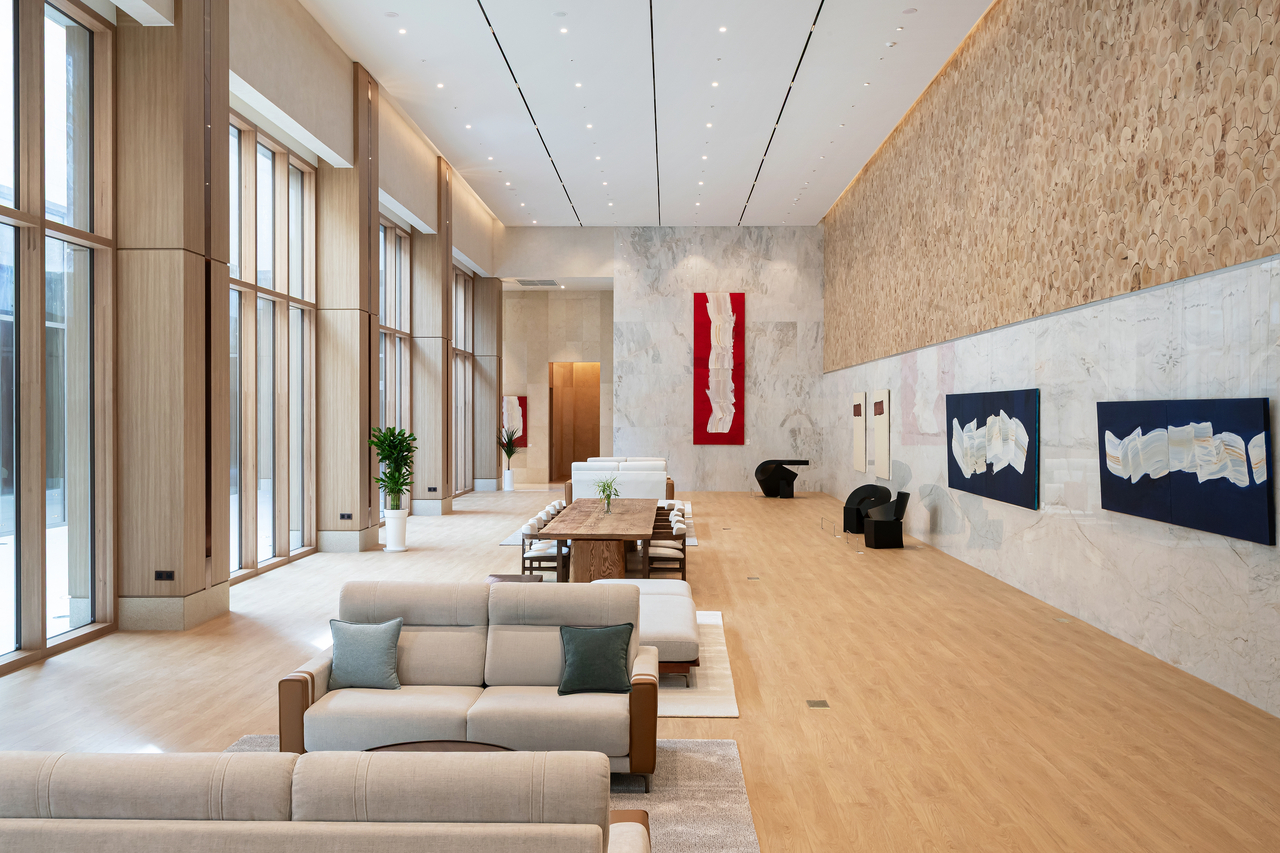
The hotel's expansive facilities include Goyo, a quiet lounge with tea and drinks, the gallery Gyeol, which features traditional and contemporary art, and a banquet hall that merges modern technology with classic Korean aesthetics for private and corporate events.
Dining at The Hanok Heritage Hotel is a cultural journey in itself. The all-day restaurant Namu offers seasonal Korean fare, including a 12-dish traditional breakfast and signature dishes like perilla oil noodles and Yeongwol-style yukhoe bibimbap for lunch. In the evening, Monto, the hotel’s fine-dining restaurant, serves a 10-course Korean tasting menu prepared by Executive Chef Shin Dong-min.
Immersive cultural programs
The Hanok Heritage Hotel curates immersive cultural programs that reflect Korea’s rich traditions. Guests can participate in traditional activities like royal hanbok fittings, or engage in more reflective experiences such as digital detox and meditation surrounded by the scent of natural wood.
Daily docent-led tours guide guests through the philosophical and aesthetic reinterpretations of hanok architecture. In the evening, the hotel operates the Hanok Observatory program, where guests gather to watch the stars in peaceful silence.
Traditional games like yutnori, jegichagi and tuho are available during the day, creating an environment where guests can connect with Korea’s cultural heritage.
Global achievement for K-architecture
The Hanok Heritage Hotel has already garnered international acclaim. In 2024, it became the first Korean-designed structure to win the top prize in the hotel category at the Prix Versailles, co-hosted by UNESCO and the International Union of Architects. It also won the IIDA Global Design Award — a historic first for a hanok building.
“This is proof that hanok is not merely a relic of the past,” said Cho. “It is heritage for the future — a cultural asset reborn with modern vision and global resonance. The era of K-Architecture has begun.”
Cho’s ambitions stretch beyond Yeongwol.
“My ultimate dream,” he said, “is to create a 2.5-kilometer-long hanok street in Seoul — a place where both Koreans and international visitors can experience the harmony of tradition and modernity in everyday life.”
yoohong@heraldcorp.com