
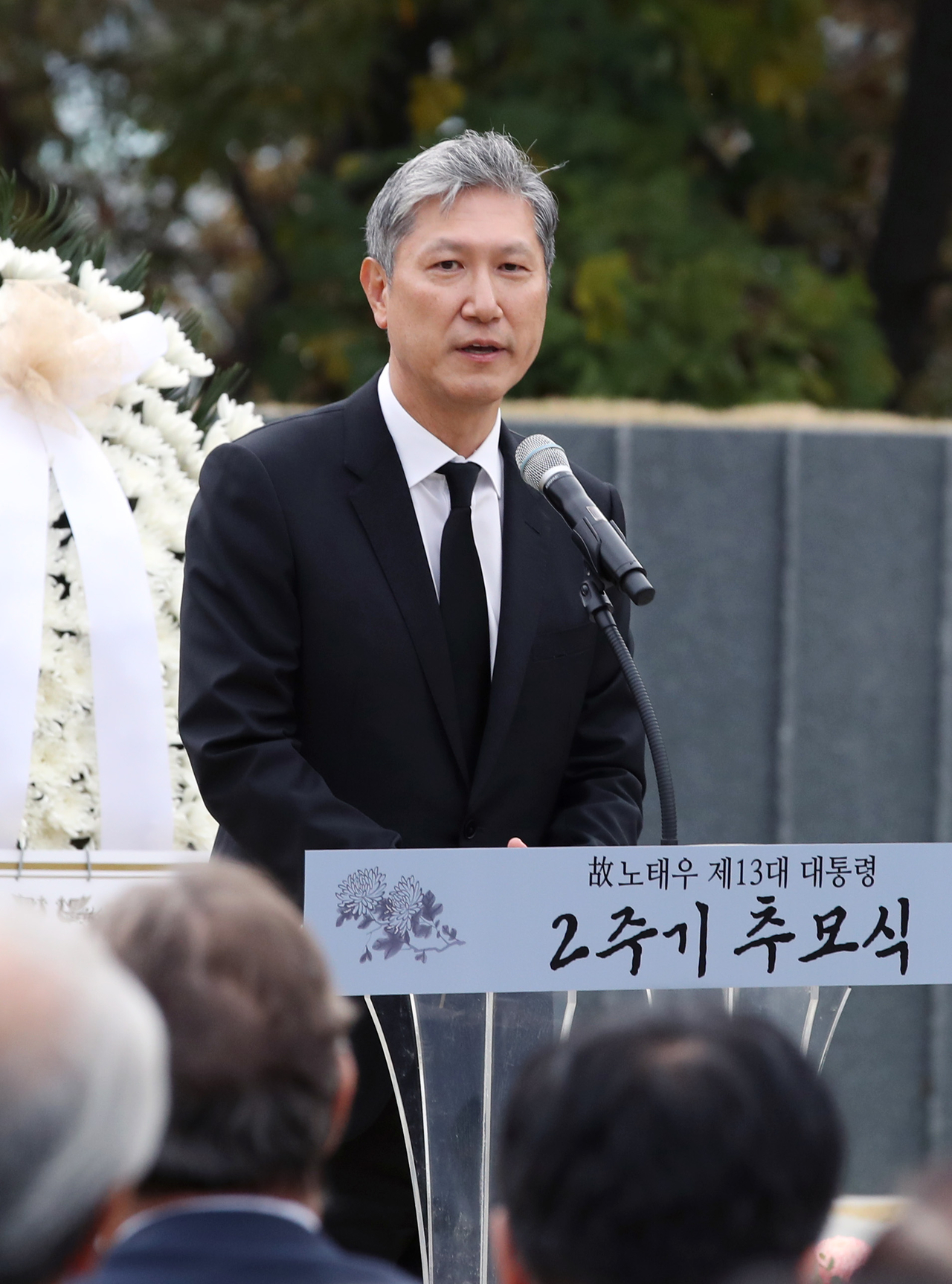
The eldest son of former conservative President Roh Tae-woo appears to have been chosen as Seoul’s next ambassador to China, with the appointment awaiting Beijing’s agreement, local reports said Thursday.
If confirmed, the late president's son, Roh Jae-heon, director of the East Asia Culture Center in Seoul, will become the first ambassador to China under the Lee Jae Myung administration.
Though Roh has no public service experience as a diplomat, he has been actively involved in South Korea-China exchanges for over a decade, according to reports.
Last month, he joined President Lee's special delegation to China in August, ahead of the South Korea-US summit in Washington.
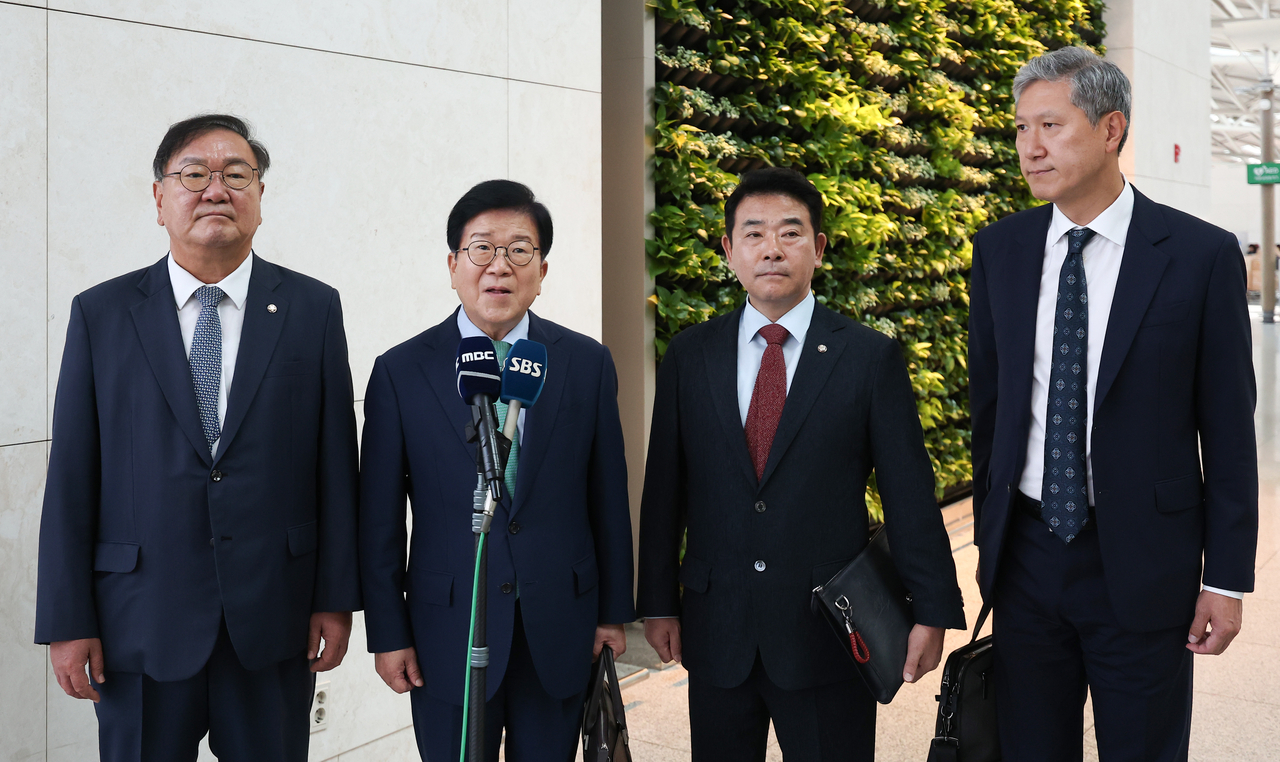
The delegation, which included former National Assembly Speaker Park Byeong-seug and Reps. Kim Tae-nyeon and Park Jeung of the ruling party, delivered Lee's letter to Chinese President Xi Jinping via Chinese Foreign Minister Wang Yi.
In 2012, the year marking the 20th anniversary of the establishment of diplomatic ties between South Korea and China, Roh established the Korea-China Culture Center, which was later renamed the East Asia Culture Center.
In 2016, he also served as an adviser to an international advisory council of the Chinese city of Chengdu in Sichuan province.
From 2021 to 2022, he chaired the sociocultural subcommittee of the Korea-China Future Development Committee under the Foreign Ministry, during the Moon Jae-in administration.
His father, the late Roh Tae-woo, a former military general who served as president from 1988 to 1993, is said to have contributed to laying the foundation of Korea-China diplomatic ties, established in 1992.
When he died in 2021, the Chinese Foreign Ministry issued a statement saying he had “made significant contributions to China-Korea diplomatic relations and the development of bilateral ties.”
Last month, Chinese Ambassador to South Korea Dai Bing visited Roh Tae-woo’s grave in Paju, Gyeonggi Province, where he was quoted as saying that China "wishes to stay true to the original intention behind diplomatic normalization with Korea.”
The late president has been at the center of controversy over his ties with former President Chun Doo-hwan, who seized power in a 1979 military coup and ruled until 1988.
Roh, a classmate of Chun’s at the Korea Military Academy, was among those who supported the coup. Shortly after the coup, Chun ordered a brutal military crackdown on the pro-democracy uprising in Gwangju.
In recent years, Roh Jae-heon has tried to distance himself from his father’s history, expressing remorse by visiting the May 18 National Cemetery in Gwangju in 2019 and meeting with bereaved families.
flylikekite@heraldcorp.com

![[World Class] HUFS bets on Songdo, AI to redefine what a global university can do](https://wimg.heraldcorp.com/news/cms/2026/10/18/news-p.v1.20260930.7e4dbeacfc1d4d16848c0e2a441c04e6_R.jpg?type=h&h=120)
