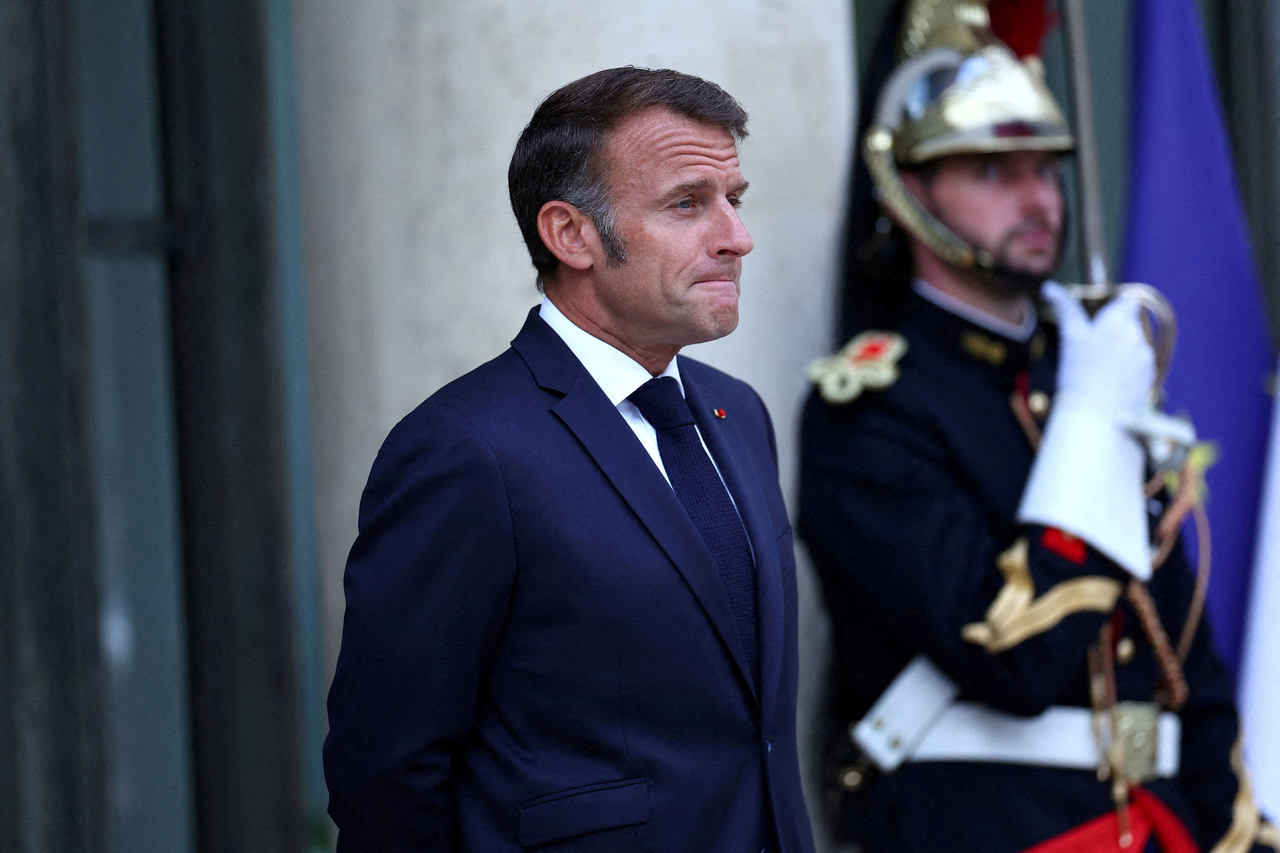
Euro area sovereign bond investors showed a muted reaction on Tuesday to a collapse of the French government they had already expected as they awaited President Emmanuel Macron’s next move, with a snap election not ruled out.
Focus was also on the closely-watched spread between French and Italian bonds, with French bonds on the cusp of yielding more than Italy's.
Macron's office said he would appoint a new prime minister in the next few days following Prime Minister Francois Bayrou's loss of Monday's vote of confidence in parliament.
Investors were concerned that a new minority government would similarly fail to chart a credible path towards reducing public debt, prompting a demand for higher risk premiums on the country's sovereign bonds.
With markets remaining calm on Tuesday, analysts noted that the end of the current administration and the appointment of a new prime minister without snap elections had already been priced in by markets.
"For me it's a 50/50 between a new PM being appointed and dissolution coming," said Matthieu de Clermont, head of insurance and regulatory strategies at Allianz Global Investors.
"The question I ask myself is: what's the change here?" Referring to potential candidates to lead a new government, he said: "Once again the question will be if it will be someone like this… will it last?" The yield gap between 10-year French and German government bonds — a market gauge of the risk premium investors demand to hold French debt — was at 81 basis points (bps), after hitting 83 bps earlier, LSEG prices showed.
But some strategists flagged that there was a change to the benchmark French bond data providers reference, to the November 2035 OAT on Tuesday from the May 2035 paper the day before.
The yield on the French November 2035 bond was 3.488 percent.
Germany’s 10-year bond yield, the benchmark for the euro zone bloc, rose 2.5 bps to 2.66 percent. It hit 2.80 percent last week, its highest since March 26.
"It's not a catastrophe scenario; in this environment, credit spreads should be relatively well-behaved," said Kevin Thozet, investment committee member at Carmignac.
"French bonds are the cheapest in Europe these days." The yield gap between Italian and French bonds and was last at 3.5 bps.
Italian bonds, which carry the euro area's heaviest debt load, steadied in line with safe-haven Bunds, with 10-year yields up 1.5 bps at 3.51 percent.
However, some analysts remained worried about the possible consequences of a weaker France within the European Union.
"The policy paralysis in Paris spells trouble for France and Europe," said Holger Schmieding, chief economist at Berenberg.
"It makes it even more difficult for Europe to stand up to (US President Donald) Trump and (Russian President Vladimir) Putin."


