First supply blueprint under President Lee stresses government’s central role in delivery
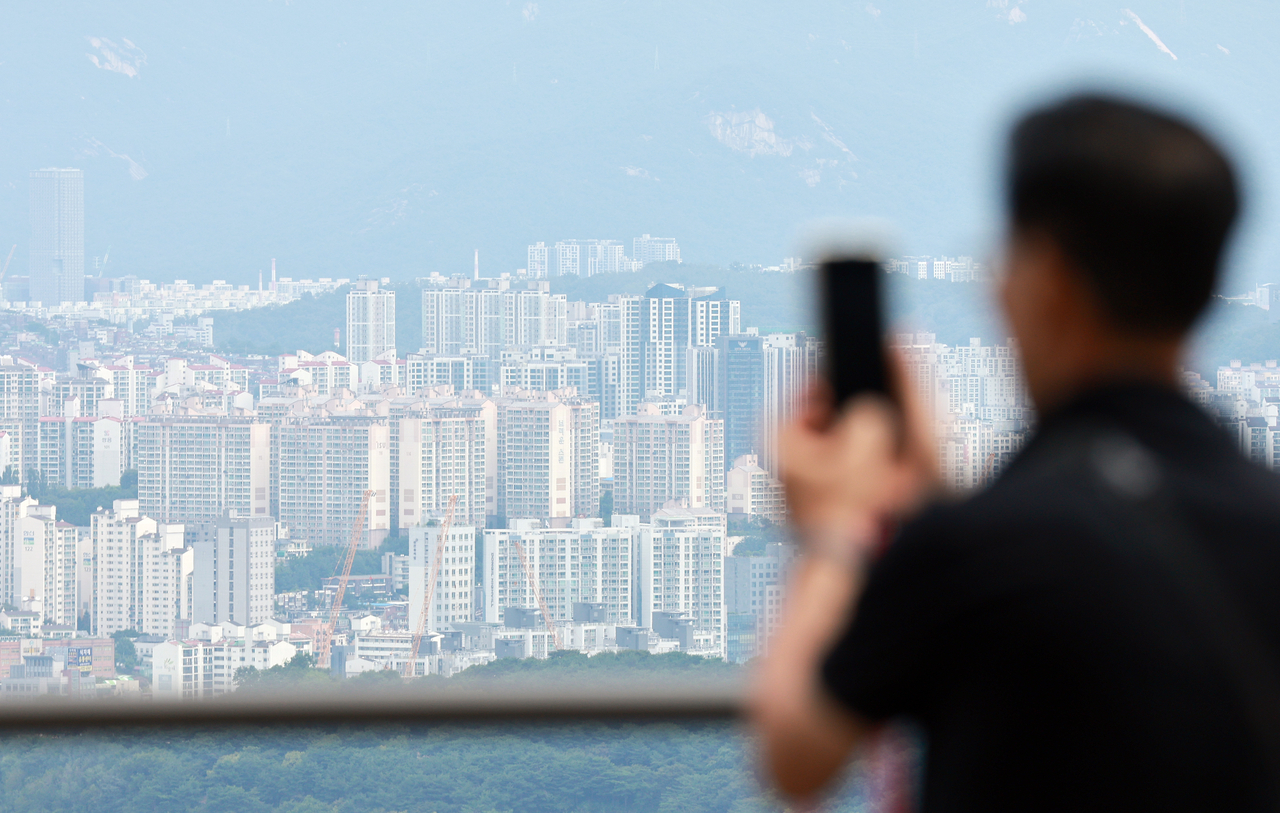
The South Korean government unveiled a plan Sunday to start construction of 1.35 million new homes in Seoul and the broader capital area by 2030 to cool the housing market, with expanded state-led initiatives at the core of the plan.
“Nationwide housing supply has topped 100 percent, but Seoul and the capital region still fall short, leaving a persistent shortage. On top of that, the recent rise in construction costs and financing hurdles are weighing further on supply,” Land Minister Kim Yoon-duk told reporters after a ministerial meeting on real estate. “The government believes the key to easing the shortage is delivering quality homes in prime locations.”
The meeting was attended by top regulators from key agencies, including the Land Ministry, the Finance Ministry and the National Tax Service.
Sunday's rollout marks the Lee Jae Myung administration’s first supply-side effort to stabilize the housing market in Greater Seoul, which includes Gyeonggi Province and Incheon. It is also a follow-up on the so-called June 27 measures, which had focused on controlling demand through tighter lending regulations.
The government said its top priority would be to break ground on 1.35 million homes in the capital region within the next five years. “That’s about 270,000 new homes annually — the equivalent of building a new city each year,” Land Minister Kim Yoon-duk said. “We’re targeting based on 'construction starts,' not simple permits as in previous administrations, to ensure supply that reaches people."
That figure represents a significant boost from 158,000 annually between 2022 and 2024.
Bolstering the government’s role and expanding public housing will anchor the plan. Most notably, Korea Land & Housing Corp. will stop selling public housing sites to private builders and instead develop them directly to speed up delivery. It has a target of starting work on at least 75,000 new LH homes in the capital region by 2030, including 60,000 directly developed units.

“Private builders inevitably face setbacks during economic downturns or when financing tightens. LH is less exposed to such risks,” Kim said, adding that the agency would work closely with private builders to overcome perceptions that LH housing is lower in quality.
To complement this, the government pledged regulatory shifts and streamlined permit issuance to tackle recurring delays, aiming to cut development timelines by more than two years.
Authorities will also push for timely sales of planned public projects and consider an additional 30,000-unit public housing plan to ensure long-term supply stability.
To maximize use of existing sites, authorities will launch high-density redevelopment of outdated public rental housing built since 1989 in major metropolitan districts. Regulations will also be revised to allow unused public facilities, government-owned land and closed schools to be converted into housing and community amenities.
A broader slate of urban renewal projects will accompany the plan. Redevelopment and reconstruction will be accelerated to start on 234,000 homes in the capital area over the next five years. For public urban complex projects, the sunset clause will be scrapped and floor area ratio limits eased, enabling 50,000 new homes.
The government's plans to boost supply also include easing regulations and providing financial support to improve development conditions, while expanding short-term rental housing over the next two years.
While boosting supply, the government will keep curbing demand with tighter lending rules, cutting the loan-to-value ratio in regulated areas to 40 percent from 50 percent and lowering the jeonse deposit loan limit for homeowners to 200 million won.
Oversight of illegal market practices will also be tightened. A new investigative body combining the Land Ministry, financial regulators, the tax agency and police will be launched to step up investigation of property deals to curb speculation and improve funding transparency.
The tax office pledged tougher scrutiny of suspicious luxury home purchases, including illegal gifting and tax evasion through children or business entities, and vowed stricter monitoring of foreigners exploiting regulatory gray areas.
The supply plan follows the government’s June 27 credit squeeze, which capped mortgages in regulated areas at 600 million won, barred multiple-home owners from borrowing and cut loan guarantees for rentals.
Those steps slowed price gains but did little to reverse momentum. Seoul apartment prices rose 0.08 percent in the first week of September, extending their climb to a 31st straight week, Korea Real Estate Board data showed.
jwc@heraldcorp.com