
Gangneung’s water crisis is worsening by the day as the coastal city marks its seventh day under a state of disaster due to drought as of Friday, with Thursday’s long-awaited rainfall once again skirting past the region.
While nearby towns received as much as 50 millimeters of precipitation, Gangneung recorded just 2.1 — far too little to lift the levels of its Obong Reservoir, the source of nearly 90 percent of the city’s water.
According to the Ministry of Interior and Safety, Gangneung received just 359.1 millimeters of rain over the past six months — around 39.6 percent of normal levels.
On Thursday, while 30 to 50 mm of rain fell in other parts of Gangwon Province, Gangneung received a mere 2.1 mm, far too little to raise water levels at its main reservoir.
The Obong Reservoir, which supplies 87 percent of Gangneung’s tap and industrial water, stood at 13.2 percent as of Friday morning, a 0.3 percent decrease compared to the previous day’s record.
At its current pace, city officials added that reservoir levels could drop below the 10 percent margin within a week.
As water levels in the Obong Reservoir continue to decrease by 0.3 to 0.4 percentage points daily, the Gangneung city government announced Friday that it would impose further water restrictions from Saturday.
Emergency measures escalate
During a press briefing Thursday, Gangneung Mayor Kim Hong-kyu stated that water supply will be cut off to 123 facilities with water storage tanks exceeding 100 metric tons in the Hongje Water Purification Plant’s service area. This includes 113 apartment complexes — home to some 45,000 households — and 10 large lodging facilities such as hotels.
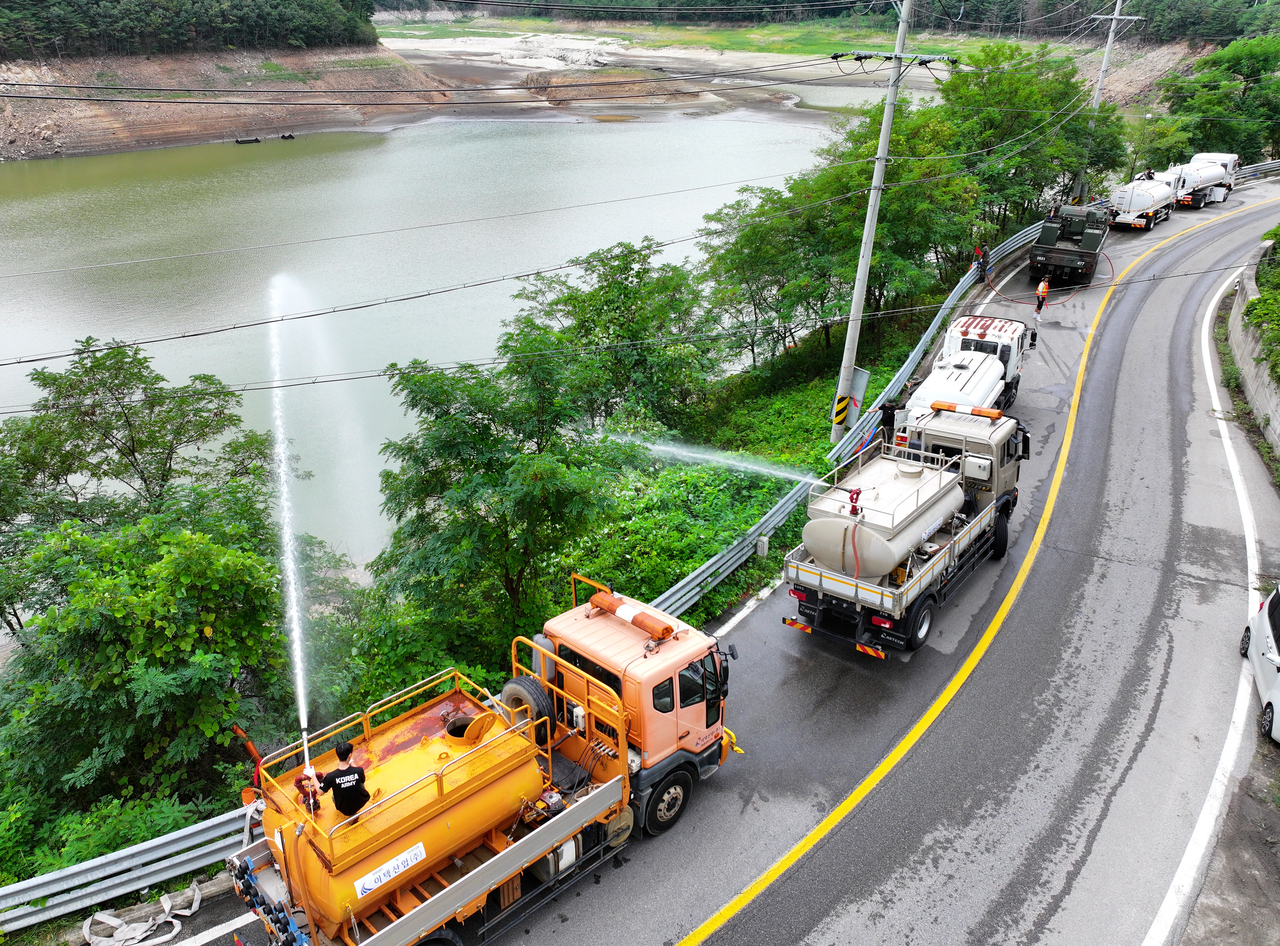
Instead of direct supply from the purification plant, water will be delivered to the facilities’ storage tanks by trucks operated in coordination with fire authorities.
The city government further added that if the reservoir storage levels fall below 10 percent, restrictions will be expanded citywide to cover more than 53,000 households under the Hongje plant’s supply network.
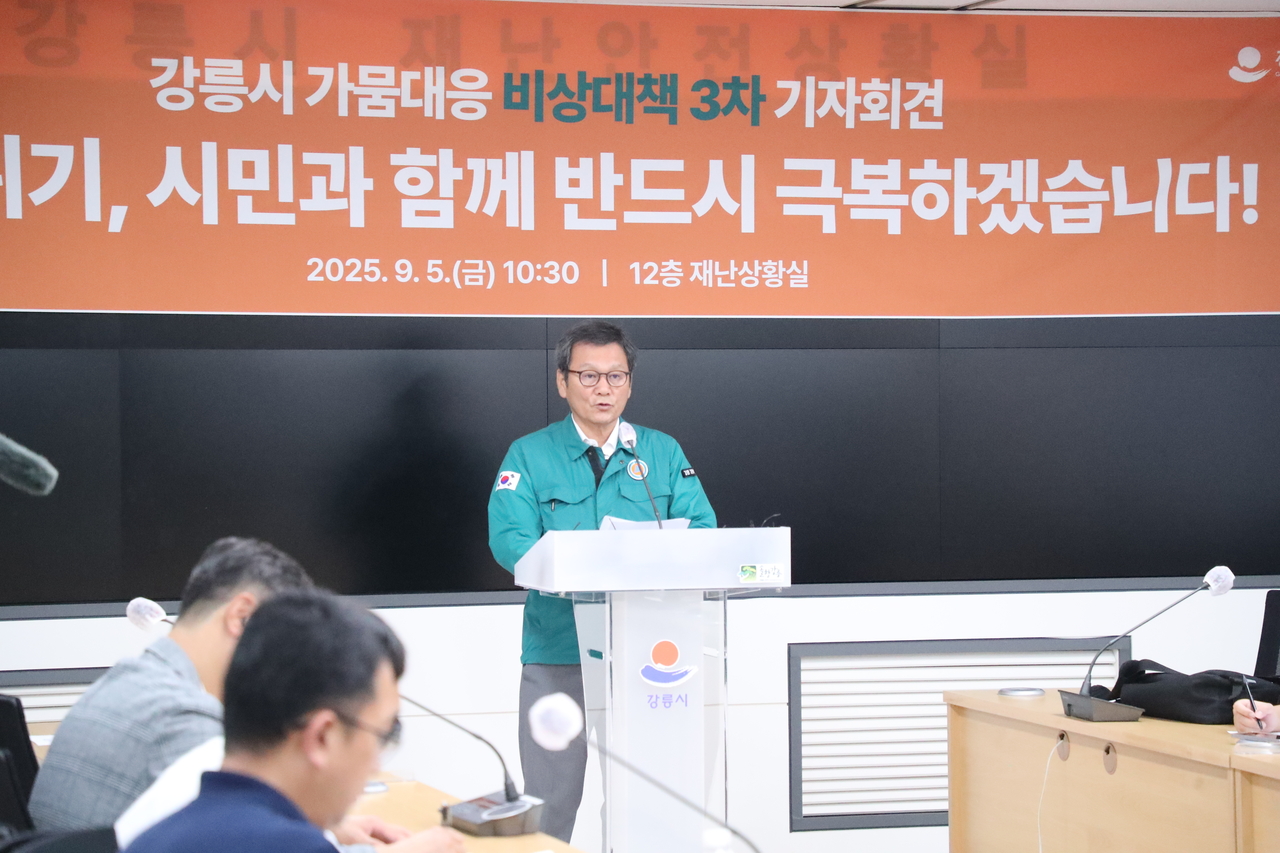
If the restrictions are expanded, the city plans to implement time-based rationing, cutting water supply from 10 p.m. to 5 a.m., followed by alternate-day supplying of water if conditions deteriorate further.
Though emergency responses have intensified over the past few days, reservoir levels show no sign of increase.
According to the Interior Ministry, authorities mobilized a massive supply operation Thursday, channeling 26,416 tons of water into the reservoir and purification plants through truck deliveries and pipelines connected to the nearby Namdaecheon River.
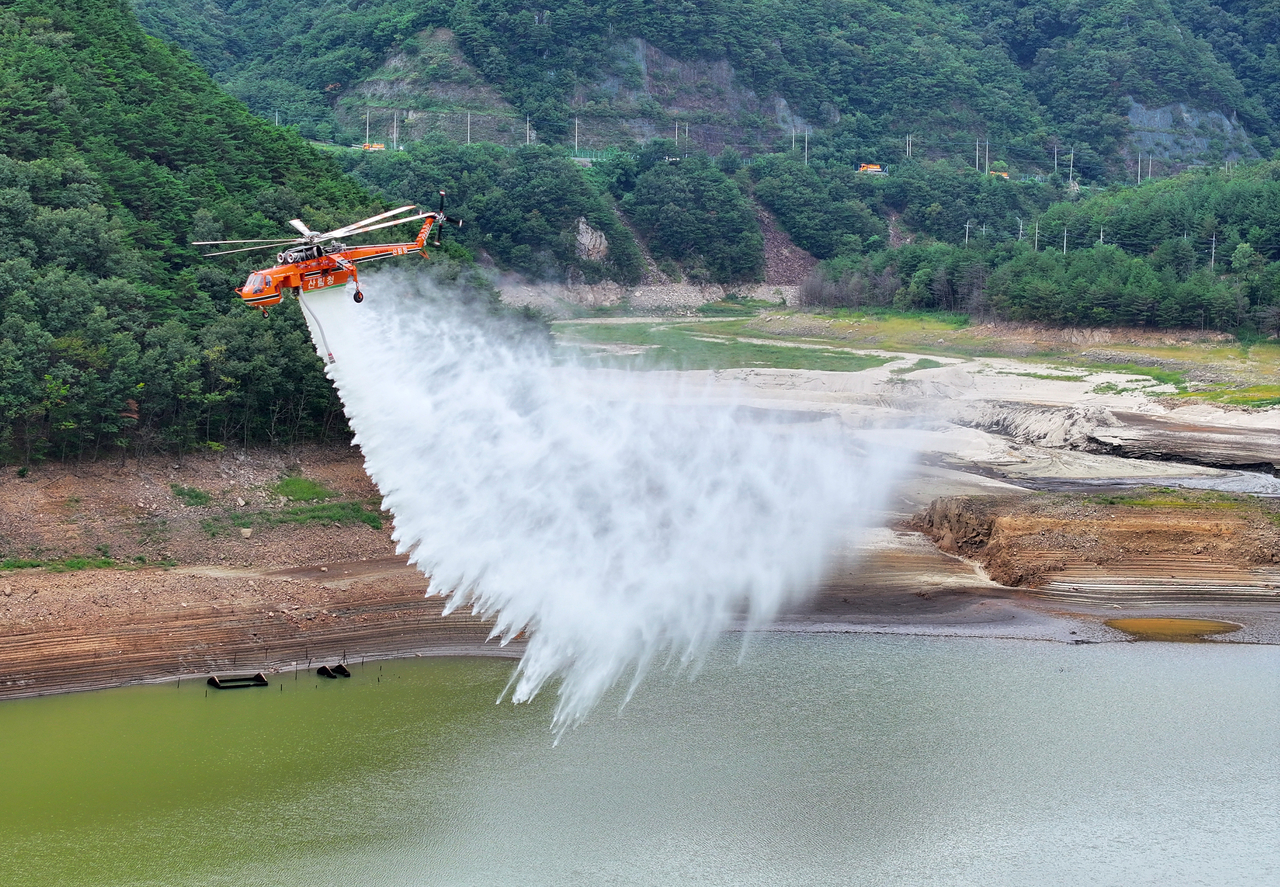
On Friday, helicopters from the Korea Forest Service and military units were also dispatched to dump water into the reservoir while trucks and pipelines continued round-the-clock deliveries of water from nearby sources.
In total, the city looked to pour some 29,000 tons of water into the reservoir Friday.
Drought risks spread
Unfortunately, the water shortage crisis in Gangneung is not confined to the city.
Other cities in Gangwon Province are starting to show hints of similar risks.
In Samcheok, eight rural towns comprising 374 households have faced water shortages since late July, forcing authorities to provide bottled water and trucked supplies as an emergency.
Unlike Gangneung, Samcheok saw nearly 100 mm of heavy rain on Thursday, but it was not enough to relieve the city of its shortage entirely.
Jeongseon-gun has also seen no rain over the last few days, with 185 households left with no choice but to rely on emergency supplies since July 21.
Concerns are also rising in Taebaek and its surrounding areas, as the Gwangdong Dam, which supplies drinking water to the Taebaek region, was recently reported to have dropped to 39 percent of its capacity.
lee.jungjoo@heraldcorp.com