Maurice Obstfeld says Korea’s debt manageable; long-term slump avoidable with strategic investment
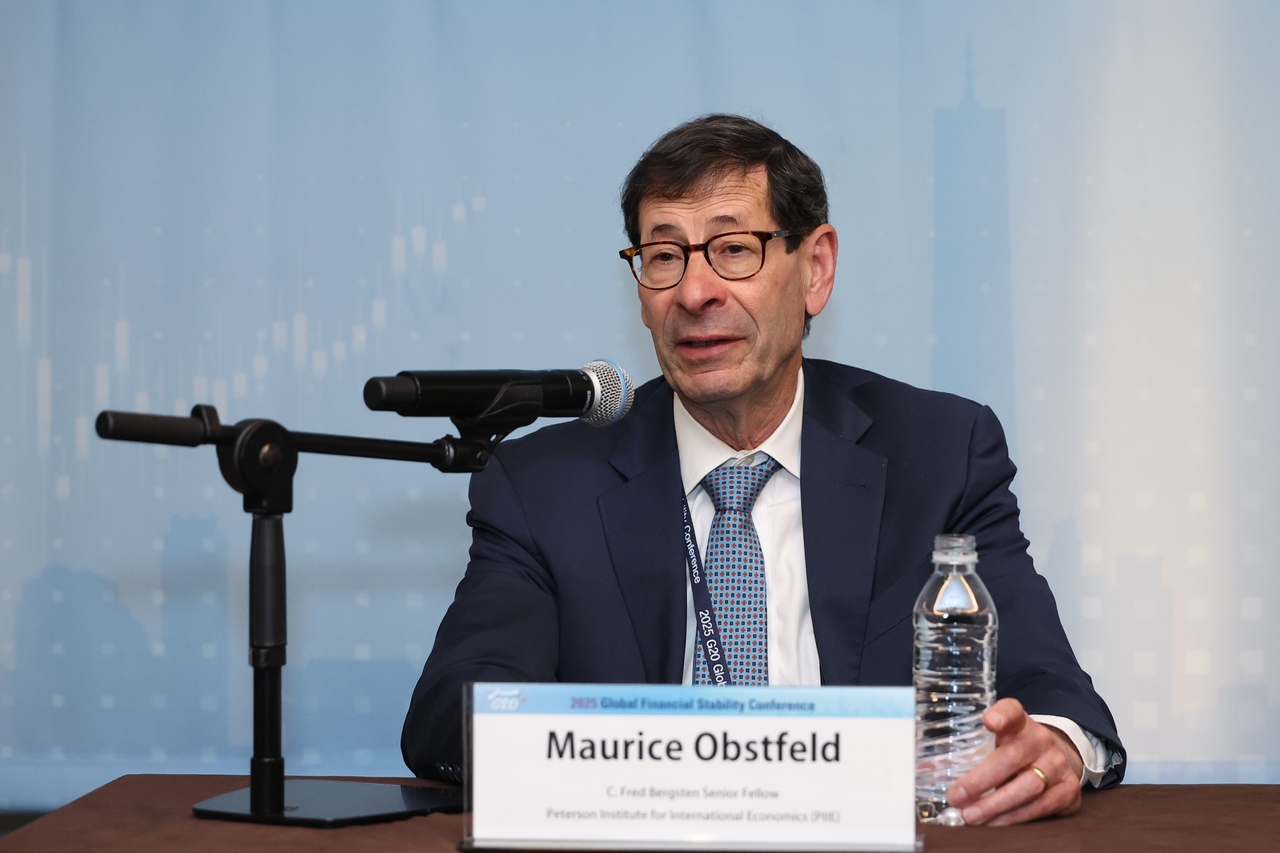
South Korea’s trade deal with the US remains unresolved, raising the risk of fresh disputes, said economist Maurice Obstfeld, professor emeritus at UC Berkeley and former International Monetary Fund chief economist.
"I worry that the US and Korea may have different interpretations of what has been agreed — the type, size and distribution of investments, and who will carry them out," Obstfeld said at a press conference during the G20 Conference on Global Financial Security hosted by the Korean government.
"If the US sees the deficit is not shrinking as the trade balance with Korea is reviewed, it will claim there must be hidden barriers or imbalances and demand more concessions," he said.
Obstfeld said the world must close ranks as the US “becomes less generous” in providing global public goods. Under Trump’s second term, Washington has pushed allies, including South Korea, to pay more for defense while retreating from climate accords and the World Health Organization.
"I don't mean for the world to unite against the US, but for countries to deepen ties among themselves to better insulate from shocks or demands coming from the US," said Obstfeld, citing Korea’s potential entry into the Comprehensive and Progressive Agreement for Trans-Pacific Partnership as an example.
For Korea, strategy means balancing security and economic priorities while expanding partnerships in Europe and Asia. “The trade-off lies in finding a kind of ‘magic point’ where security concerns can be balanced with economic interests," he said, urging Korea to maintain vital ties with Japan and China despite geopolitical strains.
On Korea’s rising debt, Obstfeld downplayed immediate risks. "Korea’s sovereign debt now relative to GDP looks very favorable compared with other OECD countries," he said. "Most countries would be glad to have this level of debt."
Still, he warned that Korea’s rapid aging will strain public finances. "Rapid aging implies greater demands on fiscal resources to support a larger, less healthy elderly population, and those demands have already been rising in recent years," he said, also noting the risk of higher global interest rates as the US and Europe boost defense spending.
Yet, deficits are not inherently negative if spent wisely, he added. "If the funding is used for productive investments that raise potential growth and advance structural reforms, it can make the fiscal burden more sustainable," he said.
Obstfeld also downplayed fears that Korea could follow Japan into prolonged stagnation. "Korea is in a much better position to steer the economy without falling into deflation," he said, noting Japan’s failure to set a clear price stability target.
He added that while Korea’s bubble is not comparable to Japan’s, the country still faces vulnerabilities such as low fertility, high housing costs and heavy household debt relative to disposable income.
jwc@heraldcorp.com


![[Exclusive] Ateez to return in November](https://wimg.heraldcorp.com/news/cms/2026/09/02/news-p.v1.20260902.76162fb0ba55493aad1c076f240d0750_R.jpg?type=h&h=120)