
Four artists reflect on exploring tradition and innovation across cultures
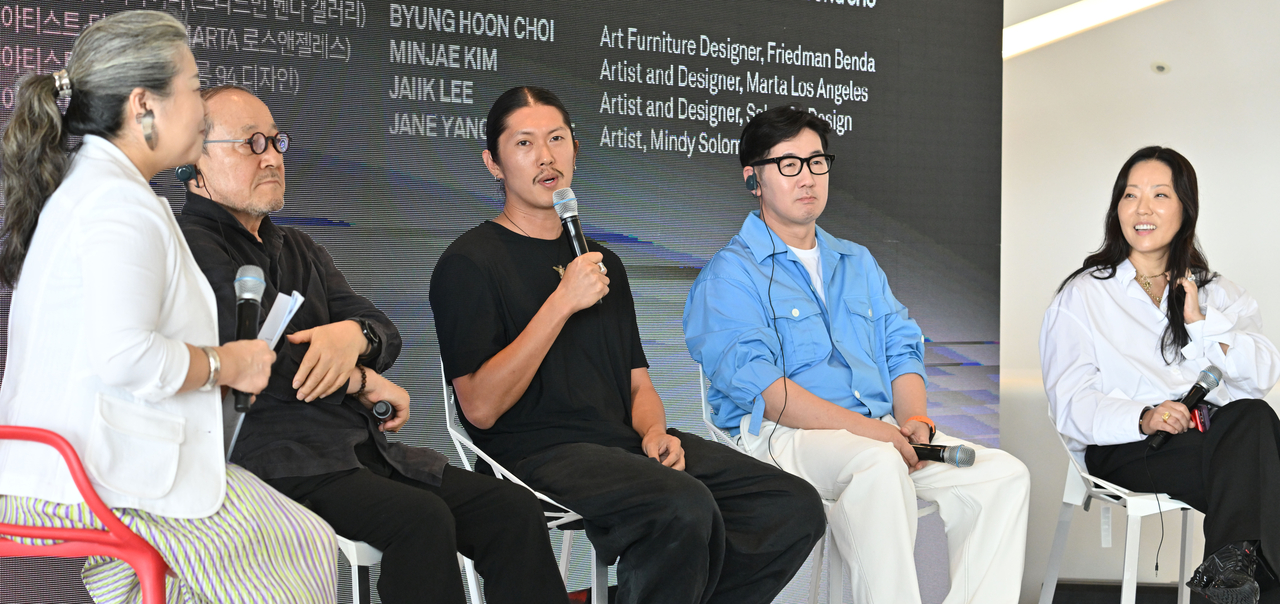
Creative practitioners were the subject of the Design Talks session themed "Korean Designers Illuminated on the World's Stage," as four Korean designers working internationally shared personal stories about finding their voice between Korean heritage and global ambitions.
The panel assembled creatives from across generations: Choi Byung-hoon, who founded The Society for the Creation of Decorative and Applied Arts in 1977 and essentially invented "art furniture" as a concept; Kim Min-jae, whose furniture trilogy for Marta Los Angeles blends Korean elements with Western forms; Lee Jai-ik, who creates metal sculptures inspired by traditional ceramic vessels for Salon 94; and Jane Yang-D'Haene, whose ceramic pieces become canvases for painterly expression at Mindy Solomon Gallery.
Choi, represented by New York's Friedman Benda since 2011, offered a veteran's take on just how far Korean design has come. "Back when I was starting out, people barely knew anything about Korean culture," he recalled. The challenge was basic but profound: "If they could work with someone local, why call a Korean artist from abroad?"
His solution was to put in serious groundwork, both at home and abroad. "I spent years really understanding our culture — visiting sites, reading everything I could find. When you're showing internationally, audiences can't tell the subtle differences among the different Asian cultures. You have to be able to explain what makes us distinct."
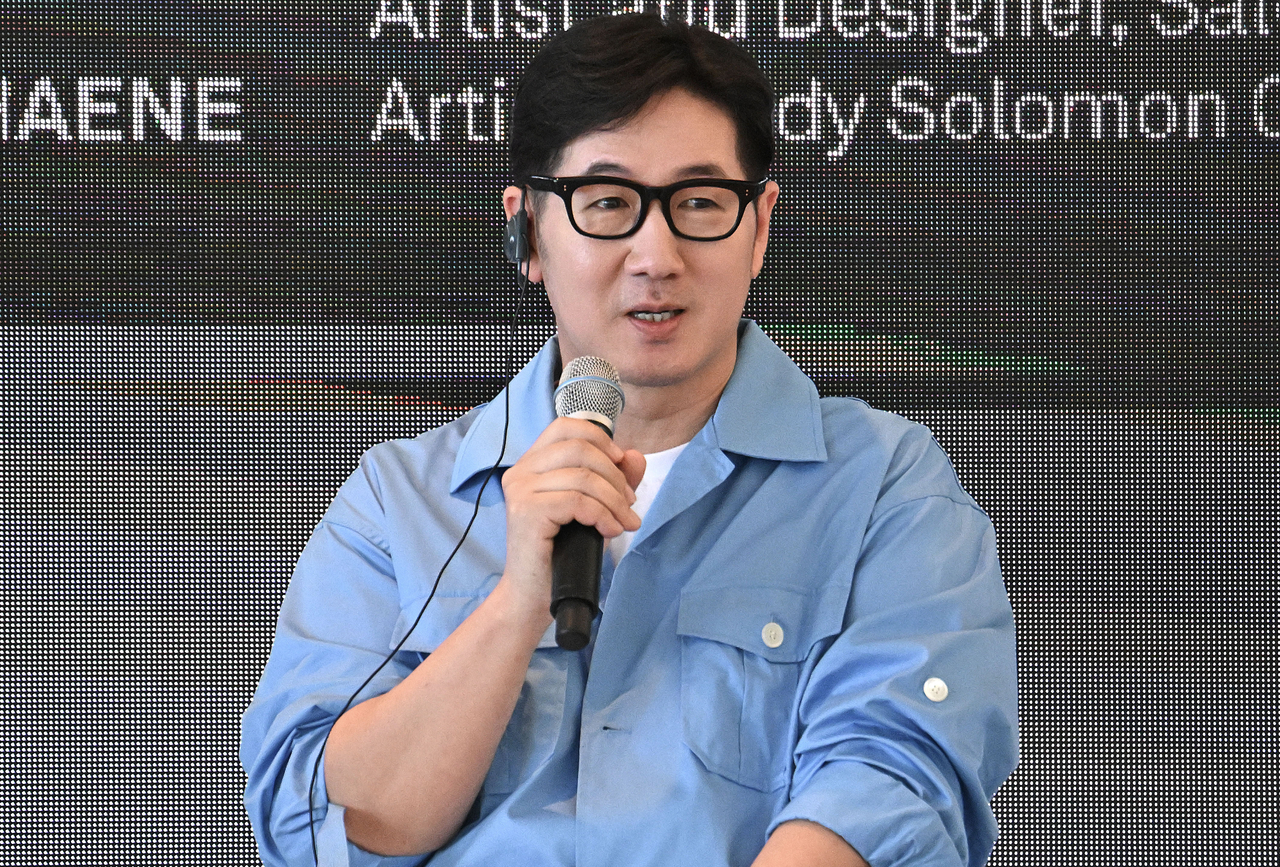
Kim Min-jae discussed the creative energy that comes from never quite fitting in. After pivoting to furniture design from architecture and moving to New York a decade ago, he's made peace with his outsider status. "What really hit me was always being the outsider — studying Western architectural history, working within Western design traditions," Kim said. "Now, I feel like a stranger in both Seoul and abroad. I try to channel that feeling directly into my work."
His relationship with his Korean identity took interesting turns based on how others saw him. "At first, I tried to hide my Koreanness," Kim said. But when early press coverage kept focusing on his Korean background and reading his work as some kind of traditional remix — even though that had not been his intention — he decided to play along strategically. "For my third solo Miami show, I thought, fine, let me give them what they're talking about. That's how I got to incorporate the recognizable Korean motifs."

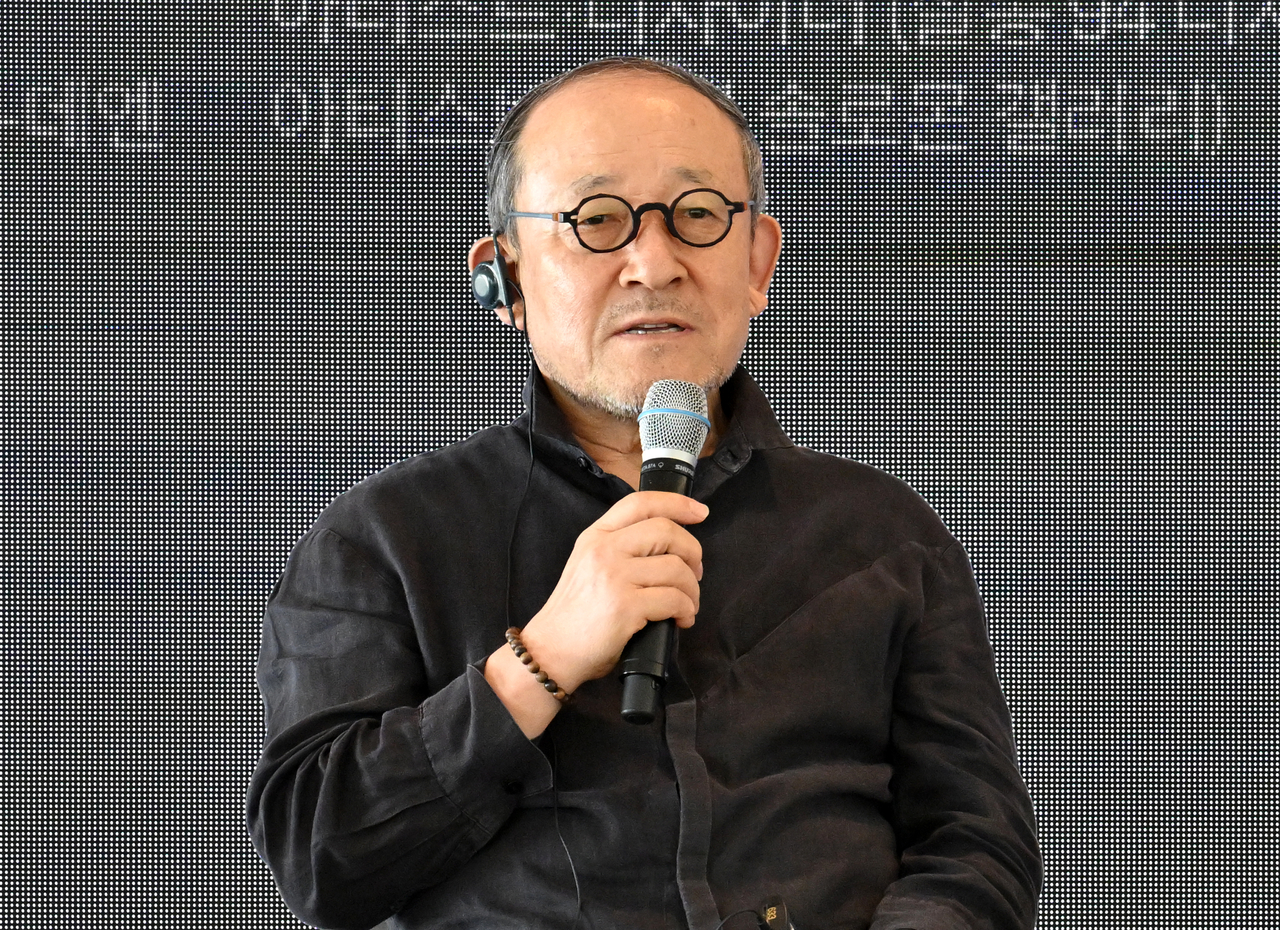
Lee Jai-ik didn't sugarcoat the challenges Korean designers face at home. "In Korea, there's serious discrimination between creative fields, especially when it comes to craft," he said. "The domestic market is obsessed with painting because of its investment value. Those of us making three-dimensional work barely get a look." For artists like him, this reality has meant having to look outward from day one: "Just like Korean companies that develop products for export, we have to look for opportunity overseas."
His breakthrough came from persistent self-promotion on social media. "I worked social media like it was my actual job," Lee explained. "I feel artists are basically like entertainers or politicians — you have to constantly prove you're alive and working." After being rejected by the Loewe Foundation Craft Prize four times, his 2023 finalist selection coincided with exhibition opportunities in New York and led to successful gallery representation in the city.
Jane Yang-D'Haene offered a different angle as someone who left Korea as a child. "I don't feel fully Korean or American. I'm really just a New Yorker," she said. This in-between existence shapes everything she makes, especially how she merges Korean vessel traditions with contemporary painting techniques. "I use my childhood memories, but they're filtered through 40 years of life in New York. I can only show what it looks like from between two cultures."
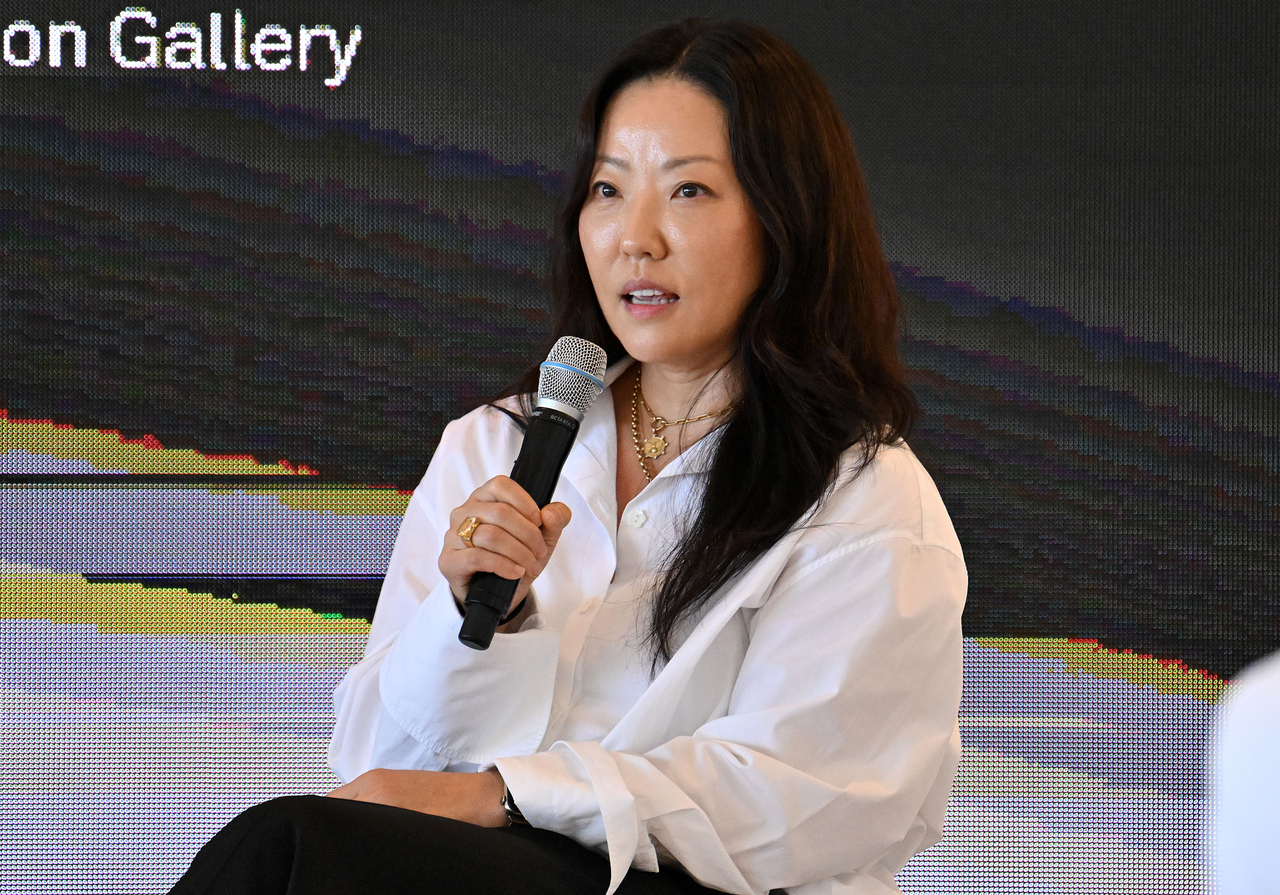
When the talk turned to the artists' relationships with galleries, the artists revealed complicated feelings. While acknowledging that galleries matter for wider publicity, they pointed out that digital platforms have scrambled the old playbook. Kim Min-jae noted how much has changed: "These days, so many artists are making it work on their own terms. Artists now have to play both sides of the game," he said.
Choi stressed the importance of active self-promotion in today's competitive landscape. "You can't just lock yourself in a studio and expect the world to come knocking," he said. "That idea of the tortured artist working in isolation is dead. You need to be out there, keep making noise and making connections."
moonkihoon@heraldcorp.com