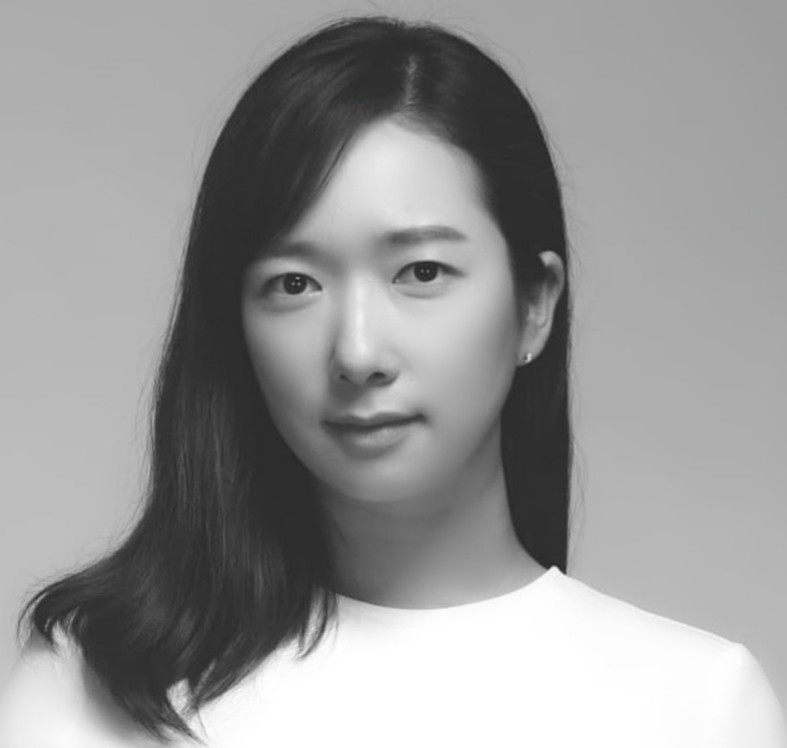
Acclaimed creative director and fashion designer Jung Ku-ho has gained attention from home and abroad, most recently, for directing “One Dance,” or “Ilmu” in Korean.
The performance reinterprets the ceremonial dance from Jongmyo jeryeak, a royal performance of song, music and dance performed during Korean ancestral rites, listed as a UNESCO Intangible Cultural Heritage.
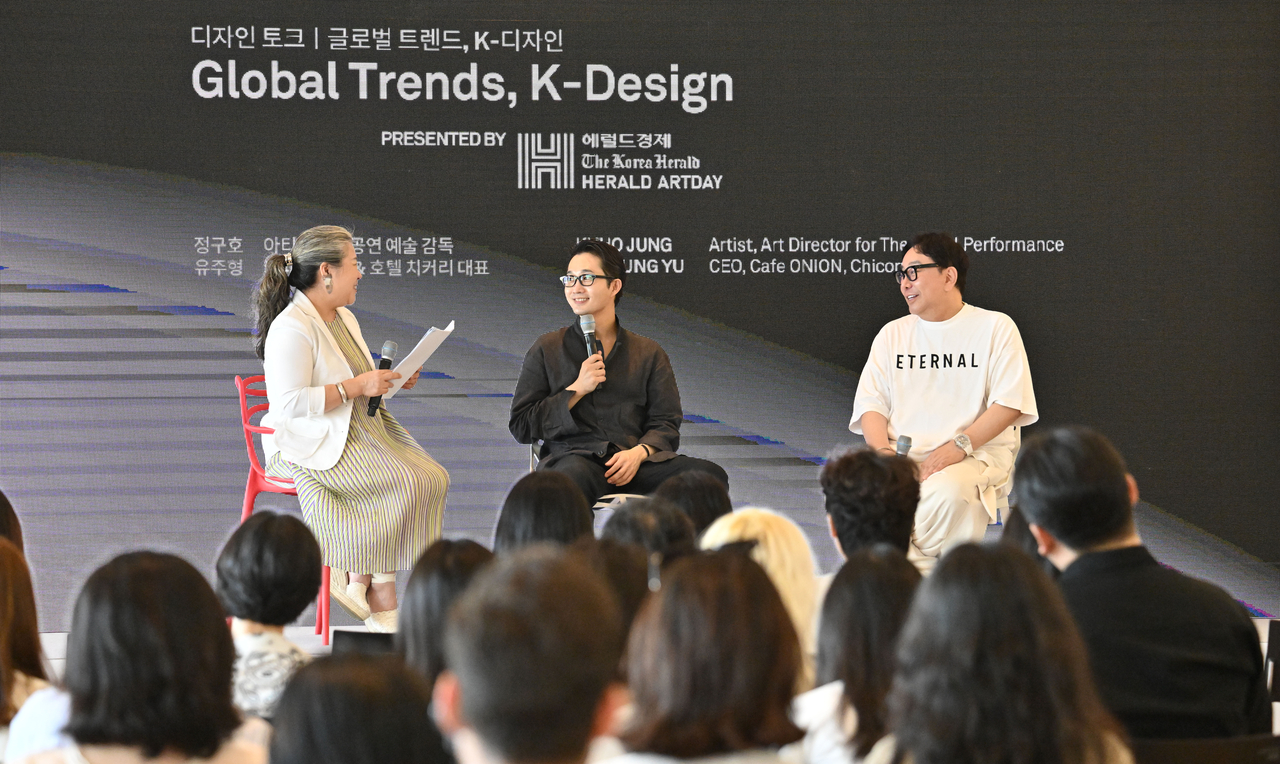
“My ultimate goal has been to push tradition to the very limit of how modern it can appear,” Jung said Tuesday at the “Global Trends, K-Design” talk session presented by Herald Media Group at Dongdaemun Design Plaza, held alongside Design Miami.In Situ Seoul.
The contemporary dance performance, which premiered in 2022, has been celebrated worldwide since its three sold-out performances at Lincoln Center’s David H. Koch Theater in New York two years ago. It returned to the Sejong Center for the Performing Arts in Seoul in late August, once again to sold-out audiences.
“What I can do is not to simply inherit or replicate tradition, but to create something of my own, based on tradition — to reinterpret and express it in a contemporary language for today’s generation. That is the kind of work I pursue,” Jung said.
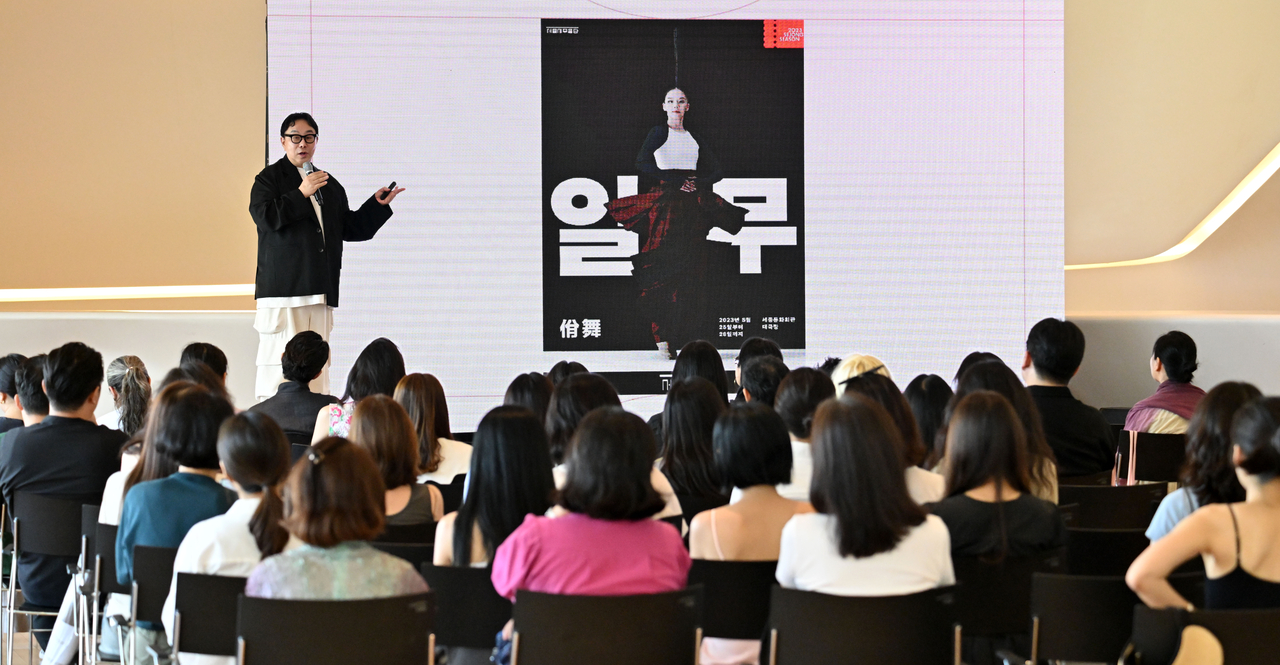
He said he has been working with questions of identity throughout his career, questions that were sparked, in turn, by the questions he was often asked when he was studying and living abroad: “So, how is Korea different from Japan or China?”
The idea of contemporary performance came to him when he realized he would like to create a work using only the basic movements of Korean dance, he recalled.
Following Ku's presentation, Yu Zu-hyung, CEO of Cafe Onion and Chicory Hotel, shared his experiences of how he found and revitalized forgotten or marginalized spaces in Seoul.
Cafe Onion — one of the most popular bakery cafe chains in Seoul today — opened its first shop in Seongsu-dong in 2016, a neighborhood popular among young people and sometimes referred to as the Brooklyn of Seoul. The brand has expanded to other neighborhoods in the following years, including Anguk and Gwangjang Market.
“I wanted to attract foreign visitors by drawing inspiration from tradition,” he said of the Anguk Onion branch housed in hanok, or Korean traditional building.
“What is considered Korean is not something that is fixed, but something that continually evolves through hybridity and fluidity,” he said. “Angugk and Seongsu branches each get more than 1,000 visitors a day.”
The CEO shared how he came up with the idea of the cafe’s signature "pastry pizza pie" for the Gwangjang Market branch, a treat reminiscent of butterfly-shaped pies once easily found at old-fashioned Korean bakeries.
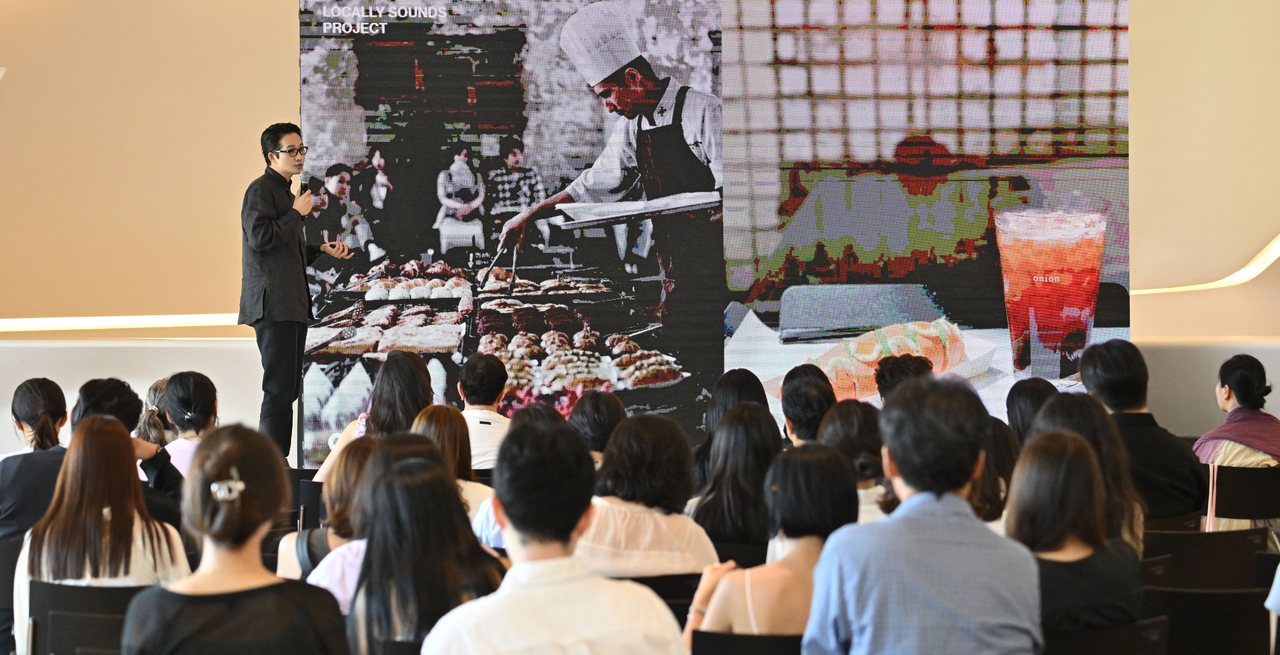
Yu is currently working on a hotel project in Hannam-dong, converting an old motel into an atmospheric hotel, incorporating works by leading Korean artists based on what he learned from his bakery business.
“What matters most is having a fundamental root. For Onion, and for myself as well, it has been about finding our own roots that can serve as a source," Jung said.
"The question is whether such a foundation is firmly in place, because everything will evolve from there. The stronger that foundation is, the more new trends will continue to grow.”
yunapark@heraldcorp.com


![[Exclusive] Ateez to return in November](https://wimg.heraldcorp.com/news/cms/2026/09/02/news-p.v1.20260902.76162fb0ba55493aad1c076f240d0750_R.jpg?type=h&h=120)