'Korea’s edge in IT, AI, chips, pharma can power Chhattisgarh’s manufacturing push'
The Indian state of Chhattisgarh recently highlighted the synergy between Korea’s technology leadership and its abundant natural resources. The central state is encouraging Korean companies to join India’s Viksit Bharat 2047 vision, which hopes to significantly expand the country's gross domestic product.
India is now the world’s fourth-largest economy but aims to become the third-largest by 2030, with a projected GDP of $7.3 trillion.
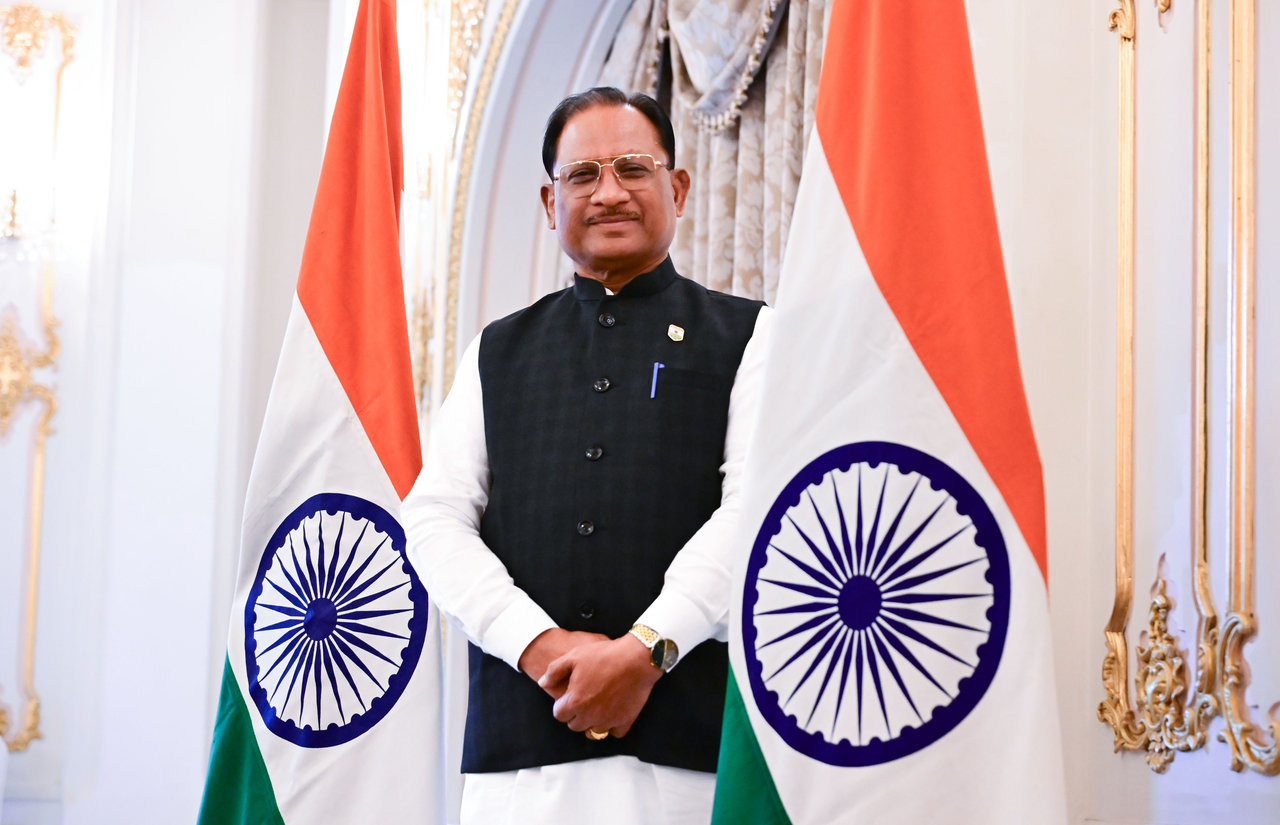
In an interview with The Korea Herald and its sister publication Herald Business in Seoul on Aug. 27, Chief Minister Vishnu Deo Sai called on Korean companies to harness his state's employment-linked subsidies, technical training support, digital licensing system and subsidies of up to 35 percent.
Chhattisgarh is prioritizing electronics, pharmaceuticals, processing, manufacturing, textiles and green energy, and Korea plays an important role in these areas — a leadership from which the state hopes to benefit, according to Sai.
“Korea’s technology and innovation, combined with Chhattisgarh’s natural wealth and resources, can write a new chapter of development,” Sai told The Korea Herald.
The New Industrial Policy 2024-2030 of Chhattisgarh will greatly help Korean companies.
According to Sai, Chhattisgarh is a power-surplus state with over 14,000 megawatt capacity, including the Korba region — India’s “power capital” — offering strong cost advantages.
With rising renewable capacity, Chhattisgarh is also emerging as a powerhouse for energy-hungry industries, from steel and semiconductors to data centers and battery materials, says Sai.
Coal-based power currently dominates, but the state is actively pursuing an energy transition and recently increased its renewable energy capacity to 3,000 MW.
The state is gearing up to power the electric vehicle future, leveraging its abundant iron ore, strong infrastructure, vast potential in steel, semiconductors and battery materials, and newly discovered lithium reserves.
Sai welcomed Hyundai and other EV, battery and steel players, saying all investors will gain under Chhattisgarh’s new industrial policy.
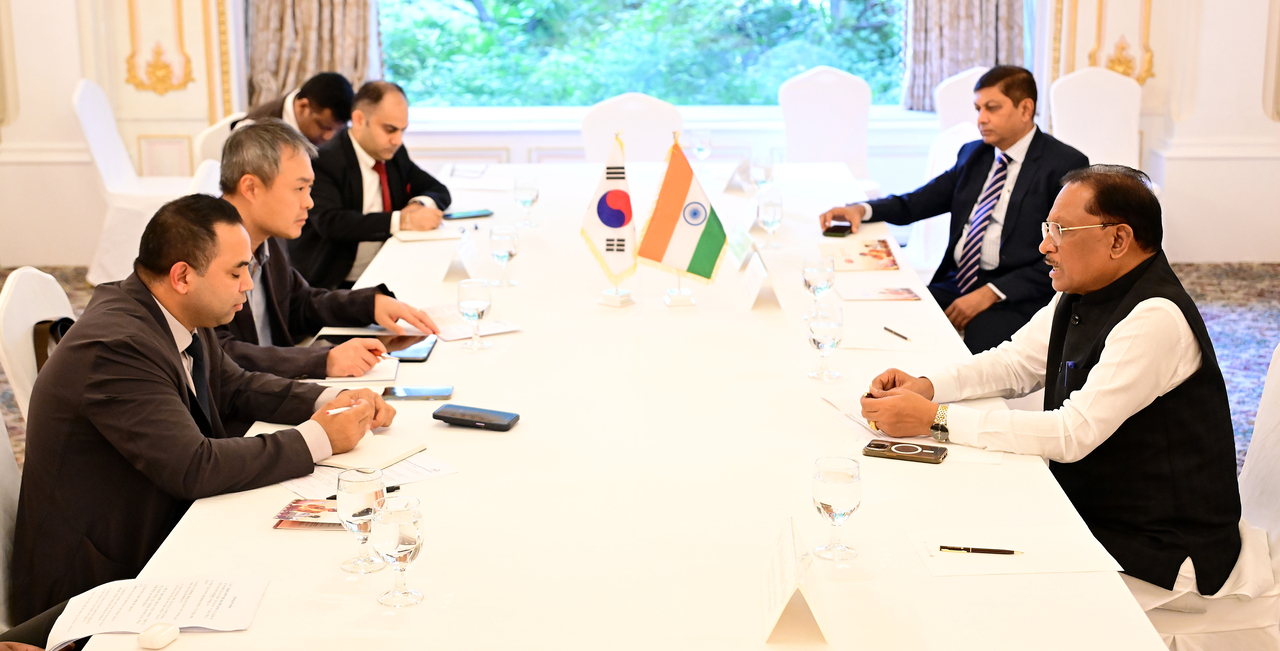
“Whoever comes from among Korean companies is welcome,” Sai told The Korea Herald, calling on Korean firms to use the new Single Window 2.0 system to tackle the biggest challenges of doing business in the state. The platform facilitates fast-track approvals, production-linked incentives, employment-linked subsidies, skill development support and subsidies of up to 35 percent.
Korean participation in Smart City
“Like the National Capital Region, the state aims to develop its own State Capital Region,” the chief minister said, sharing the vision of integrating multiple cities across the state.
The Delhi-NCR, comprising Delhi, Noida and Gurgaon, is a major hub for Korean companies, particularly in electronics, manufacturing and retail, including Samsung, Hyundai and LG.
Sai hopes to attract similar Korean investments to the SCR.
He stated that Raipur and Bilaspur are developing greenfield smart cities, with Korean construction companies invited to participate.
The region hosts semiconductor, data center and EV manufacturing firms.
Korean technology is being indirectly utilized in the integrated monitoring and command control systems, but now is the best time for Korean companies to have a direct footing, according to Sai.
Learning from Japan, inviting Korea
Learning from Japan’s experience, Sai cited recent discussions with five Japanese companies, mainly in electronics and IT, three of which have already decided to invest.
Sai underscored the state’s strategic location, with Delhi, Mumbai and Kolkata accessible within 90 minutes by air.
“Centrally located, with strong logistics and basic infrastructure in place, our state is well-positioned to become a major employment hub, and it will help companies use it as a gateway to other Indian markets,” he said.
By 2024, Japanese investments in India were reported to be seven times larger than Korea’s, prompting experts and leaders to urge Korean companies to expand their foothold in the country.
He said that in Korea, he held discussions with ATCA, which plans to visit India next month along with about 20 companies across multiple sectors.
'Ancient connections'
The chief minister concluded the interview by referring to the historical, spiritual, philosophical and cultural connection between India and Korea through Buddhism.
“Philosophical and cultural exchanges have historically connected India and Korea,” he said, inviting Koreans to the 8th-century monastery in Sirpur.
The monastery, with 100 viharas, was a major center of Buddhism from the sixth to the 10th centuries CE.
"India, Korea and Japan have ancient connections through Buddhism. We want this bridge to be vibrant."
Profile
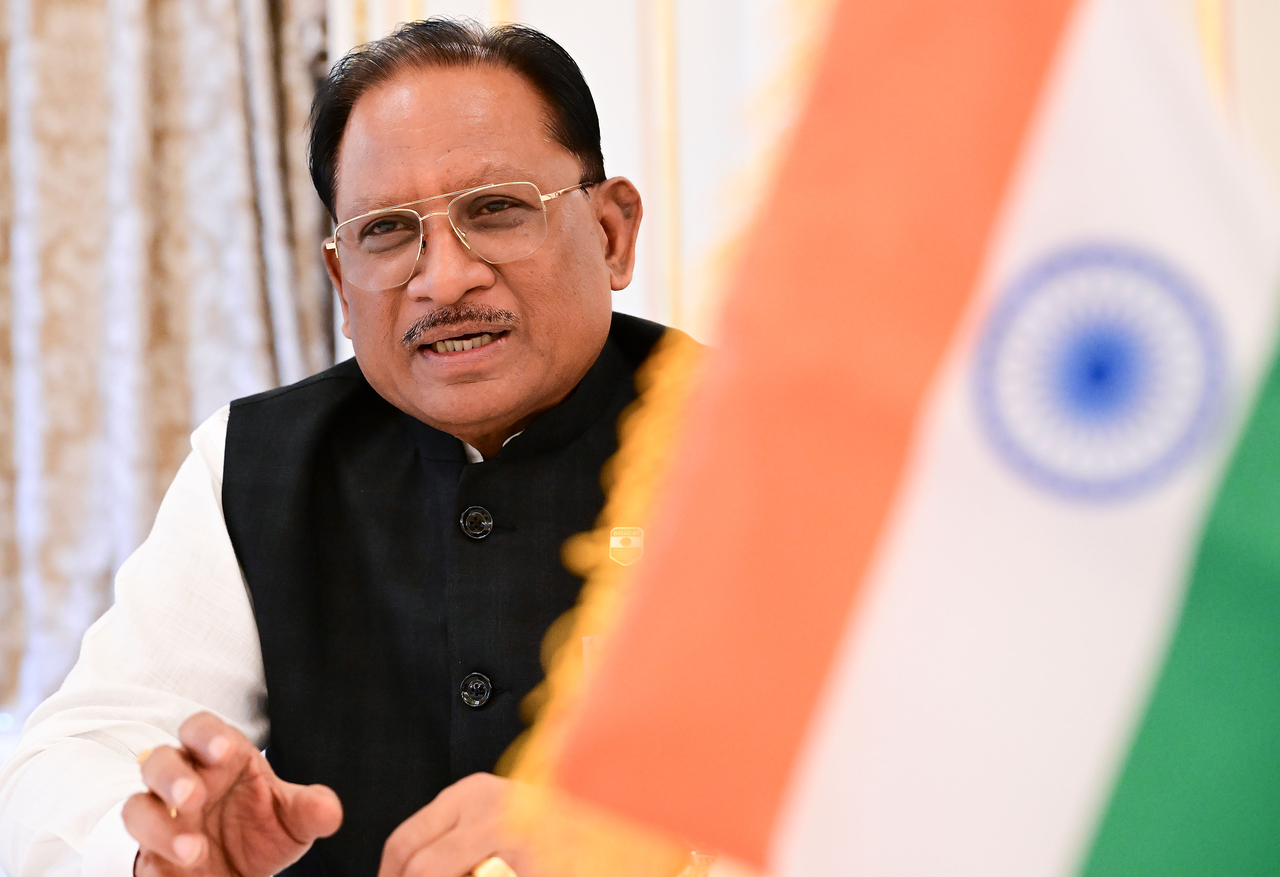
Vishnu Deo Sai is an Indian politician and a prominent tribal leader, currently representing Kunkuri in the Chhattisgarh Legislative Assembly. Born into a farmer’s family in Bagia village, he began his political career as a grassroots worker and was elected village head. First elected to the state assembly in 1990, Sai has served four terms in Parliament and held the posts of Minister of State for Mines and Steel and Minister of Labor and Employment from 2014 to 2019.
sanjaykumar@heraldcorp.com