

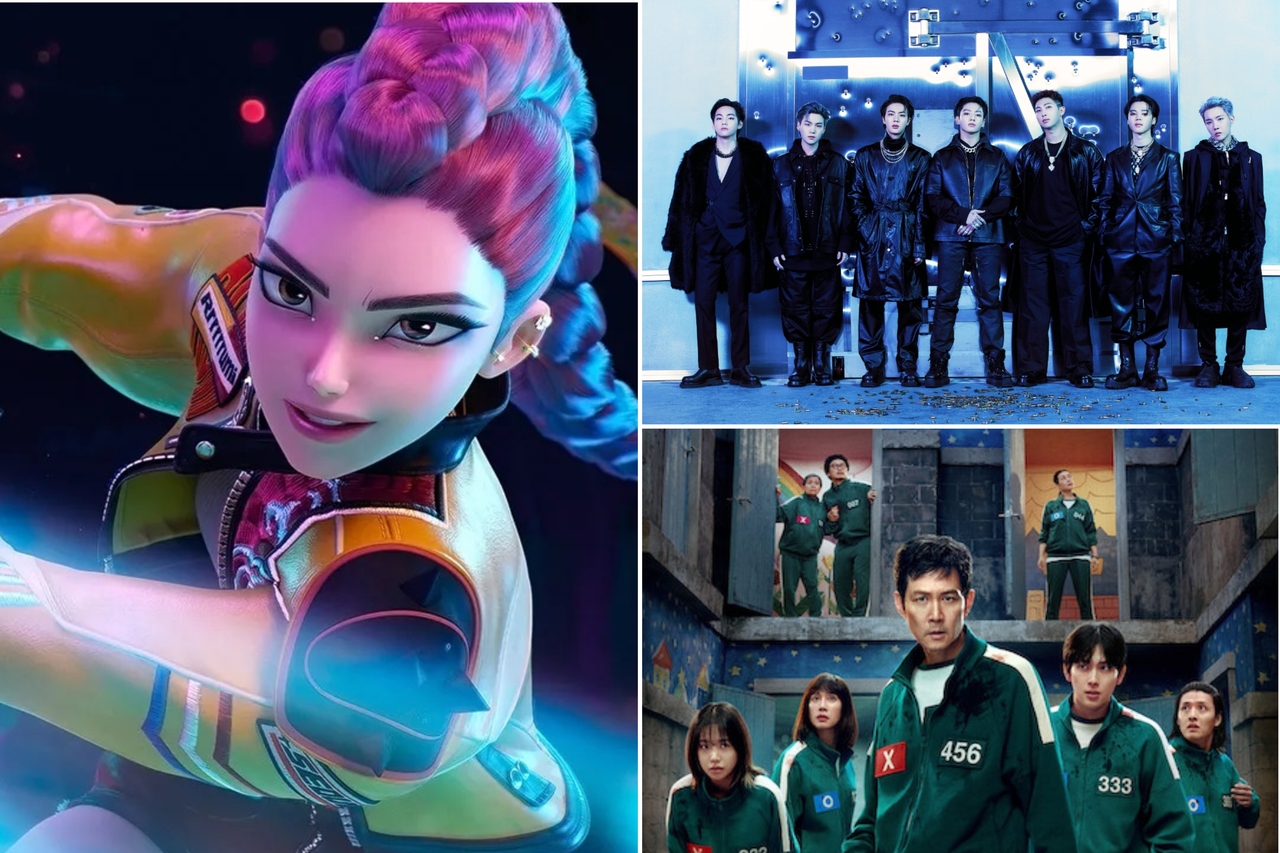
What does “Koreanness” mean to the world?
According to a new survey from the Corea Image Communication Institute, the answer is clear: The cultural wave known as Hallyu — spanning K-pop, dramas, film, fashion and beauty — has become synonymous with Korea’s image abroad.
A survey of 406 opinion leaders — 203 Koreans and 203 foreign nationals with experience living in or visiting Korea — about their perceptions of “Koreanness” and the global spread of K-culture conducted by CICI from Aug. 11 to 31, showed an overwhelming majority of both Koreans (94.6 percent) and foreign nationals (93.1 percent) identifying “K-style” as the essence of Koreanness. The findings suggest the country’s identity is now firmly tied to its cultural exports.
Beyond that shared view, Koreans ranked cutting-edge information technology infrastructure as the second most distinctive national trait (52.7 percent), while foreigners chose traditional aesthetics (41.9 percent). Safety came in third for Koreans (25.6 percent), while foreign respondents placed IT infrastructure in that slot (32 percent).
Asked what has most recently boosted Korea’s global image, respondents on both sides were in agreement: the runaway success of Korean TV dramas and films. The vast majority of both Koreans (93.1 percent) and foreign nationals (95.1 percent) pointed to their international popularity.
The organization noted that the surge was driven not only by Korean titles consistently ranking among the top titles on Netflix, Disney+ and other global streaming platforms, but also by prestigious accolades at the Academy Awards and Cannes Film Festival. It also noted that the most emblematic was the record-breaking success of “KPop Demon Hunters,” which after its release in June soon became Netflix's most-watched film of all time.
K-pop world tours and Korea’s first Nobel Prize in literature, won by Han Kang, were also recognized. Together, the responses underscore that both popular culture and high culture are reshaping Korea’s reputation.
The survey also explored negative perceptions.
Both Koreans (79.8 percent) and foreign respondents (80.8 percent) identified “extreme ideological divides” as the biggest factor undermining Korea’s image abroad. Political polarization, generational value gaps and regional tensions were seen as detracting from the country’s otherwise favorable reputation.
Looking ahead, both Koreans (71.9 percent) and foreign nationals (77.8 percent) predicted that the future of K-culture lies in hybrid forms — content that fuses tradition with futuristic elements. Storytelling and food followed closely behind. Koreans ranked literature and narrative content second (60.1 percent) and food globalization third (58.6 percent), while foreigners reversed the order, with 56.2 percent choosing cuisine and 54.7 percent selecting literature.
Corea Image Communication Institute is a nonprofit organization founded in 2003 with the aim of promoting Korea's image abroad. Its president, Choi Jung-wha, was awarded the Legion d’Honneur Officier in May for her contribution to strengthening Korea-France relations and advancing cultural exchange.
hwangdh@heraldcorp.com