
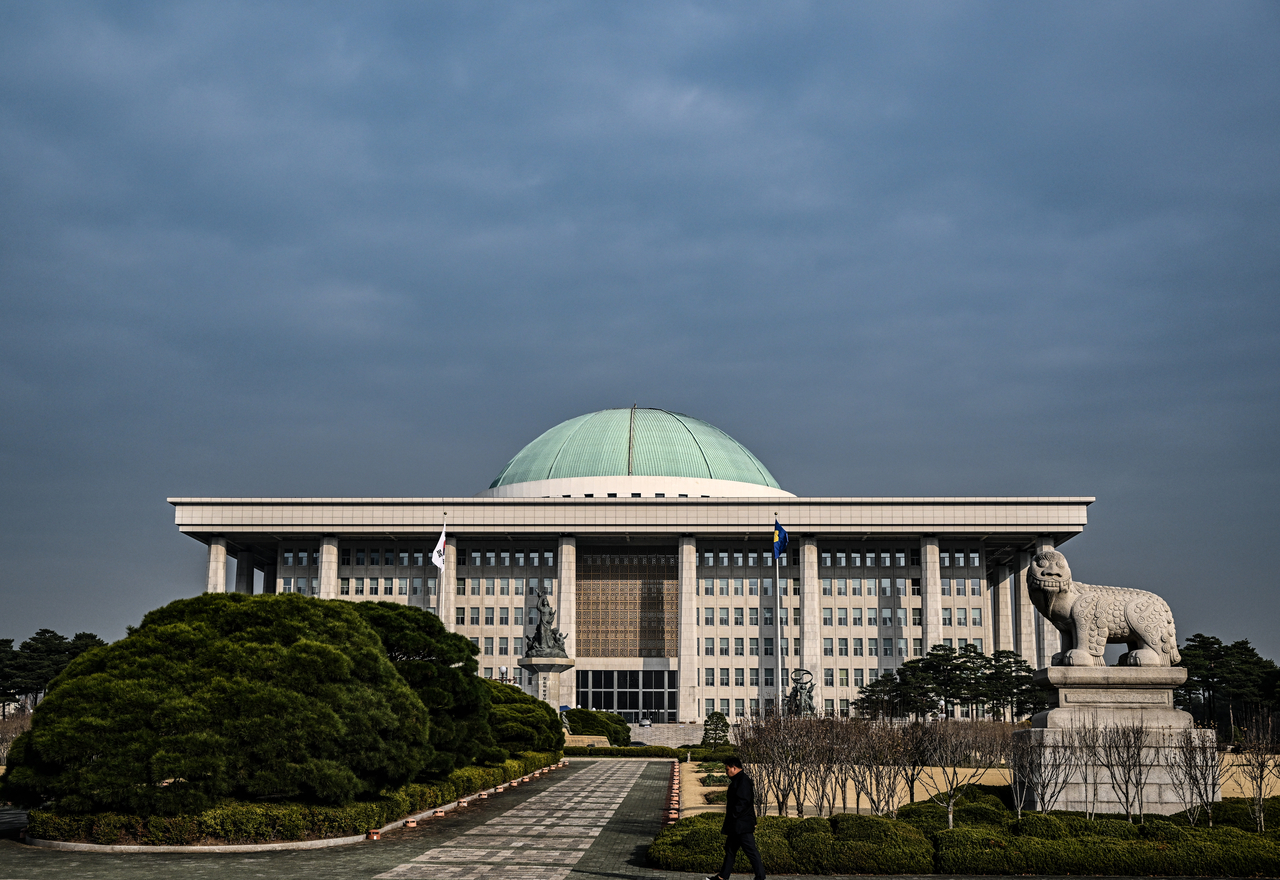
South Korea’s National Assembly is set to open Monday for a 100-day regular session, with the ruling party looking to pass sweeping government restructuring bills, next year’s budget proposal and confirm nominees for high-level government posts.
The session officially begins at 2 p.m. and will run until Dec. 9, according to the National Assembly Secretariat. Floor leader speeches by the Democratic Party of Korea and the opposition People Power Party are scheduled for Sept. 9 and 10.
The annual session is expected to unfold under high political tension.
The ruling Democratic Party is set to push a swath of legislation in support of the Lee administration and to hold those linked to former President Yoon Suk Yeol’s Dec. 3 martial law declaration accountable. The main opposition People Power Party has vowed to block what it calls the ruling bloc’s “unilateral rule.”
Legislation
The Democratic Party, which holds 166 out of 298 seats at the Assembly, has outlined 224 priority bills it aims to pass during the session and into early next year.
A key bill slated for a vote on Sept. 25 is a revision to the Government Organization Act, which would dissolve the Supreme Prosecutors’ Office and strip prosecutors of investigative authority, leaving them only with the power to indict — a long-standing aim of the Democratic Party’s prosecutorial reform drive.
More broadly, the party claims that the proposed government overhaul seeks to build a government structure “capable of fully delivering on the Lee administration’s policy goals.”
Other major proposals include bills to allow punitive damages for false or manipulated reporting in the media and on platforms such as YouTube, and expanding the number of Supreme Court justices.
The People Power Party has condemned these moves as attempts to dominate the judiciary and suppress press freedom.
Also high on the legislative agenda is a package of bills aimed at expanding the scope and duration of special counsel investigations into former President Yoon and his wife, Kim Keon Hee.
The three probes are charged with investigating Yoon’s Dec. 3 martial law declaration, Kim’s suspected involvement in stock manipulation, and the death of a Marine during a flood rescue operation.
“The three special counsel bills have already been thoroughly discussed with party leadership and adopted as part of our platform, so we expect no issue in pushing them through the plenary on Sept. 4,” said Rep. Jeon Hyun-heui, who leads the party’s special committee on the investigations.
The party also plans to introduce a separate bill to establish a special tribunal to oversee cases related to Yoon's martial law declaration.
Fiscal Budget
Tensions are expected to escalate over the government budget for 2026.
The Lee administration finalized its 728 trillion-won ($523 billion) fiscal blueprint on Aug. 29 and is set to submit it to the Assembly this week.
The Democratic Party has expressed full support, calling the budget a necessary tool to stimulate the economy and improve livelihoods amid ongoing economic uncertainties. It argues that aggressive spending is vital to support vulnerable populations and stabilize domestic demand.
The opposition sees it differently.
The People Power Party has labeled the plan a “populist spending spree,” warning that increased borrowing and new taxes will place a heavy burden on future generations.
In particular, the opposition party has taken issue with a 24 trillion won allocation for regional voucher programs, calling it an attempt to sway voters ahead of next year’s local elections.
The People Power Party is also seeking to cut special activity funds for top government agencies — including the presidential office, prosecution and audit authorities.
Only last year, the Democratic Party scrapped these funds when it was in opposition, citing transparency issues and a need to rein in spending, despite objections from the People Power Party.
Hearings
A series of confirmation hearings is also scheduled throughout September.
Starting Tuesday, the Assembly will begin vetting the remaining Lee administration Cabinet nominees, including Education Minister nominee Choi Gyo-jin and Financial Services Commission nominee Lee Eo-gwon. Hearings for Fair Trade Commission nominee Joo Byung-gi and Gender Equality Minister nominee Won Min-kyung will follow.
The People Power Party has signaled strong opposition to both Choi and Joo.
Choi faces criticism over a drunk driving conviction and controversial remarks regarding the sinking of the ROKS Cheonan in 2010, while Joo is under fire for what the party describes as habitual tax delinquency. People Power Party lawmakers have also raised concerns about Choi’s previous affiliation with a progressive teachers' union.
Meanwhile, interpellation sessions are scheduled from Sept. 15 to 18, during which lawmakers will question the Lee administration on key policy areas including foreign affairs, national security, economic management, social welfare and education.
flylikekite@heraldcorp.com